





Hepplewhite Dressing Table
A hepplewhite dressing table offers graceful lines and fine timber work, bringing genuine Georgian elegance to a bedroom.
Hepplewhite Dressing Table
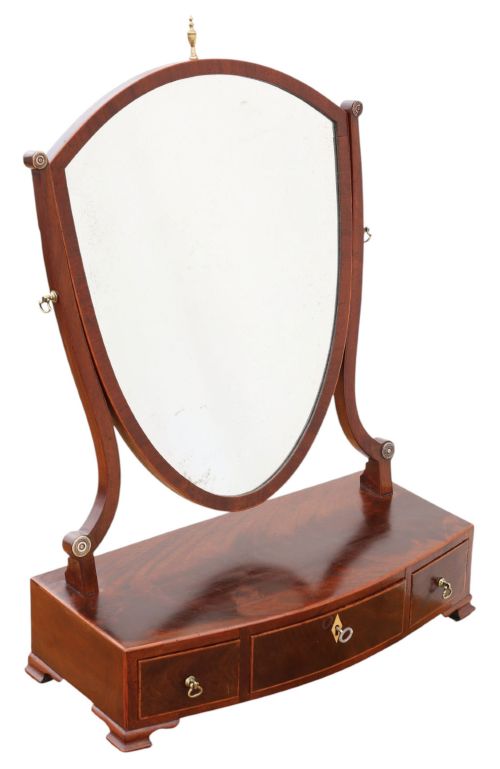
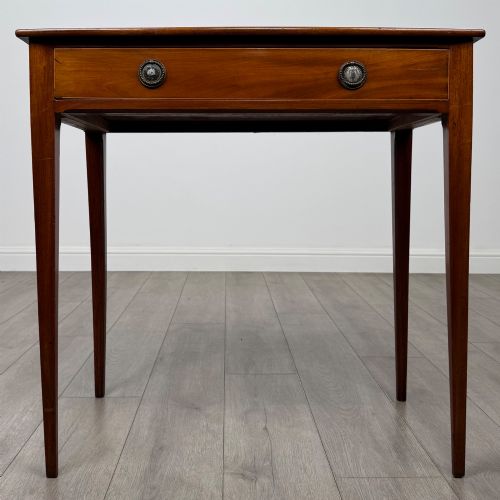
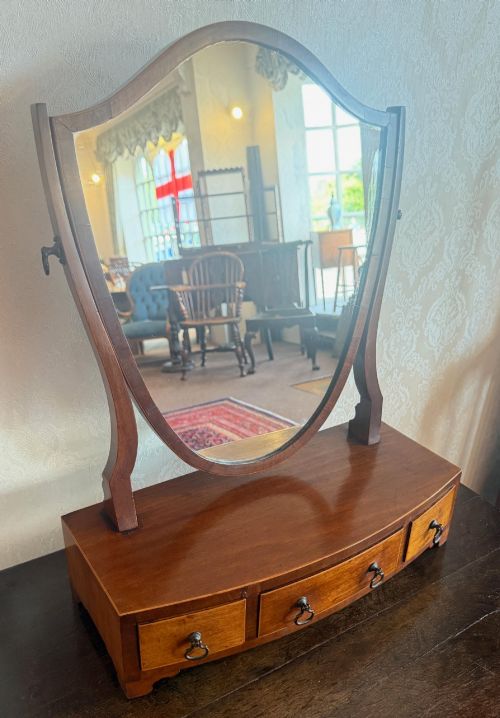
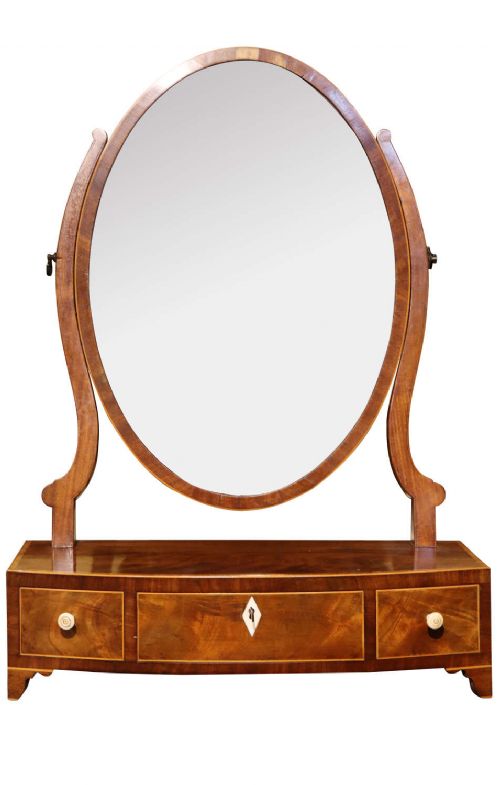
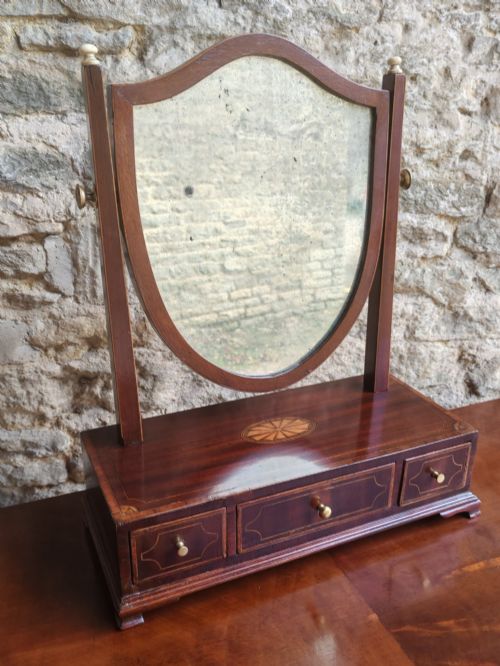
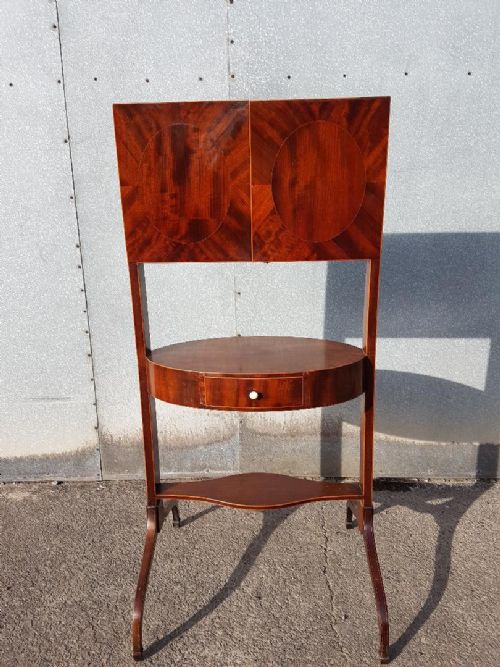
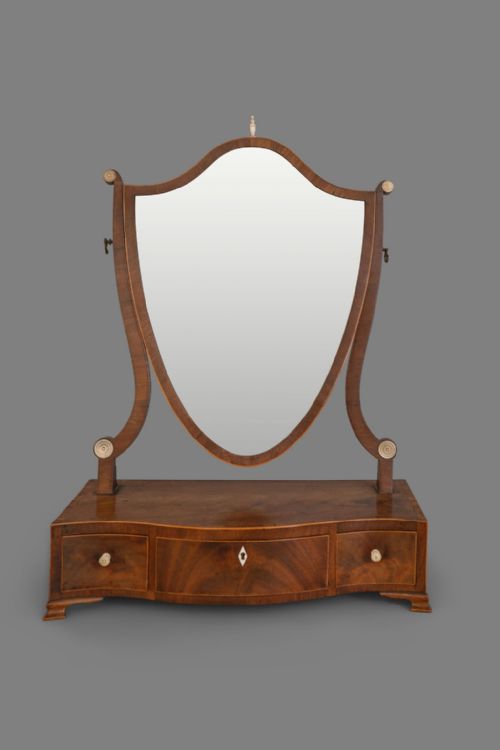
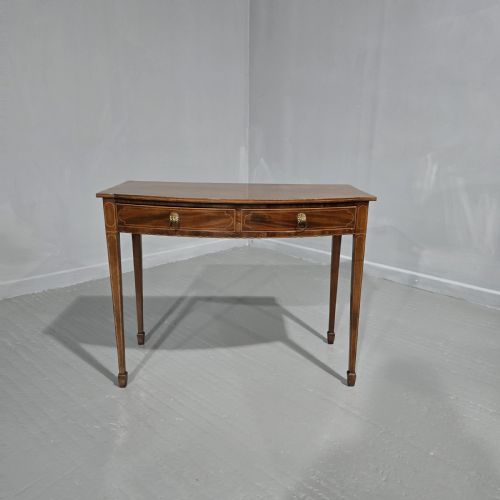
The most common formats on this page are tabletop dressing mirrors with shield or oval plates, accompanied by occasional low boys and side tables derived from the same design vocabulary. These objects reflect the refined domestic requirements of the eighteenth and nineteenth centuries.
How They Were Made
Cabinet makers utilised solid mahogany and walnut, frequently enhancing the surfaces with satinwood, harewood, boxwood inlay, and wood inlay to create subtle tonal contrast. Brass fittings and glass plates complete the construction of the mirror and table variants.
Techniques such as crossbanding and marquetry appear across the listings, demonstrating structured assembly methods typical of Georgian and later workshops. Timber selection prioritised rich grain patterns and smooth finishes.
The listings span from the eighteenth century to the Edwardian era, incorporating mahogany, satinwood, and boxwood inlay.
What Varies in Quality
The distinction between standard examples and superior pieces rests on the crispness of the carving, the finesse of the boxwood inlay, and the proportion of the timber figures. Refined grain selection and balanced proportions elevate the status of an individual item.
Original brass hardware and undamaged glass plates contribute significantly to the standing of a mirror or table. The precision of the joinery and the integrity of the secondary woods further define the craftsmanship.
The Hepplewhite Dressing Table Glossary
- Shield mirror
- A dressing glass framed in the shape of a pointed shield, popular in the eighteenth century. This form often swings between upright support arms.
- Crossbanding
- A strip of veneer applied to the border of a panel so the grain runs perpendicular to the main surface. It provides a neat framing effect on tabletops.
- Marquetry
- Decorative veneer work forming intricate patterns using various woods. Craftsmen assemble these pieces to create pictorial or geometric designs on furniture surfaces.
- Serpentine
- A curved outline featuring a convex centre flanked by concave sides. This flowing shape appears frequently on drawer fronts and tabletops.
- Low boy
- A small side table with drawers, typically standing on four legs. It serves as a compact dressing or writing surface in domestic interiors.
Hepplewhite Dressing Table: Frequently Asked Questions
What is a hepplewhite dressing table?
A hepplewhite dressing table is a piece of furniture reflecting the light, elegant style popularised in the eighteenth century. These items often incorporate delicate legs and subtle wood inlays.
They encompass both freestanding tables and tabletop mirrors designed for personal grooming. The aesthetic prioritises curved forms and refined timber selection.
How do I date a dressing mirror?
Dating a mirror involves examining the timber species, the method of assembly, and the bevel or quality of the glass plate. Georgian examples frequently feature mahogany with hand-cut dovetails.
Later Victorian and Edwardian pieces often display different secondary woods and machine-finished components. Comparing the hardware style helps confirm the period.
Where should I place a toilet mirror?
A toilet mirror sits comfortably atop a chest of drawers, a low boy, or a dedicated dressing table. It provides a functional reflective surface while adding period character to a room.
Ensure the supporting surface is stable and deep enough to bear the weight of the swinging frame.
What woods were used in these tables?
Mahogany is the predominant timber found across these listings, providing a rich reddish-brown base colour. Walnut and harewood also appear in specific pieces.
Boxwood and satinwood are frequently utilised for inlay work and contrasting borders, adding decorative detail to the primary wood.