

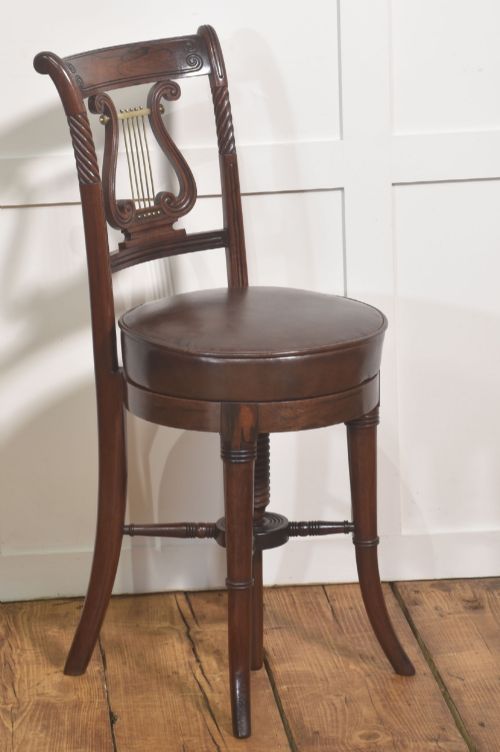
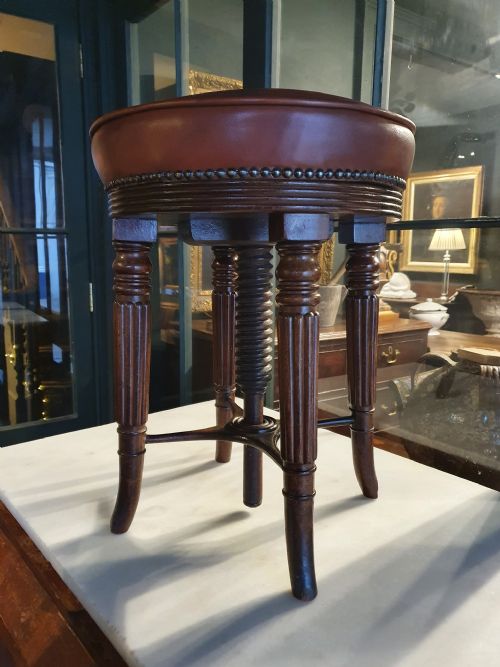


Height Adjustable Swivel Chair
A height adjustable swivel chair offers the practical comfort of rotation and vertical movement combined with period character.
Height Adjustable Swivel Chair
When you search for a height adjustable swivel chair, you encounter seating designed for utility at desks, dressing tables and keyboards. The selection spans piano stools, music chairs, desk chairs and dressing chairs from the Georgian, Victorian and Edwardian eras.
Mahogany, rosewood and walnut form the primary timbers of these pieces, alongside iron and brass mechanisms. You meet variants such as rise and fall piano stools, revolving music chairs and screw top piano stools.
Victorian and Edwardian examples dominate the current listings, alongside Regency and Georgian pieces. Stools and chairs utilise central threaded screws or mechanical rise and fall actions to alter the seat level.
How they were made
Cabinet makers shaped solid timbers including mahogany, rosewood, walnut, oak and satinwood into frames, turning legs and carving details. Metal components such as brass screws, cast iron bases and iron spindles provide the rotating and elevating functions.
Upholstery methods involve fabric, leather and horsehair stuffing secured over wooden seats or revolving tops. Ebonised finishes, gilt paint and brass inlay decorate the surfaces of specific models.
Height Adjustable Swivel Chair Retail Price Guide 2026
Typical asking prices for height adjustable swivel chair among the pieces listed under this phrase on Sellingantiques today, from the lower quarter to the upper quarter. They describe what is for sale here now, not the wider market.
Listings feature mahogany, rosewood, walnut, oak, satinwood, iron and brass across Victorian, Edwardian and Georgian periods.
What varies in quality
The sophistication of the turning mechanism and the choice of timber determine the standing of each piece. Finely figured mahogany, rosewood veneers and integrated brass inlay separate standard workshop output from exceptional cabinet work.
Carved details on the legs and the solidity of the revolving joint dictate the durability and refinement of the seating. Maker attribution, such as work originating from Gillows or James Shoolbred, adds distinction to the construction.
Gillows·James Shoolbred
The Height Adjustable Swivel Chair Glossary
- Rise and fall
- A mechanical action that allows the seat height to be adjusted vertically. This system often uses a threaded central screw or scissor mechanism concealed beneath the upholstery.
- Revolving
- A seating format featuring a central pivot that permits the top to turn through a full circle. This movement relies on a spindle and socket joint within the underframe.
- Piano stool
- A seat specifically constructed for keyboard players, frequently featuring a swivel top or height adjustment. These forms range from simple round wooden tops to upholstered music chairs with backs.
- Ebonised
- Timber treated with a dark chemical stain or finish to imitate ebony. This technique gained popularity during the nineteenth century for decorative furniture.
- Satinwood
- A dense, yellowish timber prized for its smooth grain and reflective surface. Cabinet makers utilised it for inlay and polished veneered surfaces.
Height Adjustable Swivel Chair: Frequently Asked Questions
How do I adjust the height on these chairs?
Most pieces operate via a central wooden or metal screw mechanism hidden beneath the seat top. Turning the upholstered section clockwise or anticlockwise raises or lowers the seating surface.
Some Edwardian and Victorian models utilise internal rise and fall lever actions. These require you to release a mechanism before moving the seat to the desired level.
Were these chairs originally meant for desks?
The majority of height adjustable swivel chairs in early periods served as piano stools or music chairs rather than office seating. Musicians required adjustable seating to suit different heights and instruments.
Desk chairs and dressing chairs also appeared in the nineteenth century with revolving bases. These provided similar mobility for administrative tasks or dressing tables.
Can I use a piano stool at a modern desk?
Many piano stools and music chairs match the height dimensions of standard writing tables. Their compact footprints make them suitable alternatives to conventional desk chairs.
Check the lowest and highest measurements of the screw mechanism before purchase. Ensure the seat clearance fits comfortably beneath your knee wells.
How do I distinguish Victorian from Georgian examples?
Georgian and Regency revolving stools typically display restrained classical lines, simpler turned legs and premium timbers such as rosewood or figured mahogany. Brass inlay and sabre legs often accompany these earlier designs.
Victorian pieces introduce heavier proportions, cast iron framing, industrial elements and complex rise and fall hardware. Arts and Crafts variants display simpler structural honesty with exposed joinery.