



Heavy Oak Storage Box
A heavy oak storage box is the utilitarian answer to housing household silver or linens securely, built to endure generations of rough handling.
Heavy Oak Storage Box
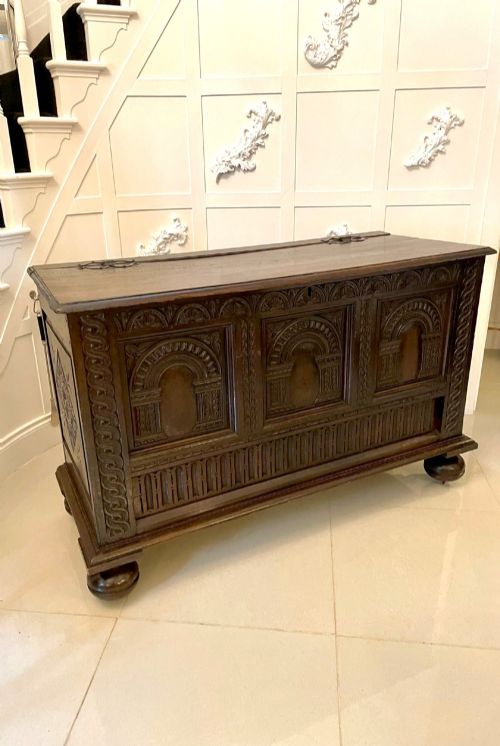
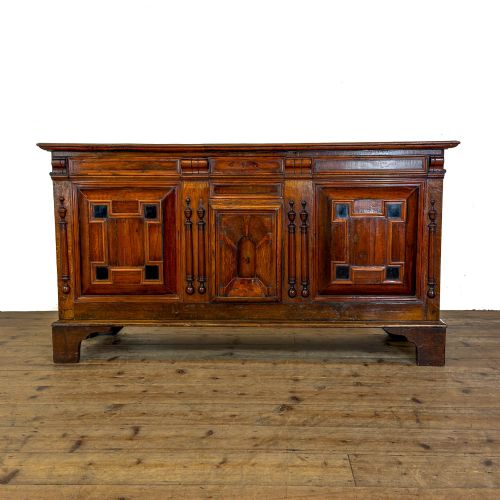
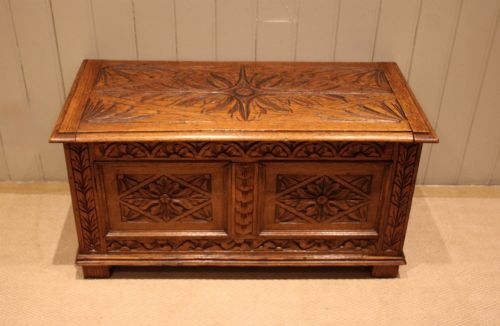
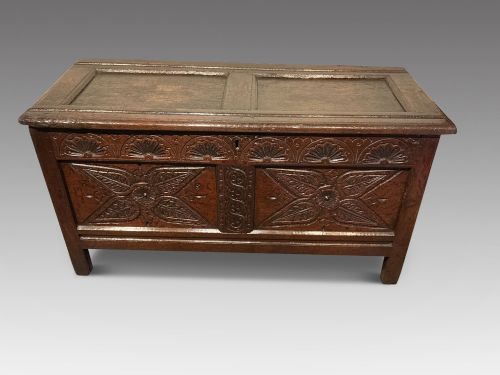
A heavy oak storage box spans several distinct functional forms, most commonly appearing here as robust silver chests, travel trunks, and joined coffers from the sixteenth to the nineteenth century.
The nineteenth-century iron-banded silver chest and the seventeenth-century carved coffer dominate the selection, offering deep internal wells designed for substantial household valuables.
Makers utilised dense native hardwoods and structural metalwork to create rigid carcases capable of resisting both damp and forced entry during transit.
How they were made
Carpenters constructed these boxes using solid oak boards, frequently employing pegged frame and panel techniques or heavy dovetailing to maintain structural integrity under heavy loads.
Blacksmiths and metalworkers reinforced the timber bodies with wrought iron, cast iron, steel, or brass bands, securing the corners and lids against the strains of shipping and travel.
Many examples feature internal baize or fabric linings alongside fitted compartments, combining rugged exterior armour with protective storage for delicate silver and plate.
Heavy Oak Storage Box Retail Price Guide 2026
Typical asking prices for heavy oak storage box among the pieces listed under this phrase on Sellingantiques today, from the lower quarter to the upper quarter. They describe what is for sale here now, not the wider market.
Listings span from the 16th Century to the 1930s, pairing solid oak with iron, brass, and steel hardware.
What varies in quality
The standard of a heavy oak storage box depends largely on the weight of the timber framing and the integrity of the original metal banding rather than surface decoration alone.
Superior pieces display thoughtful blacksmithing in their strapwork and handles, alongside dense, unwarped oak boards that maintain a tight seal when closed.
Original fitted interiors, working locks with period keys, and makers' stamps elevate the standing of a trunk well beyond standard utilitarian storage.
Elkington·H D Dean
The Heavy Oak Storage Box Glossary
- Coffer
- A traditional timber chest with a hinged lid, primarily used for storing valuables or household goods. Early examples often display hand-carved panels and pegged construction.
- Silver chest
- A heavy trunk specifically reinforced with iron or steel bands to transport and store family plate. These feature partitioned internal trays designed to separate flatware and hollowware.
- Campaign chest
- A portable box or set of drawers built for military officers on active service. They incorporate recessed carrying handles and protective metal corners.
- Ebonised wood
- Timber treated with a chemical stain or finish to imitate ebony. This dark treatment provides sharp contrast against bright brass or steel hardware.
- Panelled construction
- A method of joining timber where a central floating panel sits within a grooved frame. This technique accommodates the natural expansion and contraction of oak.
Heavy Oak Storage Box: Frequently Asked Questions
What is a heavy oak storage box used for?
These robust containers served primarily to secure and transport valuable table silver, important documents, or household linens across estates and during travel. Their thick wooden walls and iron bindings protected contents from theft, moisture, and rough handling.
Today, they function brilliantly as coffee tables, blanket boxes, or deep hallway storage units that conceal clutter while adding period character to a room.
How do I tell a seventeenth-century coffer from a nineteenth-century chest?
Early pieces from the seventeenth century typically rely on joined frame and panel construction with hand-carved motifs like linenfold or geometric strapwork, held together by wooden pegs. They often show the irregular tool marks of hand-riving and adzing.
Nineteenth-century silver chests and travel trunks favour simpler timber planes reinforced by heavy industrial iron or steel bands, machine-cut dovetails, and functional cast-iron carrying handles.
Are these boxes waterproof for modern use?
While the tight-fitting lids and metal-strapped joints offered substantial weather resistance during nineteenth-century shipping, original timber naturally responds to fluctuating modern central heating.
Minor gaps can develop in the dry atmosphere of a modern house, meaning they suit indoor storage rather than exposure to persistent rain or damp environments.
How do I clean and care for an iron-bound oak chest?
Maintain the timber by feeding the dry oak with a traditional beeswax polish, avoiding modern silicone sprays that can penetrate the grain and harm the finish. Gently dust the iron or brass straps, applying a light coat of microcrystalline wax if necessary to prevent surface oxidation.
Keep the box away from direct heat sources and radiators to prevent the heavy oak boards from splitting or warping over time.