
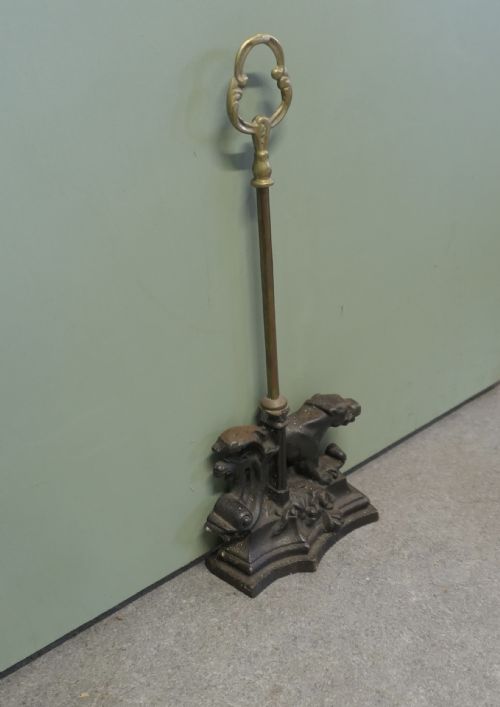
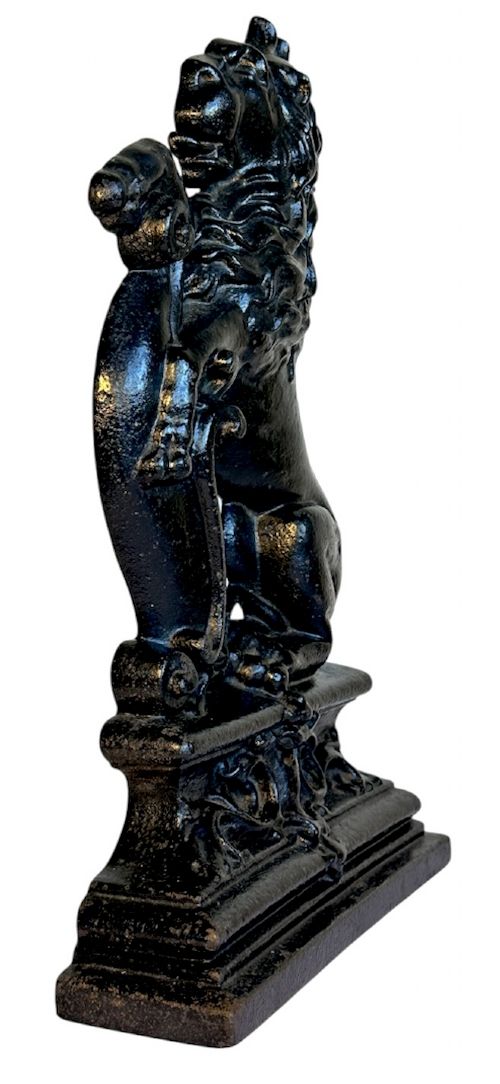


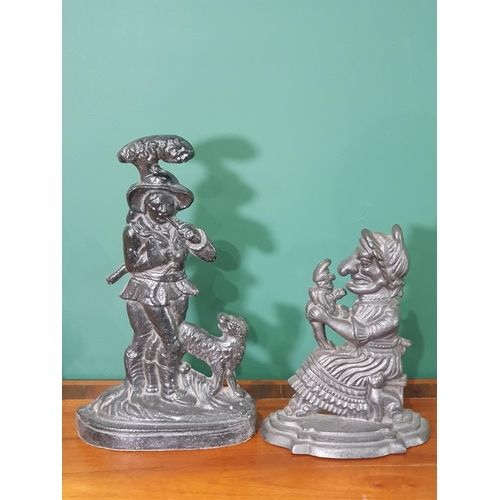
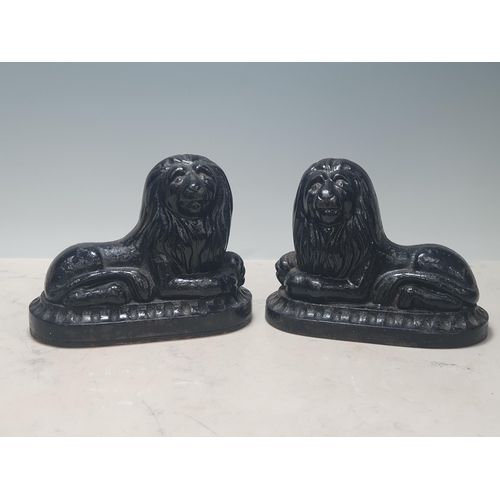
Heavy Iron Door Stop
These heavy iron door stop pieces hold a door firm with substantial weight, combining everyday utility with sculptural presence.
Heavy Iron Door Stop
A heavy iron door stop takes the form of functional hardware designed to keep interior pathways open. The pieces encountered here span eras from the Georgian period through the Victorian and Edwardian decades.
Figurative examples dominate the selections, featuring animals such as lions, dolphins, dogs, and horses alongside characters like Mr Punch and Lord Nelson. Collectors also find architectural motifs like the Egyptian Revival sphinx.
The form functions equally well as a decorative sculpture or a traditional door porter. Many items arrive in matched pairs, offering symmetry for grander entranceways.
Assessing quality
The integrity of the original paint surface dictates much of the appeal. Pieces retaining authentic historic pigment carry greater visual character than later repainted surfaces.
Mr Punch watches the skirting board with an enduring grin.
The Heavy Iron Door Stop Glossary
- Door porter
- A heavy weight designed to be carried from room to room to hold doors open, often featuring an integrated handle at the top.
- Cast iron
- An iron-carbon alloy poured into a mould to create rigid, heavy objects with high compressive strength.
- Egyptian Revival
- A nineteenth-century stylistic movement incorporating motifs from ancient Egypt, such as sphinxes and pharaonic symbols.
- Recumbent
- Lying down or resting, commonly used to describe animal figures positioned horizontally along the floor.
Heavy Iron Door Stop: Frequently Asked Questions
How heavy are these door stops?
These pieces possess substantial heft derived from solid cast iron construction. Their weight ensures they hold heavy interior doors securely in place.
Most examples weigh several kilograms, providing the necessary mass without requiring floor fixings.
Where should I place a door porter?
A door porter belongs on the floor near interior doorways where cross breezes tend to slam doors shut. Their integrated handles make them portable enough to move between rooms as needed.
They function best on wooden or stone floors where their weight prevents sliding.
How do I clean a cast iron door stop?
Maintenance requires only a soft, dry cloth to remove dust from recessed casting details. Avoid harsh liquid cleaners that might strip historic painted surfaces.
Keeping the metal in a dry environment prevents oxidation from forming beneath the protective paint layer.
Are painted finishes original?
Many items retain their early or original painted surfaces, which display natural wear and patination over time. Examining the paint layers under magnification often reveals the age of the finish.
Subsequent overpainting remains common on utility items that served in active households for generations.
How do I date a Victorian door stop?
Dating relies on stylistic clues, foundry marks, and the sharpness of the iron casting. Victorian examples frequently depict popular cultural figures or heraldic animals like the rampant lion.
Comparing the casting quality against dated specimens from the same era helps narrow down the production period.