



Heavy Glass Tumbler
These heavy glass tumbler pieces are solid drinking vessels designed for spirits, offering exceptional weight and substance in the hand.
Heavy Glass Tumbler
A heavy glass tumbler is a sturdy drinking vessel designed primarily for whisky and spirits, featuring thick walls and a substantial base. When you search for this phrase, you encounter robust drinkware spanning the Victorian, Edwardian, and Biedermeier periods.
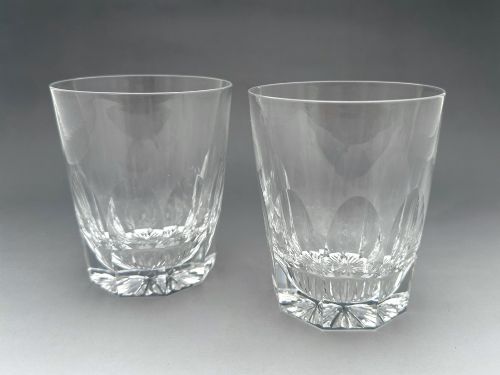
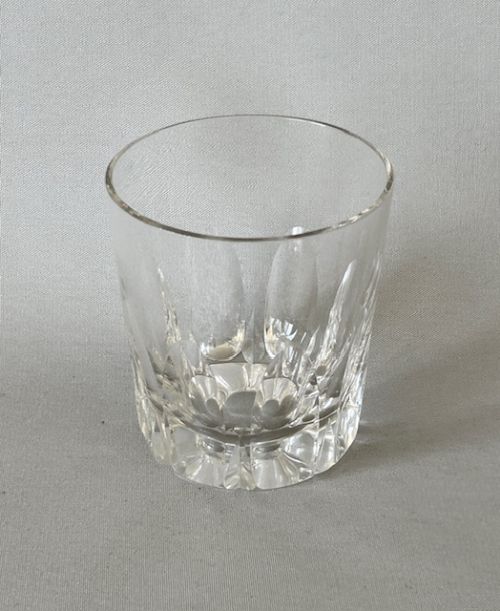
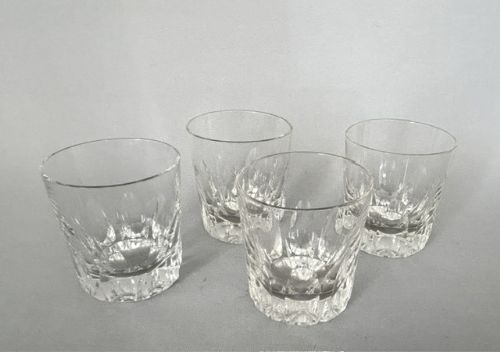
The pieces listed on this page include pairs, sets of four, sets of six, and individual beakers originating from English and Bohemian workshops. Forms range from simple clear glass beakers to elaborate ceremonial vessels and richly faceted whisky glasses.
You are most likely to meet Victorian and early twentieth-century examples on this page, often shaped as straight-sided cylinders or heavy-bottomed beakers. These vessels reflect the changing social habits of nineteenth and early twentieth-century households where robust glassware was essential for daily hospitality.
How they were made
These vessels are formed from lead crystal, lead glass, and clear glass using traditional blowing and hot-forming techniques. The high lead content in the metal provides the characteristic heft and brilliant clarity observed in the pieces.
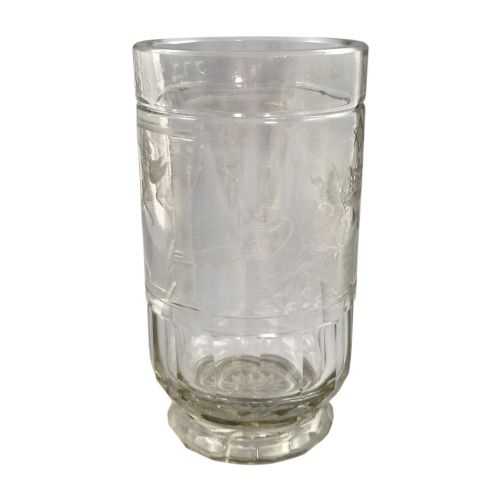
Makers shaped the thick walls and heavy bases by hand, employing cutting wheels to carve deep geometric patterns into the surface. Engraving was also utilised on specific ceremonial vessels to add detailed figurative or symbolic motifs.
Heavy Glass Tumbler Retail Price Guide 2026
Typical asking prices for heavy glass tumbler among the pieces listed under this phrase on Sellingantiques today, from the lower quarter to the upper quarter. They describe what is for sale here now, not the wider market.
One extraordinary nineteenth-century beaker recorded here bears Masonic symbols, proving that even a whisky glass can hold a secret society.
What varies in quality
Quality rests upon the crispness of the wheel-cut facets and the optical purity of the metal. Superior pieces display sharp, precisely defined cutting that catches the light cleanly across the heavy body.
The distribution of weight also dictates distinction, as finer items maintain a balanced, thick base without cloudy imperfections or bubbles trapped within the clear glass.
The Heavy Glass Tumbler Glossary
- Lead crystal
- Glass containing a significant proportion of lead oxide, which increases the weight, refractive index, and workability for deep cutting. This material gives the drinkware its resonant ring and brilliant sparkle.
- Wheel-cut
- A technique where the glass vessel is held against a rotating abrasive wheel to carve patterns into the surface. This method creates the deep facets seen on period whisky tumblers.
- Beaker
- A straight-sided cylindrical drinking vessel without a handle or stem. These forms provide a simple, stable shape suited for heavy everyday use.
- Biedermeier
- A Central European style dating from the nineteenth century focusing on utilitarian comfort and clean lines. Pieces from this tradition balance solid practicality with understated decorative restraint.
Heavy Glass Tumbler: Frequently Asked Questions
What were heavy glass tumblers used for?
These vessels were primarily utilised for serving spirits such as whisky, brandy, or water in nineteenth and early twentieth-century dining rooms and drawing rooms. Their substantial walls kept drinks cool and provided a reassuring weight during social gatherings.
Some specialist examples, such as large ceremonial beakers, served specific fraternal or commemorative functions rather than everyday dining use.
How do I care for antique crystal tumblers?
Wash these pieces by hand in warm water using a mild detergent, avoiding sudden temperature changes that can stress the aged glass. Dry them immediately with a lint-free cloth to maintain the clarity of the material.
Store them upright on a stable shelf rather than stacked together to protect the rim and cut facets from chipping.
How can I tell Victorian tumblers apart from later pieces?
Victorian examples often display hand-finished pontil marks on the base and slightly irregular cutting lines created by traditional workshop tools. The glass metal itself may carry subtle variations in tone characteristic of nineteenth-century melting practices.
Twentieth-century pieces generally show more uniform machine-assisted precision in their faceted patterns and clearer, highly standardised metal compositions.
Are these tumblers safe for daily use?
Most antique drinkware constructed from lead crystal can handle regular use for cold beverages if handled with care. Hand washing prevents any degradation of the surface lustre over time.
Avoid pouring boiling liquids directly into these heavy vessels to prevent thermal shock fractures.