






Heavy Gilt Picture
A heavy gilt picture brings substantial presence to a room, combining rich surface gilding with deep frames, oil paintings, and mirrors.
Heavy Gilt Picture
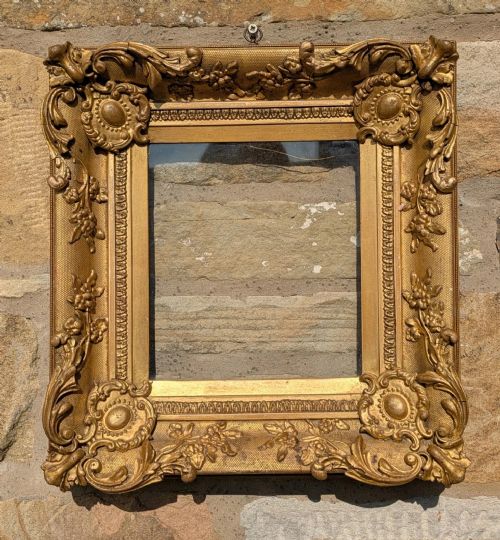
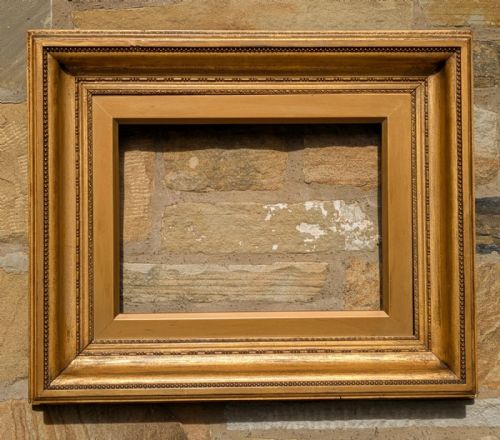
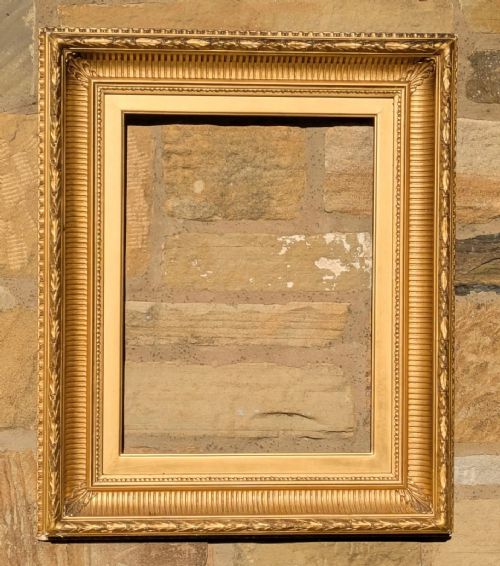
A heavy gilt picture encompasses substantial framed artworks, mirrors, and empty frames primarily originating from the nineteenth century. These objects combine significant wooden structures with ornate surface decoration designed to anchor a wall scheme.
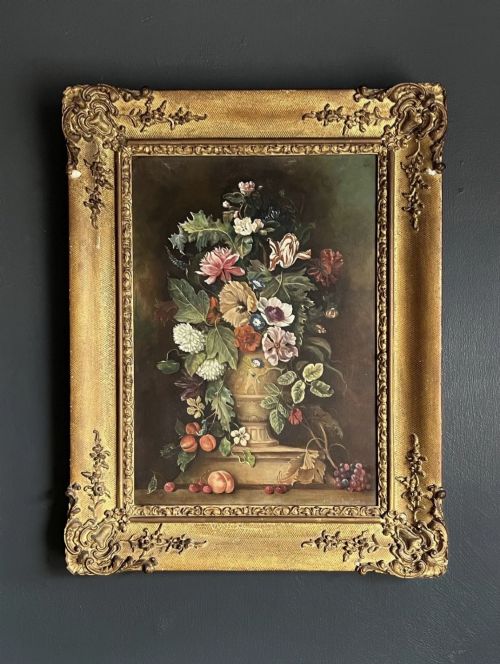
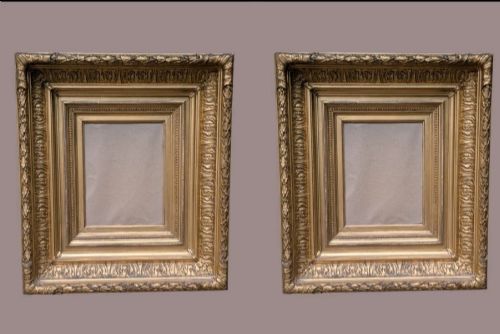
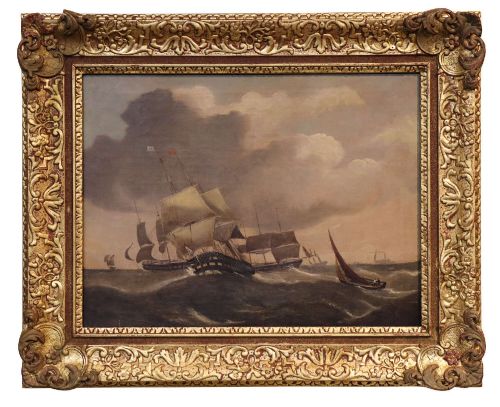
Forms range from empty picture frames and linen slips to marine oil paintings, floral still lifes, and photographic portraits. The common thread is the combination of substantial weight and gold leaf or gesso finishing.
How they were made
The construction of a heavy gilt picture relies on a solid wooden carcass built to support deep mouldings and substantial glass or canvas. Artisans applied layers of gesso to the timber foundation to build up intricate relief ornamentation and decorative motifs.
Makers applied gold leaf or metallic finishes over the prepared ground to achieve a brilliant, reflective surface. Canvases received oil paint applications, whilst frames utilised specialised joinery to maintain structural integrity under heavy loads.
A solitary nineteenth-century sand picture proves that heavy frames occasionally housed landscapes constructed entirely from tinted grains.
What varies in quality
Quality in a heavy gilt picture rests upon the depth of the moulding and the crispness of the gesso relief work. Superior pieces display hand-carved details and well-preserved leaf layers rather than flat, uniform modern coatings.
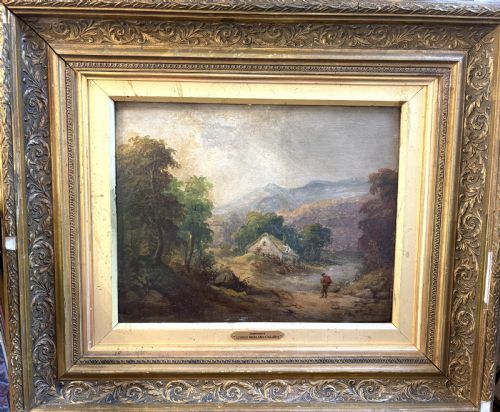
The integration between the artwork and its housing dictates the overall cohesion of the piece. Deeper frames with linen slips and original oil paintings demonstrate greater craftsmanship than later assembled combinations.
The Heavy Gilt Picture Glossary
- Gesso
- A plaster-like mixture applied to wood frames as a base for gilding. It allows artisans to carve intricate relief patterns before applying gold leaf.
- Giltwood
- Timber that has been coated with gold leaf or powder. This material gives frames and mirrors their characteristic metallic radiance.
- Linen slip
- A fabric-covered inset placed between an oil painting and its outer frame. It creates a visual buffer that enhances the depth of the display.
- Overmantle
- A large mirror or painting designed specifically to hang above a fireplace mantel. These pieces frequently feature heavy frames to anchor grand interior spaces.
- Oil on canvas
- Pigment mixed with drying oil applied to a stretched canvas support. This technique defined traditional painting across the nineteenth century.
Heavy Gilt Picture: Frequently Asked Questions
How do I hang a heavy gilt picture?
These substantial objects require secure wall anchors fixed directly into structural studs or masonry. Professional hanging hardware distributes the considerable weight safely across the wall.
Position the centre of the piece at eye level to balance its visual mass within the room. Ensure the hanging wire and D-rings match the heavy construction of the frame.
What periods do these frames come from?
The selection spans from seventeenth-century styles through to nineteenth-century Victorian production. Many pieces reflect revival aesthetics including Rococo and Dutch Golden Age influences.
Nineteenth-century examples dominate the offerings, showcasing deep profiles and elaborate gesso mouldings. Earlier pieces display hand-carved timber foundations under historic gilding layers.
Can I use these frames for my own art?
Empty frames and linen slips provide a ready-made housing for contemporary or antique canvases of matching dimensions. Ensure the rabbet depth accommodates your stretcher bars securely.
Matching a historic frame to a new artwork creates a striking contrast between old and new. Professional framers can adjust internal spacers if minor fitting is required.
How should I clean a gilt surface?
Dust the ornate mouldings gently with a soft, dry brush to prevent accumulation in the carved recesses. Avoid commercial cleaning liquids which can strip fragile gold leaf layers.
Keep these pieces away from direct sunlight and excessive moisture to protect the underlying gesso and wood. Professional conservation is recommended for any flaking or structural instability.