



Heavy Gilt Frame Artwork
Heavy gilt frame artwork brings together centuries of oil paintings and deep wooden surrounds designed to command a room.
Heavy Gilt Frame Artwork
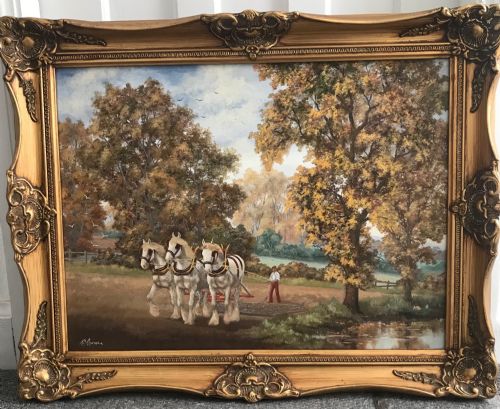
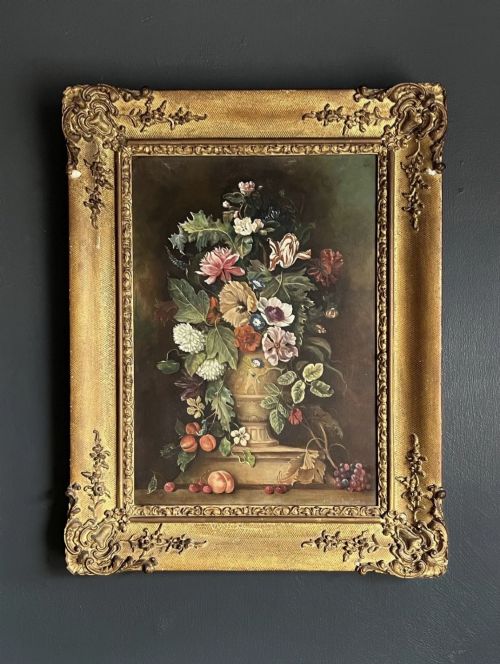
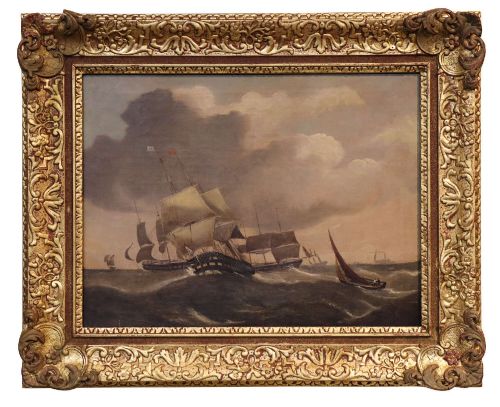
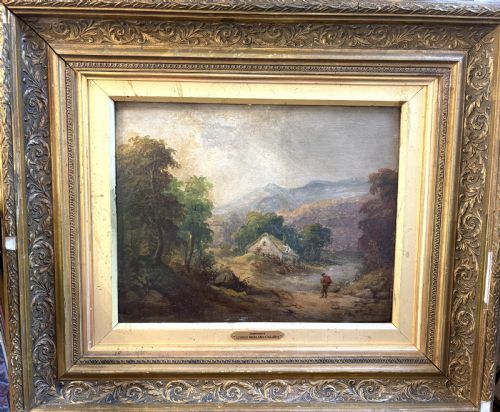
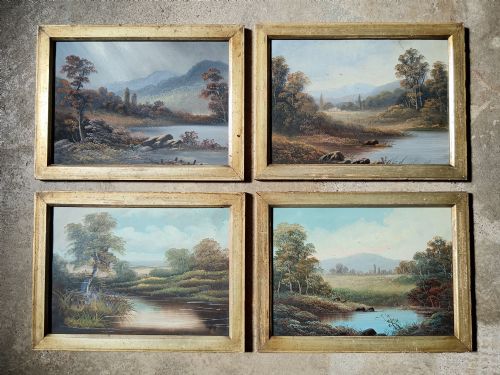
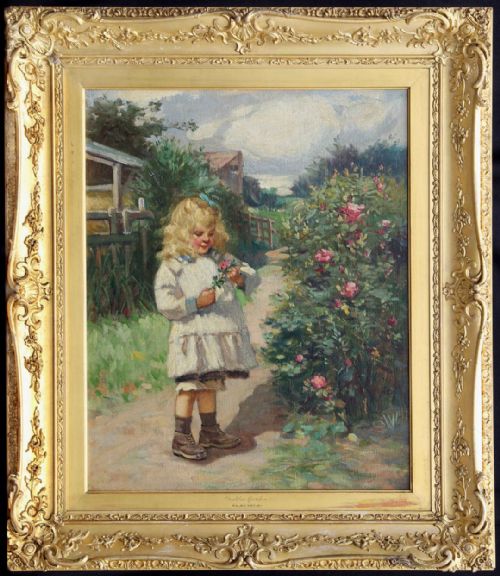
When you search for heavy gilt frame artwork, you are looking at oil paintings on canvas and board housed within substantial moulded surrounds. These pieces span periods from the Victorian era through the mid-twentieth century, featuring marine scenes, landscapes, and cityscapes.
The most common pieces on this page are nineteenth-century oil paintings and early twentieth-century works framed in deep wood and gesso. You will encounter subjects ranging from shire horses to Dutch flower studies, all secured within prominent gilded borders.
How they were made
Makers constructed the surrounds using wood and gesso, applying gold leaf or gilt finishes over moulded ornamentation to achieve a substantial weight and bright surface. Painters applied oil paint onto canvas or board, occasionally utilising linen slips within the frames to separate the image from the outer moulding.
Artisans carved and built these frames to project from the wall, creating deep profiles that matched the grand scale of the oil paintings they held. The combination of dense timber, layered gesso, and hand-applied gilding ensured the frames endured alongside the canvases for generations.
Among the landscapes and marine views, a sand picture from the mid-nineteenth century offers a wonderfully textured surprise.
What varies in quality
Quality rests in the depth of the frame's moulding and the crispness of the gesso work, where finer examples display sharp relief and heavier timber construction. The skill of the oil painting itself, from detailed equine portraits to loose Barbizon-influenced brushwork, dictates the standing of the piece.
The harmony between the canvas and its surround also influences the piece, as original pairings maintain a more cohesive presence than later combinations. Deeper frames with richer gilding command greater visual weight on the wall.
George Morland·Andre de Moller·W E Millner·Alexandre Decamps·Ralph Hedley RBA
The Heavy Gilt Frame Artwork Glossary
- Gesso
- A plaster-like mixture applied to wood frames to create a smooth surface for gilding. Artisans carved intricate patterns into this layer before applying gold leaf.
- Giltwood
- Timber that has been coated with gold leaf or a gold-coloured finish. This material forms the heavy surrounds seen on many traditional oil paintings.
- Linen slip
- A fabric-covered inner border placed between the oil painting and the main outer frame. It creates a neutral buffer that draws the eye toward the canvas.
- Oil on canvas
- Pigment mixed with drying oil applied to a stretched woven fabric support. This combination dominates the traditional paintings found in heavy frames.
Heavy Gilt Frame Artwork: Frequently Asked Questions
How do I hang heavy gilt frame artwork?
These pieces require robust wall fixings due to the dense wood and gesso construction of the surrounds. Secure your fixings directly into wall studs or use heavy-duty wall plugs to support the substantial weight safely.
Position the artwork at eye level where adequate lighting can catch the gilded surfaces and bring out the details of the oil painting.
Are these oil paintings original?
The listings on this page comprise original oil paintings on canvas and board, created by named artists and regional schools. Each piece represents a unique hand-painted work rather than a modern reproduction.
Examining the canvas texture, paint application, and the back of the stretcher bars helps confirm the authenticity of these nineteenth and twentieth-century works.
How do I clean a gilt frame?
Dust the ornate mouldings gently with a soft, dry brush to remove surface particles without disturbing the delicate gold leaf. Avoid using water, liquid cleaners, or chemical solvents, as moisture can damage old gesso and timber.
Regular, careful dusting preserves the metallic finish and prevents grime from settling into the deep recesses of the carving.
How do I date these frames?
Look at the construction methods on the reverse of the frame, including corner joints, timber types, and the composition of the gesso layer. Victorian and early twentieth-century frames often feature distinct moulding profiles and ageing patterns that mark their period.
The style of the oil painting contained within usually corresponds to the era of the frame itself.