

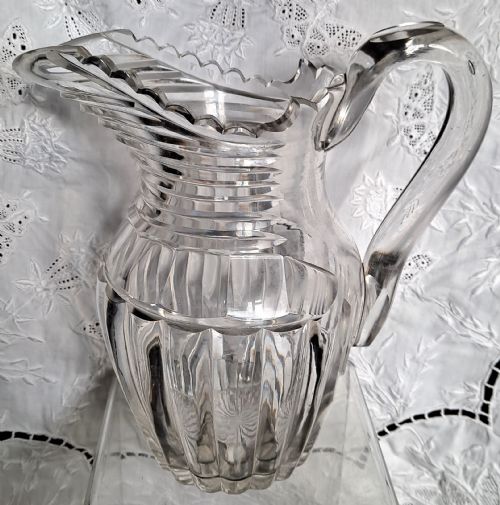
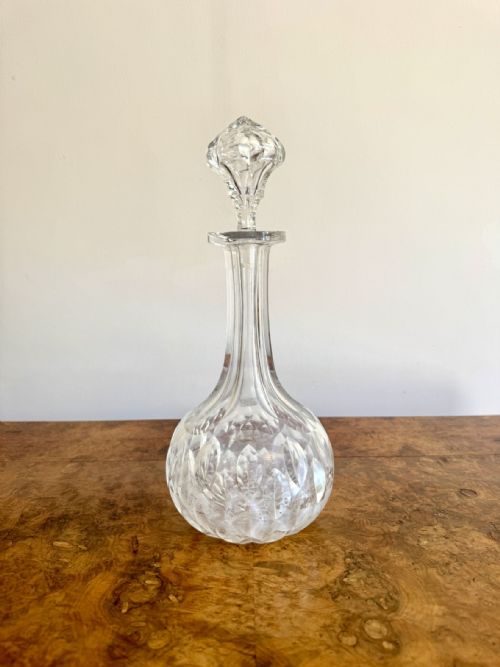


Heavy Crystal Glass Decanter
These heavy crystal glass decanter pieces bring tactile weight and brilliant light reflection to any table, spanning periods from Georgian to Mid-20th Century.
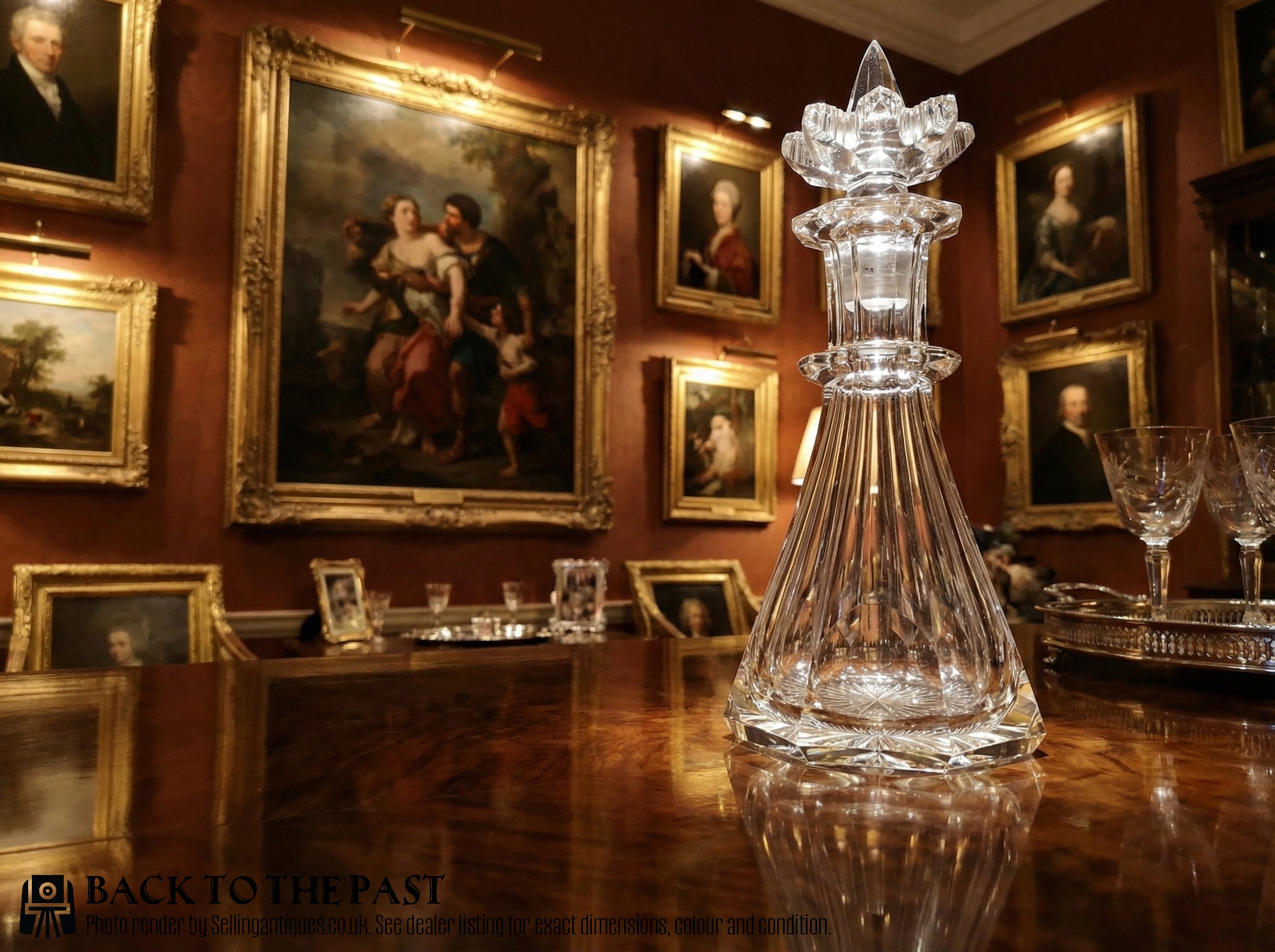
Heavy Crystal Glass Decanter
When you search for a heavy crystal glass decanter, you are looking at substantial vessels designed for holding spirits, wine, and water across several distinct historical eras. The selection on this page leans heavily towards Edwardian and Victorian examples, alongside earlier Regency and Georgian pieces.
Forms include traditional spirit decanters, three-ring carafes, ship's decanters, and associated water jugs or pitchers. Most items appear in cut glass, lead crystal, or cut crystal, occasionally fitted with silver collars or silver gilt mounts.
The range demonstrates how serving vessels evolved from the early nineteenth century into the twentieth century while retaining substantial glass weight. Buyers encounter everything from single cabinet specimens to matched pairs originating from English workshops.
How they were made
Makers utilised lead glass and crystal blanks, shaped by blowing into moulds or free-blowing before cooling. The substantial weight characteristic of these vessels derives from high lead content in the metal.
Surface decoration relies on wheel-cutting techniques to create facets, flutes, and patterns that catch the light. Certain specimens integrate applied silver collars or silver gilt mounts attached directly to the glass neck.
Heavy Crystal Glass Decanter Retail Price Guide 2026
Typical asking prices for heavy crystal glass decanter among the pieces listed under this phrase on Sellingantiques today, from the lower quarter to the upper quarter. They describe what is for sale here now, not the wider market.
Napoleon brandy was once decanted with such seriousness that it required gilt silver armour just to look important on the sideboard.
What varies in quality
Quality in a heavy crystal glass decanter rests upon the crispness of the wheel-cut facets and the optical clarity of the metal itself. Superior examples display deep, sharp cutting that remains distinct to the touch, whereas lesser pieces show softer, shallower incisions.
The weight and balance of the vessel, the inclusion of matching stoppers, and the finesse of any silver or silver gilt mounts further separate standard production from exceptional work.
Freeman and Son Ltd
The Heavy Crystal Glass Decanter Glossary
- Cut Glass
- Glass decorated by holding the vessel against a rotating abrasive wheel to carve patterns into the surface. This technique produces distinct facets that define much of the decorative work on nineteenth-century vessels.
- Lead Crystal
- Glass containing a significant proportion of lead oxide, which increases the weight, refractive index, and working time for cutting. It forms the heavy material foundation for the finest decanters.
- Ship's Decanter
- A form with a broad, flat base and a conical body designed to prevent tipping aboard a rolling vessel at sea. This practical shape ensures stability during transport and serving.
- Three Ring Carafe
- A vessel featuring three distinct raised horizontal glass rings around the neck, often originating from the Georgian or Regency periods. These rings assist with grip when pouring from a heavy container.
- Silver Gilt
- Silver that has been coated with a thin layer of gold, providing a rich metallic contrast against clear crystal. It appears on select specialised spirit decanters.
Heavy Crystal Glass Decanter: Frequently Asked Questions
What is a ship's decanter?
A ship's decanter is a specific form featuring a wide, heavy base and a tapering body designed to remain stable on a moving table. The low centre of gravity prevents the vessel from toppling.
These pieces were originally utilised at sea during the Georgian and Regency periods, though their practical stability made them popular ashore as well.
How do I date a decanter?
Dating relies on examining the overall silhouette, the style of the cutting, and the shape of the mouth or neck rings. Georgian and Regency examples often feature three-ring necks and hand-polished pontil marks.
Victorian and Edwardian versions tend to display heavier, more complex overall cutting patterns and varying stopper shapes that reflect the manufacturing standards of those decades.
Are these decanters safe for wine?
These vessels were historically manufactured for holding and serving wines and spirits over long periods. Many collectors continue to utilise them for contemporary dining.
Careful hand washing with warm water preserves both the glass clarity and any fitted silver collars without risking thermal shock or mechanical damage.
Why are some decanters heavier?
The weight of a decanter is determined by the thickness of the glass wall and the amount of lead oxide mixed into the batch during production. High lead content creates denser metal.
This heavier composition allows for deeper wheel-cutting without compromising the structural integrity of the body or the neck.