

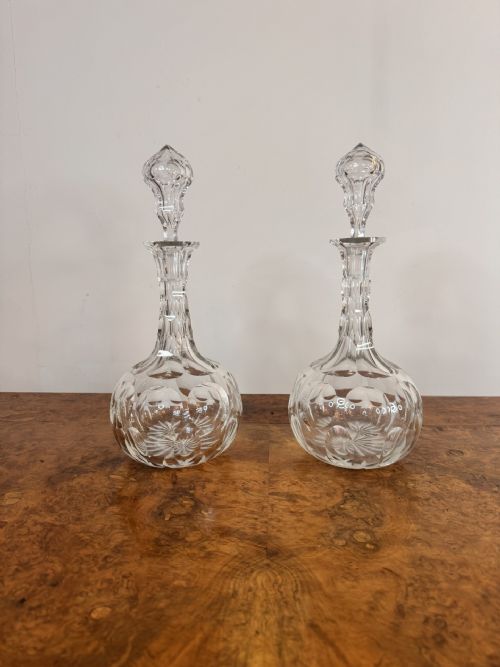
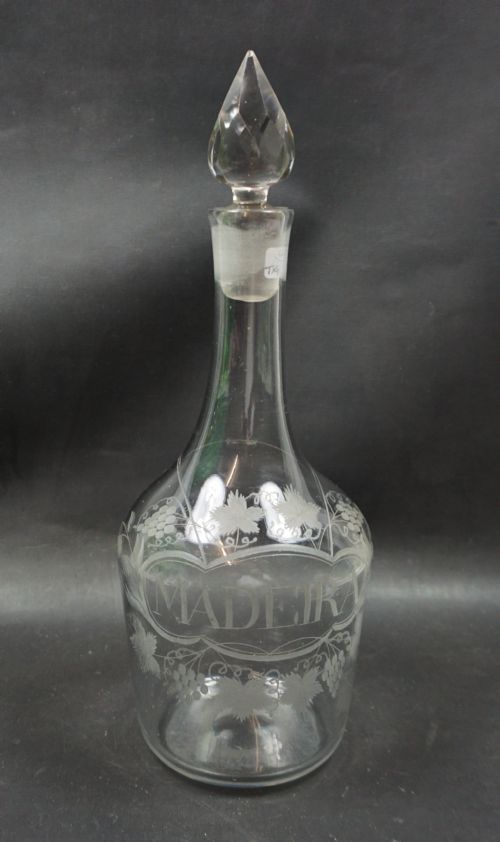


Faceted Stopper Crystal Carafe
These faceted stopper crystal carafe pieces are handsome glass vessels designed to hold wine or spirits with elegance.
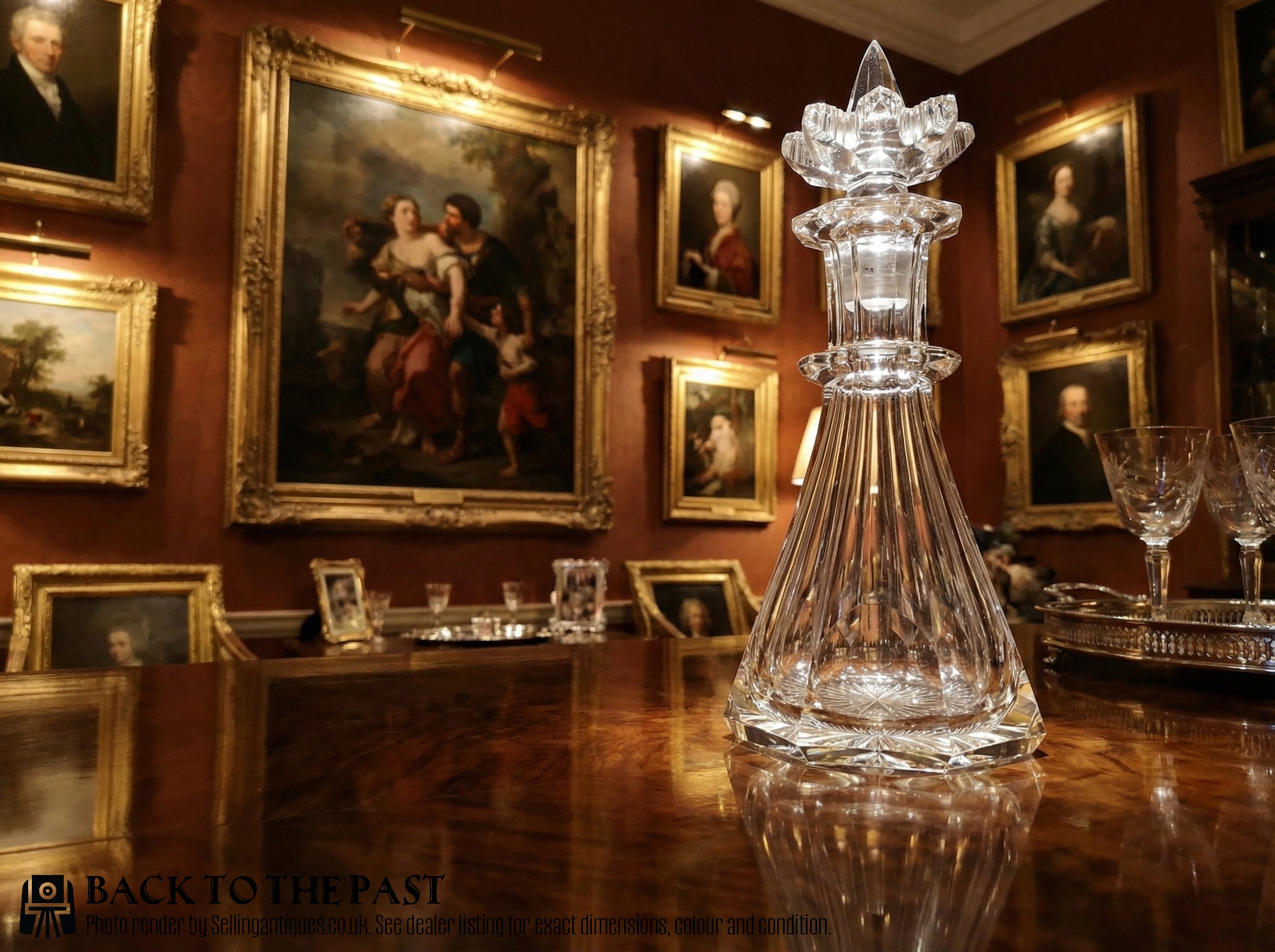
Faceted Stopper Crystal Carafe
A faceted stopper crystal carafe brings together heavy glass bodies and precision-cut closures from periods spanning the eighteenth century through to the art deco era. You will frequently encounter Victorian and Edwardian examples on this page, often shaped as traditional decanters or ewers.
The forms range from large shoulder decanters and bell-shaped vessels to matched pairs and sets of four. Many incorporate silver collars, engraved wine labels, or sterling silver locking mechanisms alongside their signature stoppers.
Materials and Construction
Makers utilised heavy lead crystal and clear cut glass, shaping the vessels through traditional blowing and wheel-cutting techniques to create sharp refractive facets. The stoppers were individually ground to fit each specific neck, ensuring a tight seal for the contents.
Metal elements such as silver plate and hallmarked sterling silver collars were frequently added to secure the neck or mount locking hardware.
Faceted Stopper Crystal Carafe Retail Price Guide 2026
Typical asking prices for faceted stopper crystal carafe among the pieces listed under this phrase on Sellingantiques today, from the lower quarter to the upper quarter. They describe what is for sale here now, not the wider market.
Some Edwardian spirits bottles came with locking silver collars to keep the household butler away from the scotch.
Quality and Craftsmanship
The distinction between average and exceptional pieces lies in the crispness of the glass cutting and the weight of the metal components. Deeper, sharper facets catch the light more effectively, while heavier crystal bodies provide a balanced, substantial feel in the hand.
The alignment of the stopper to the body and the fineness of any engraved decoration further separate standard production items from superior works by makers such as Hukin and Heath.
Hukin and Heath
The Faceted Stopper Crystal Carafe Glossary
- Lead crystal
- Glass containing lead oxide, which increases the weight, brilliance, and clarity of the vessel. This material allows for deeper and sharper cutting.
- Faceted stopper
- A glass closure cut with multiple flat planes that reflect light. Each stopper is ground by hand to match the neck of its specific decanter.
- Shoulder decanter
- A vessel form characterised by a broad, sloping shoulder tapering down to a flat base. This shape provides stability and ample surface for engraving.
- Sterling silver collar
- A band of high-purity silver fitted around the neck of the glass body. It often bears hallmarks indicating the assay office and year of manufacture.
- Ewer
- A large jug with a wide spout and a curved handle, used for serving liquids. In glassware, it shares many cutting styles with standard decanters.
Faceted Stopper Crystal Carafe: Frequently Asked Questions
How do I date a crystal decanter?
Dating relies on observing the form, the cutting style, and any accompanying metal mounts. Victorian and Edwardian pieces often display heavier wheel-cutting and distinct neck rings.
Earlier eighteenth-century examples tend to feature broader shoulder shapes and hand-engraved labels. Hallmarks on silver collars provide precise manufacturing years where present.
Are these decanters safe for daily use?
Most of these vessels can hold wine or spirits safely, provided they are washed by hand in lukewarm water. Avoid sudden temperature changes to protect the heavy glass.
Silver collars and mounted locks require careful polishing away from the glass surface to prevent chemical residue.
Why do stoppers sometimes feel loose?
Stoppers were individually ground to fit the specific neck of each decanter during production. Interchangeable stoppers often result in a loose fit or slight wobble.
Matching the original grind marks helps identify the correct stopper for a particular vessel.
What is the difference between glass and crystal?
Crystal contains lead oxide, which adds significant weight and refractive power compared to standard soda-lime glass. This heavier material allows artisans to cut sharper and deeper geometric patterns.
When gently struck, quality lead crystal produces a clear, resonant ring.