


Heavy Carved Oak Seating
Heavy carved oak seating delivers substantial timber construction and deep relief work, offering enduring utility for traditional interiors.
Heavy Carved Oak Seating
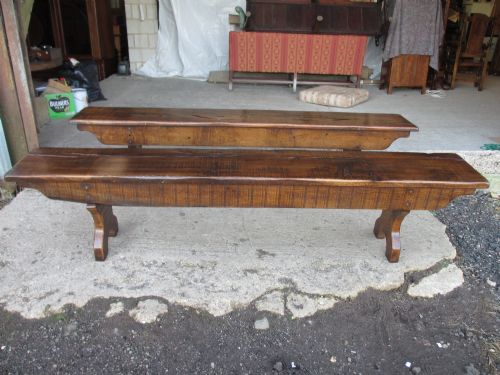
Heavy carved oak seating encompasses substantial items such as wainscot chairs, settles, benches, and dining chairs originating from periods including the seventeenth century, Victorian era, and Edwardian times. These pieces draw heavily on historical revivals, featuring distinct stylistic expressions from Gothic to Jacobean influences.
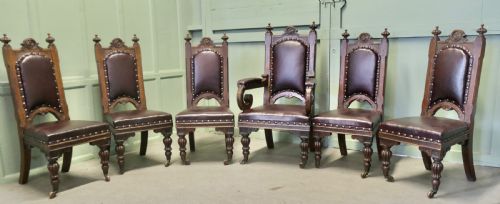
The selections available lean heavily towards Victorian and Edwardian interpretations alongside earlier seventeenth-century forms, utilising English oak enriched with brass, iron, leather, fabric, and velvet upholstery. Buyers encounter diverse seating formats ranging from single throne armchairs and library chairs to large matching sets of dining chairs and hall benches.
Materials and construction
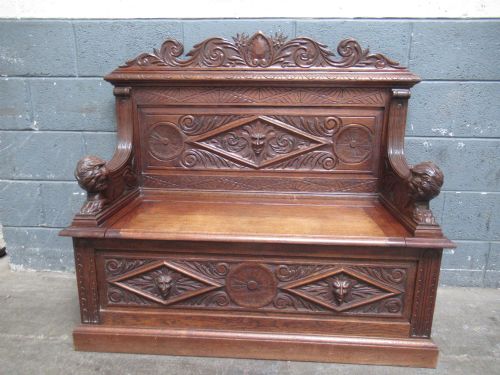
Construction relies primarily on sturdy English oak, selected for its density and durability, which supports intricate hand-carved relief work such as hound motifs and geometric patterns. Metal elements like brass and iron often appear in structural fastenings or decorative hardware.
Upholstery materials including leather, velvet, and standard fabric integrate into seats and backs where specified, fixed using traditional methods to complement the heavy wooden frames.
Distinctions in quality
Depth and crispness of the hand-carving separate standard production from exceptional examples, with master carvers delivering sharper detailing in animal figures, foliage, and strapwork. The choice of timber grain and the integrity of historic joinery also define the upper tier of these pieces.
Proportion and structural mass dictate visual presence, where pieces retaining heavy original timbers and unified period upholstery schemes command stronger architectural character than later assembled or altered examples.
The Heavy Carved Oak Seating Glossary
- Wainscot chair
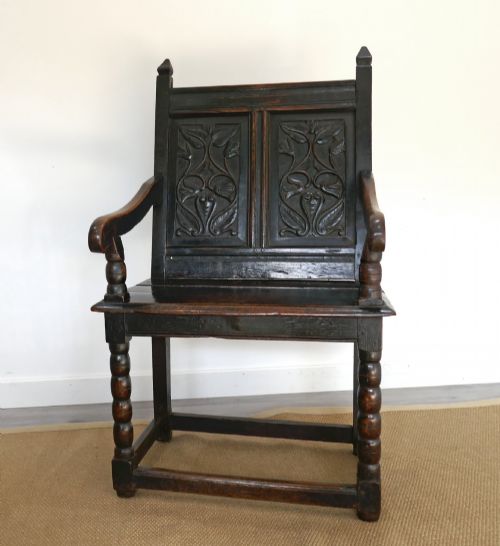
- A solid wooden armchair constructed with panelled backs, popular in the seventeenth century and noted for heavy oak framing.
- Settle
- A wooden bench featuring a high back to block draughts and often incorporating a box seat storage compartment underneath.
- Gothic Revival
- An architectural and decorative style popular during the nineteenth century that mimics medieval ecclesiastical design through pointed arches and tracery.
- Jacobean Revival
- A nineteenth-century style replicating the heavy, geometric carved ornament typical of early seventeenth-century English furniture.
- Trestle ends
- Support structures connected by a horizontal beam, commonly seen on benches and long tables to distribute weight evenly.
Heavy Carved Oak Seating: Frequently Asked Questions
Where should I place a heavy oak bench?
These benches suit large hallways, entrance lobbies, or dining rooms where their substantial physical presence anchors the surrounding interior space.
Ensure the floor surface supports significant weight, as dense oak frames combined with high backs create heavy items that require adequate clearance.
How do I care for antique oak furniture?
Maintain stable indoor humidity levels and keep wooden surfaces away from direct heat sources to prevent timber splitting or joint separation.
Apply traditional wax sparingly and buff gently with a soft cloth to preserve the natural finish without building up heavy chemical layers.
What is a cockfighting chair?
A specialised chair featuring a narrow seat and an adjustable armrest pad designed originally for spectators viewing staged events.
These pieces typically date to the nineteenth century and incorporate compact seating footprints intended for specific viewing postures.