

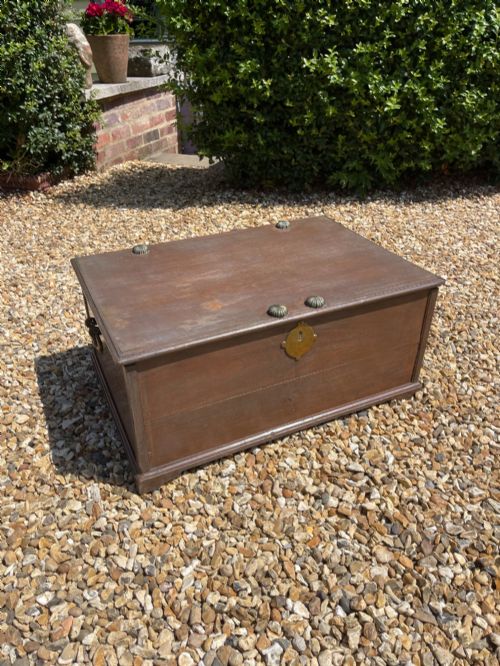
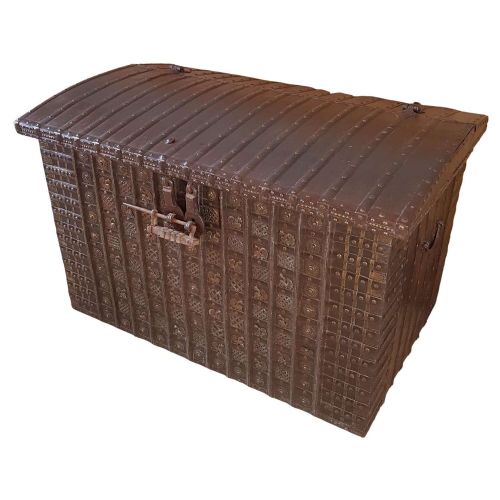


Heavy Brass Trunk
A heavy brass trunk brings robust travel history into a room, offering sturdy storage fashioned from timber and metal.
Heavy Brass Trunk
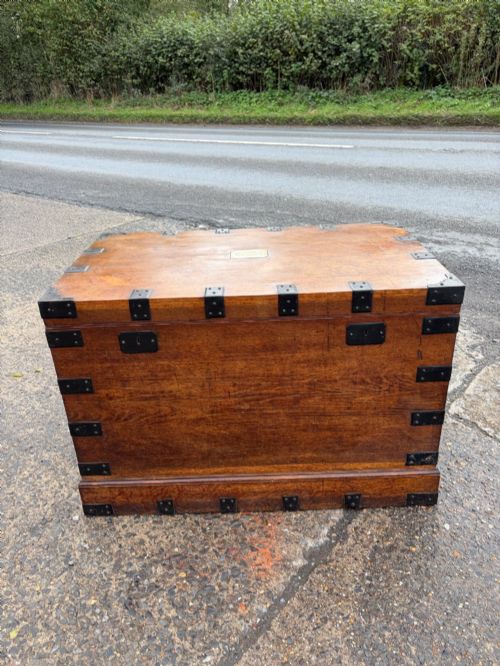
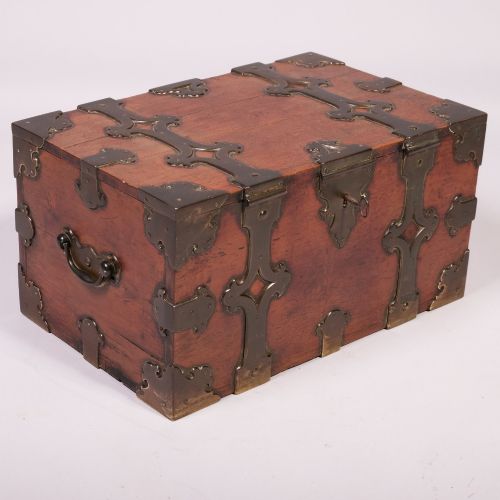
A heavy brass trunk comprises substantial storage chests and boxes constructed during the eighteenth and nineteenth centuries, often associated with colonial travel, military campaigns, or domestic utility. Buyers searching for a heavy brass trunk encounter robust forms ranging from campaign chests to dowry chests and silver boxes.
The materials span teak, oak, camphor wood, and hardwood, reinforced with heavy brass, iron, or metal bands, studs, and mounts. Origins stretch from Britain to India, Africa, and the Middle East, reflecting diverse vernacular traditions tied to transport and security.
Domestic examples like workman's tool chests and country house silver boxes appear alongside Anglo-Indian, Anglo-Chinese, and Rajasthani styles. These pieces served practical roles in transit and safekeeping before finding places in modern interiors.
How they were made
Makers constructed these trunks using dense timbers such as teak, oak, and camphor wood, selected for their durability and resistance to insects or moisture during long journeys. Carpenters joined panels tightly to withstand the rigours of carriage and sea transport.
Heavy brass straps, corners, and iron bands were affixed with numerous studs to reinforce the structural frame at vulnerable impact points. Flush-fitting brass drop handles and secure locks were integrated to facilitate stacking and safe transit.
Heavy Brass Trunk Retail Price Guide 2026
Typical asking prices for heavy brass trunk among the pieces listed under this phrase on Sellingantiques today, from the lower quarter to the upper quarter. They describe what is for sale here now, not the wider market.
Listings feature eighteenth and nineteenth-century pieces incorporating oak, teak, camphor wood, brass, and iron.
What varies in quality
The grade of timber and the substantial nature of the brass or iron mountings distinguish utilitarian boxes from finer colonial and campaign pieces. Heavier gauge metalwork and more complex locking mechanisms indicate higher production standards.
Original mounts, integrated locks with functioning keys, and well-preserved timber surfaces separate untouched examples from heavily restored or altered pieces.
The Heavy Brass Trunk Glossary
- Campaign chest
- A portable trunk or chest made in sections designed for easy dismantling and transport by military officers during the eighteenth and nineteenth centuries.
- Camphor wood
- An aromatic timber frequently utilised for nineteenth-century trunks due to its natural insect-repellent properties.
- Damchiya
- A traditional dowry chest originating from Rajasthan, typically featuring intricate wooden framing and iron banding.
- Coffer
- A sturdy wooden box used for storing valuables, traditionally reinforced with metal bands or straps.
- Silver box
- A secure chest lined or fitted specifically for the storage of domestic silver and plate.
Heavy Brass Trunk: Frequently Asked Questions
What is a heavy brass trunk?
A heavy brass trunk is a sturdy storage chest built from timbers like teak or camphor wood and reinforced with brass mounts and bands.
These pieces were originally designed for travel, military campaigns, or secure domestic storage during the eighteenth and nineteenth centuries.
How were these trunks used?
Owners utilised them to transport personal belongings, uniforms, and valuables across land and sea during long journeys.
In domestic settings, they functioned as secure storage for silver, tools, or household goods.
How do I date a trunk?
Dating relies on observing construction methods, timber types, and the style of the brass hardware and locks.
Eighteenth-century examples often display simpler joinery and heavier hand-beaten mounts, while Victorian pieces incorporate standardised brass banding.
Where were these pieces made?
Trunks originate from various regions including Britain, India, Africa, and the Middle East, depending on the colonial trade and local craftsmanship.
Styles such as Anglo-Indian or Rajasthani reflect specific regional traditions of metalwork and carpentry.
How do I live with a heavy brass trunk?
These trunks serve well as coffee tables, end-of-bed storage, or statement placement pieces in living areas.
Their robust construction allows them to handle everyday placement of objects while providing concealed storage.