

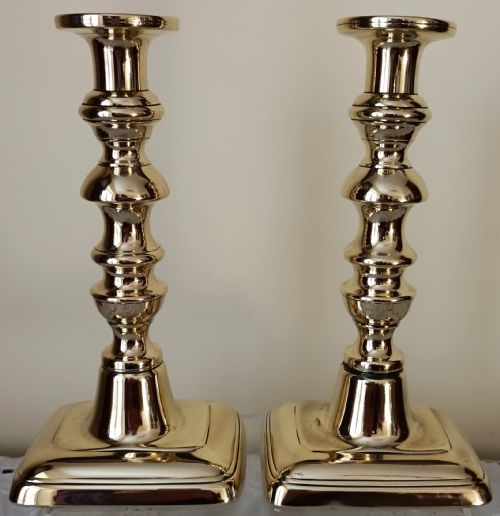
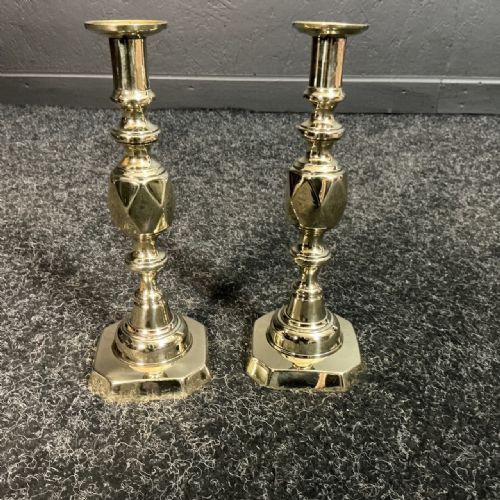


Heavy Brass Candlestick Pair
These heavy brass candlestick pair pieces deliver solid presence and metal weight, grounding a room with traditional illumination.
Heavy Brass Candlestick Pair
A heavy brass candlestick pair comprises matched metal supports designed to hold taper candles securely on a surface. These pieces emerge in domestic, church, and formal settings across several centuries, providing substantial weight and structural presence.
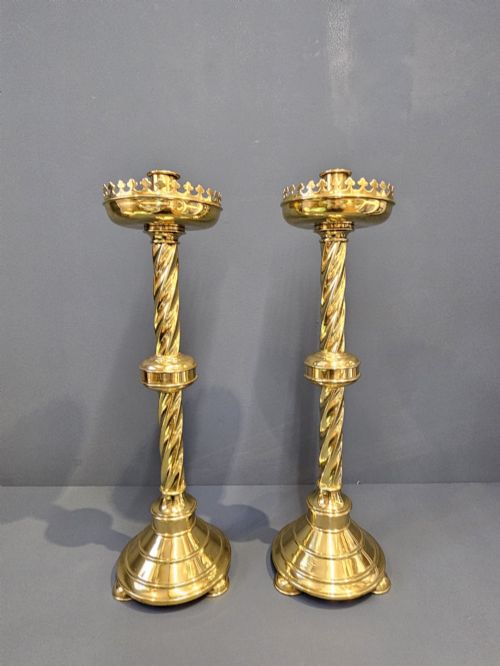
Victorian and nineteenth-century examples dominate the available selection, often taking tall forms or incorporating distinctive turnings. Church and altar variations also appear frequently alongside domestic Georgian and Regency interpretations.
Certain examples incorporate stylistic nods to earlier eras, including seventeenth-century revival designs and Gothic elements. Occasional table lamps demonstrate how earlier pairs adapt to modern lighting needs.
Distinctions in Quality
The degree of heft and the integrity of the casting separate standard production from superior examples. Thick-walled metal provides a satisfying balance in the hand and a stable footprint on the table.
Listings span multiple periods from the eighteenth century through the Edwardian era, predominantly utilising cast brass and gilt brass materials.
J.T. & Co·James Clews·T Thomason & Co
The Heavy Brass Candlestick Pair Glossary
- Pricket
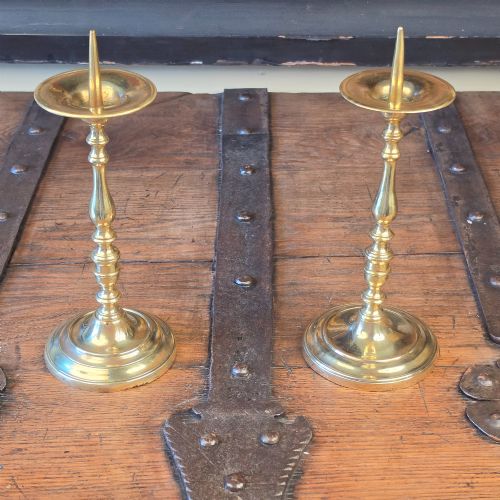
- A candlestick featuring a sharp metal spike at the centre of the drip pan to impale the wax candle. This form is common in church and ecclesiastical lighting.
- Heemskirk
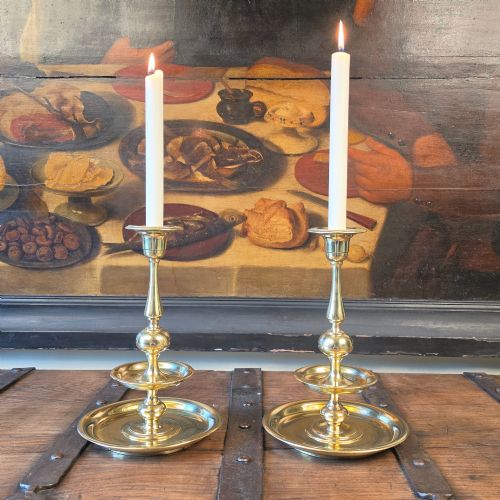
- A traditional style of heavy brass candlestick characterised by multiple drip pans and a central knop, originating in the Netherlands. These designs continued to influence later English foundry work.
- Beehive
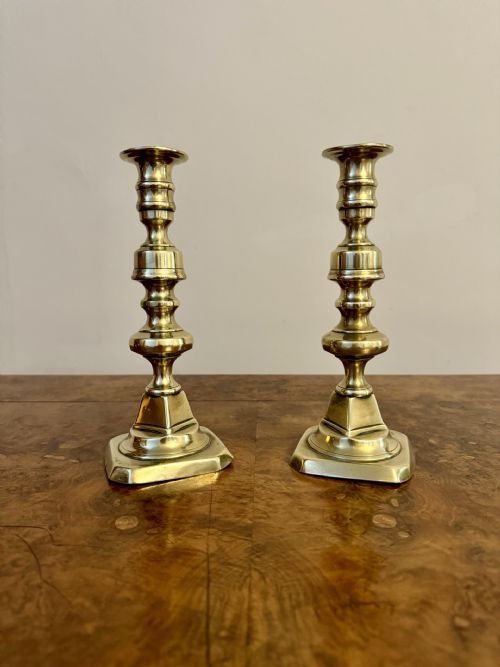
- A descriptive term for candlestick stems featuring rounded, concentric annular rings resembling a traditional skep. This turnery shape provides a strong visual profile.
- Gothic Revival
- An architectural and decorative style drawing on medieval forms, frequently seen in ecclesiastical brass altar pieces with pointed arches and heavy bases.
- Engine turned
- A mechanical decoration technique producing intricate geometric patterns cut directly into the metal surface using a specialised lathe.
Heavy Brass Candlestick Pair: Frequently Asked Questions
What distinguishes church candlesticks from domestic ones?
Church and ecclesiastical candlesticks generally stand taller and heavier than domestic versions, often featuring pricket spikes for large altar candles rather than sockets.
They frequently display Gothic Revival styling or religious motifs that suit large ceremonial spaces rather than ordinary tabletops.
How do I identify a Victorian pair?
Victorian examples often display robust cast brass construction with generous height and familiar turnery patterns like the king of diamonds or beehive shapes.
Foundry marks and registration details from the nineteenth century frequently assist in confirming this period of manufacture.
Can these candlesticks be converted into lamps?
Many pairs receive electrical fittings to function as table lamps while retaining their original heavy brass bases and proportions.
This modification allows traditional metalwork to integrate safely with modern interior lighting schemes.
What causes variations in metal colour?
Brass naturally develops a darker patina over decades of exposure to air and handling, shifting from bright yellow to deep ochre tones.
Polishing habits vary among previous owners, leaving some examples with bright finishes and others with undisturbed historical patination.