




Hearth Log Storage
These hearth log storage pieces sit beside the fireplace to keep fuel dry and tidy, bringing solid period craft into daily use.
Hearth Log Storage
Hearth log storage comprises heavy metal buckets, fitted boxes, and woven baskets designed to hold firewood and coal beside the fireplace. You will find items originating across Britain, France, Scandinavia, and Belgium, spanning the nineteenth and early twentieth centuries.
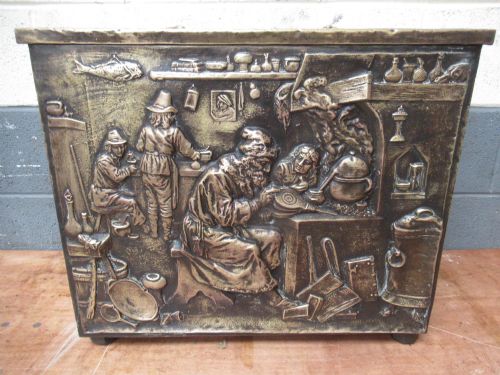
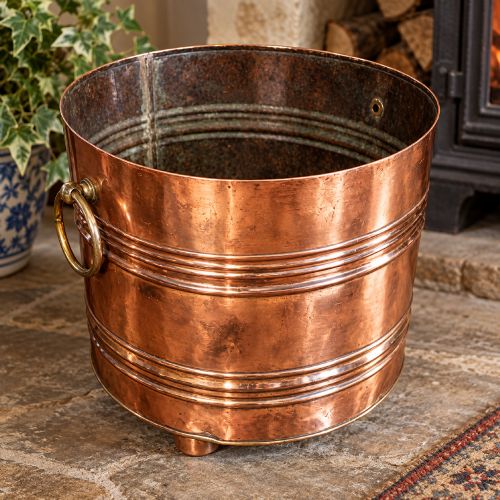
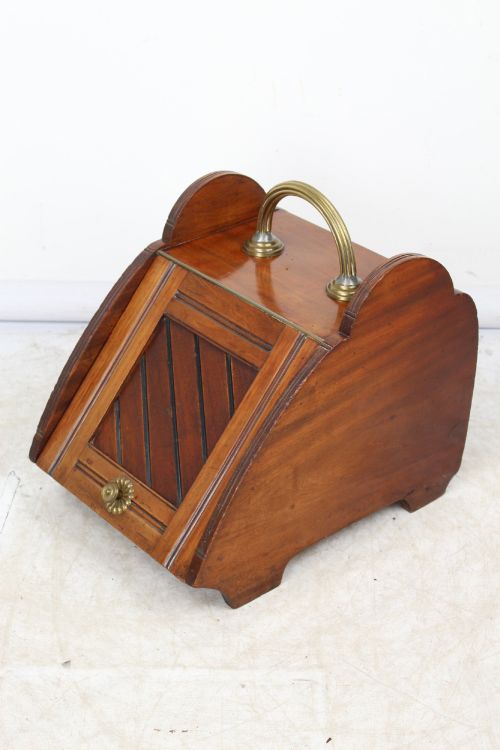
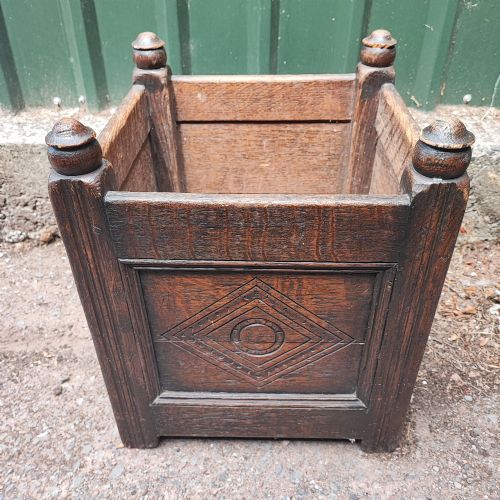
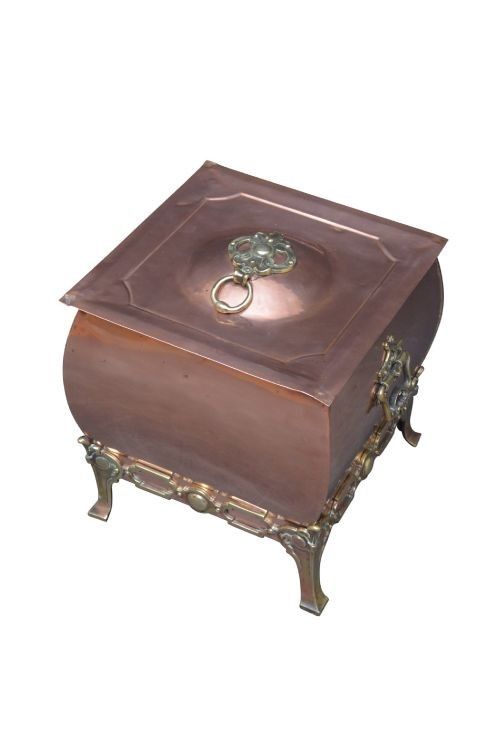
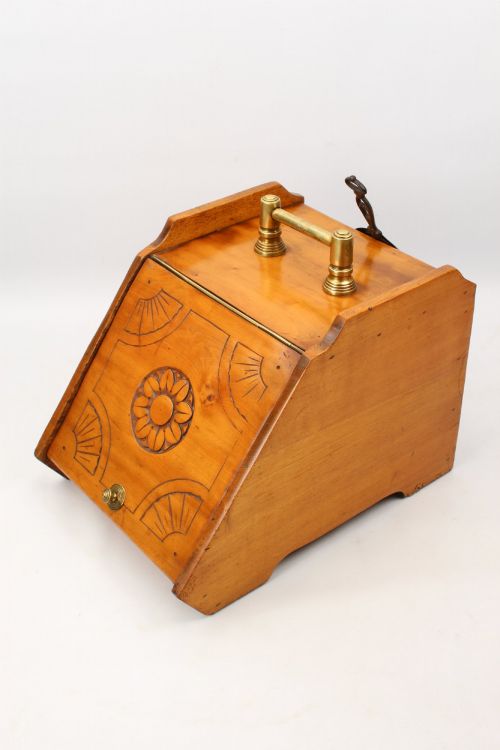
The most common forms on this page are metal scuttles and lidded bins made from brass and copper, often paired with iron frames or handles. Wooden boxes in oak, pine, and walnut appear frequently alongside woven pine and cane baskets.
Period pieces carry designations from the Victorian and Edwardian eras, with occasional Georgian and Arts and Crafts examples. These containers served functional roles in domestic hearths before transitioning into decorative room accessories.
Materials and Construction
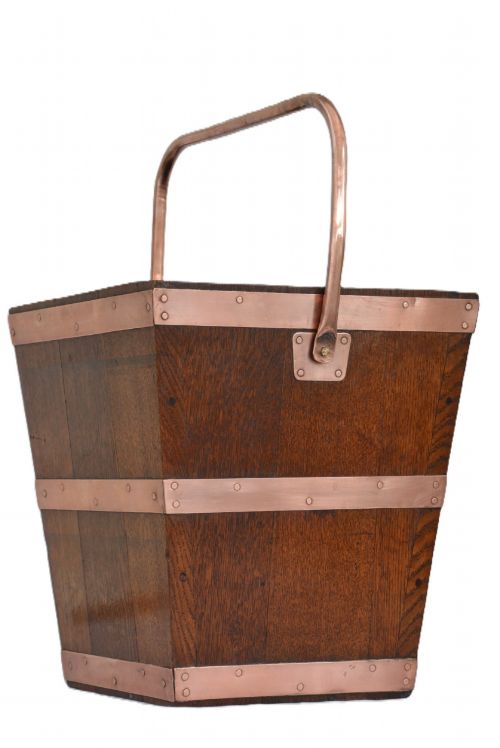
Makers utilised sheet brass and beaten copper for metal bins, joining panels with riveted seams and mounting them on cast iron frames or handles. Wooden examples often relied on traditional coopered stave construction bound with iron bands or fitted with brass mounts.
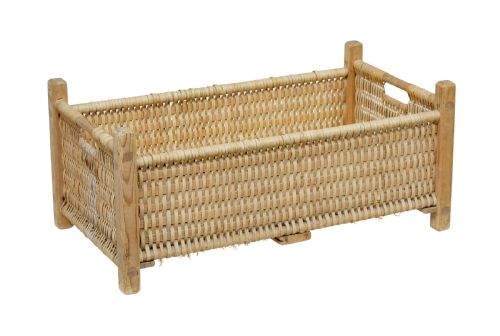
Woven items employed pine, cane, and peeled osier to create sturdy baskets capable of carrying heavy loads of wood or peat. Blacksmiths forged wrought iron carriers by hand, hammering heated metal into rigid shapes for inglenook use.
Listings feature items in brass, copper, oak, pine, walnut, iron, and cane, spanning the Georgian, Victorian, and Arts and Crafts periods.
Determining Quality
The standard of a piece depends upon the integrity of its construction and the weight of its materials. Heavy-gauge metals and tightly coopered solid woods hold their structure better under the daily strain of heavy timber.
Subtlety of detail separates ordinary containers from superior examples, such as hand-hammered surface textures on copper bins or inlaid veneers on walnut and rosewood boxes. Original fittings like cast brass handles and iron feet preserve the historical character of the object.
William Soutter And Sons
The Hearth Log Storage Glossary
- Coopered
- A method of construction where curved wooden staves are joined side by side and held tight with metal hoops, much like a barrel. This technique kept wood stable near fluctuating hearth temperatures.
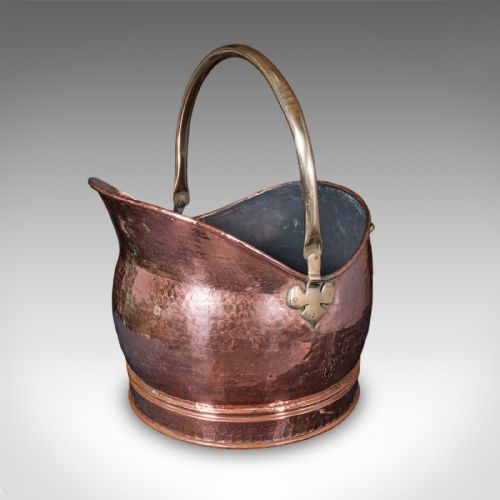
- Helmet scuttle
- A coal container featuring a flared mouth and a hinged handle, shaped broadly like a classical helmet for controlled pouring. They gained wide popularity during the Victorian period.
- Inglenook
- A large fireplace recess designed to seat people warm of the draft, requiring robust fuel carriers built by blacksmiths. These heavy iron pieces were meant to endure harsh conditions.
- Metamorphic
- A descriptive term for furniture that transforms into another form, such as a coal box that opens into a seat or tiered storage. These clever designs saved space in compact rooms.
Hearth Log Storage: Frequently Asked Questions
What is hearth log storage?
Hearth log storage covers containers built to hold firewood, coal, and kindling beside a fireplace. These range from metal buckets and lidded wooden boxes to woven baskets.
Such items kept fuel close at hand while maintaining cleanliness in the room. They protect flooring from loose bark and coal dust.
How were these bins used?
These bins sat permanently beside the hearth, filled from larger outdoor coal bunkers or woodpiles as needed. Lidded boxes kept dust contained when not actively feeding the fire.
Many included movable inner liners or shovels to make transferring fuel simpler. Some doubled as seats or planters in later domestic settings.
How do I date a piece?
Dating relies on materials, construction methods, and stylistic cues present in the metalwork or woodwork. Victorian examples often combine heavy brass with ornate handles, while Arts and Crafts items show hand-beating.
Georgian and early nineteenth-century pieces display simpler, robust joinery like pegged oak panels or thick copper sheets. Examining the fixings and interior wear confirms the age.
Are these items waterproof?
Most antique metal buckets and bins hold up well to dry logs and coal, though older soldered seams can weaken over time. Using a modern inner liner is wise if storing damp wood or using the bin as a planter.
Wooden and woven baskets rely on dry storage to prevent wood rot or rusting of their iron bands. Proper maintenance ensures these items survive for daily use.