





Heart Shaped Box
Heart shaped box designs bring a tender domestic focus to small personal containers produced across the Victorian and Edwardian eras.
Heart Shaped Box
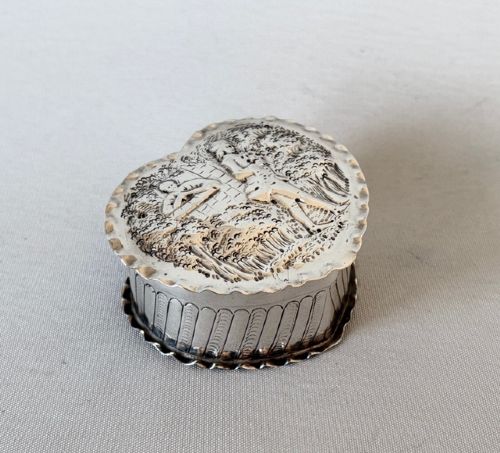
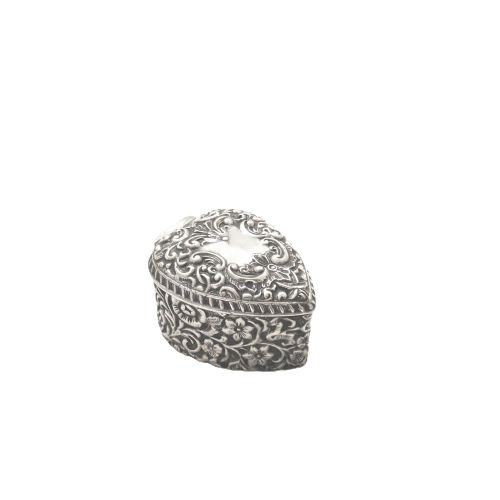
A heart shaped box serves primarily as a decorative container for rings, pins, trinkets, pills or small valuables. Most pieces met on this page date from the Victorian and Edwardian periods, constructed as small table boxes or pendant containers.
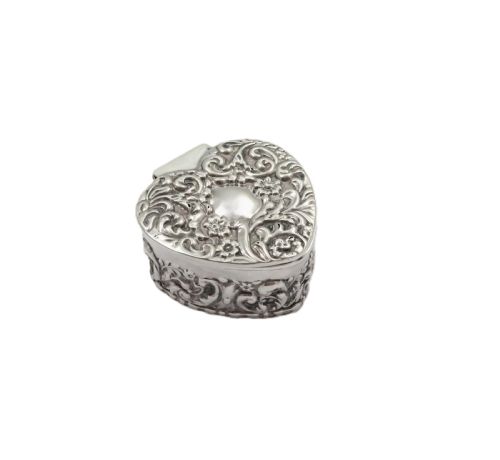
The form appears frequently in sterling silver, often with hinged lids and lined interiors intended for vanity tables. Alternative versions include cut glass vessels with silver mounts, porcelain boxes, and occasional treen or ceramic pieces from continental and English makers.
Materials and Construction
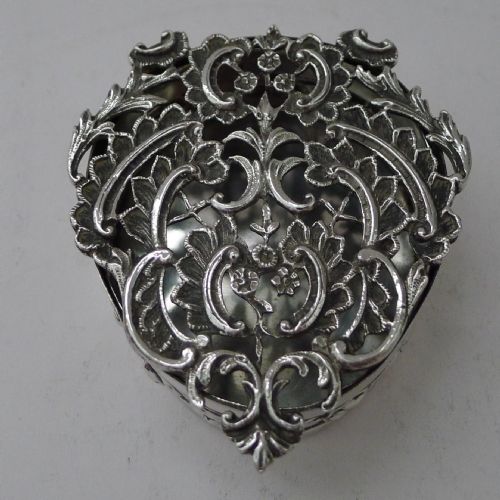
Sterling silver examples rely on stamping, embossing, and piercing techniques to shape the metal into curved contours, frequently finished with gilt interiors known as vermeil. Silversmiths mounted these metal lids onto cut glass bodies or paired them with velvet and silk linings inside hinged frames.
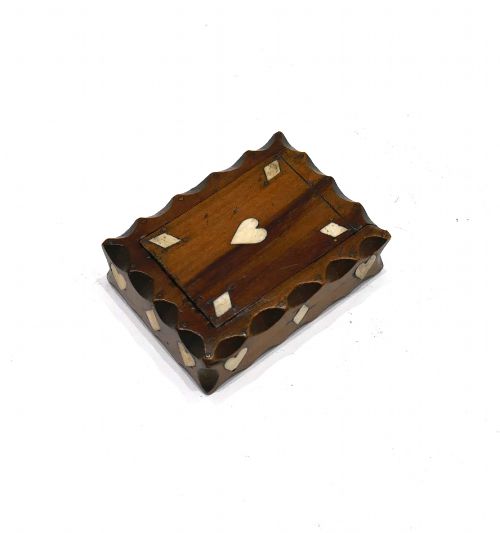
Organic and ceramic materials require distinct handling, seen in turned fruitwood and elm decorated with bone inlays, or tin-glazed earthenware and porcelain shaped before kiln firing. Metalwork often carries hallmarks denoting assay offices in London, Birmingham, and Chester alongside specific silversmith marks.
Heart Shaped Box Retail Price Guide 2026
Typical asking prices for heart shaped box among the pieces listed under this phrase on Sellingantiques today, from the lower quarter to the upper quarter. They describe what is for sale here now, not the wider market.
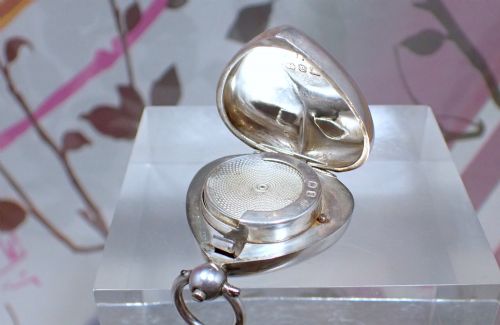
Some Victorian silver pieces double as miniature pendant boxes, allowing wearers to carry personal keepsakes directly around the neck.
Quality and Craftsmanship
The distinction between standard containers and finer work rests on the crispness of embossed detail and the structural integrity of the hinge. Pierced silver panels executed by skilled hands display clean, precise negative spaces without distortion to the curved outline.
Finer examples retain original interior silk or velvet linings and secure tight-fitting lids that close flush against the base rim. Maker attribution also influences standing, with documented pieces from notable silversmiths commanding particular attention.
William Comyns·Adie & Lovekin Ltd·Deakin & Francis·Royal Crown Derby·Dorotheenthal
The Heart Shaped Box Glossary
- Vermeil
- Sterling silver coated with a thin layer of gold on the interior or exterior surface. This technique provided the appearance of solid gold while utilising silver as the base metal.
- Pot Pourri Box
- A small lidded container pierced with holes across the top to allow scented dried plant material to fragrance a room. These vessels frequently adopted novelty shapes including hearts.
- Sovereign Holder
- A compact pocket container engineered specifically to store British gold sovereign coins securely. They often mirrored portable box dimensions.
- Treen
- Small handmade wooden household objects created by turning on a lathe or through manual carving. Pieces often incorporate inlaid bone or contrasting woods.
- Tin-Glazed Earthenware
- Pottery covered with an opaque white glaze containing tin oxide, providing a smooth surface for painted decoration. This finish characterises specific continental European ceramic boxes.
Heart Shaped Box: Frequently Asked Questions
What were heart shaped box containers used for?
These containers held precious personal items such as rings, pins, sovereign coins, and small medicinal pills. Their intimate form made them popular gifts for holding tokens of affection on dressing tables.
They functioned both as practical storage for daily jewellery and as decorative ornaments designed to catch the eye within domestic interiors.
How do I date a silver heart shaped box?
British silver pieces carry hallmarks that include date letters, assay office symbols, and maker marks stamped directly into the metal. Comparing these assay marks against official records reveals the exact year of manufacture.
Pieces lacking metal hallmarks rely on stylistic clues, material combinations, and manufacturing techniques characteristic of the Victorian or Edwardian periods.
Are these boxes made only of silver?
While silver forms the majority of surviving examples, makers utilised a wide range of materials. Selections include cut glass, porcelain, tin-glazed earthenware, and carved fruitwood.
Some variants combine media by pairing cut crystal bodies with embossed sterling silver lids or incorporating bone inlays into wooden structures.
How should I clean antique silver boxes?
Silver components require gentle dusting with a soft cloth to remove everyday surface particles without damaging delicate embossed details or pierced work. Aggressive polishing wears away thin metal layers and historical hallmarks over time.
Fabric interiors should remain dry and untouched by liquid cleaners to preserve original silks and velvets.