



Harvest Scene Painting
A harvest scene painting captures the seasonal labour of the fields through the brush of Victorian and Edwardian artists.
Harvest Scene Painting
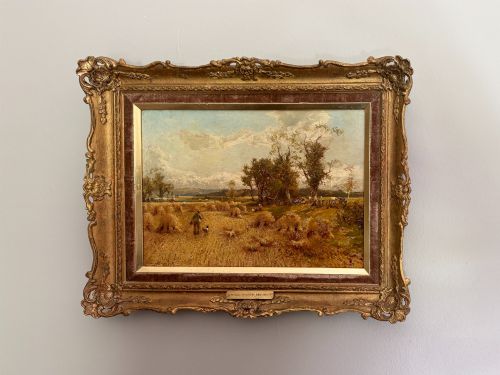
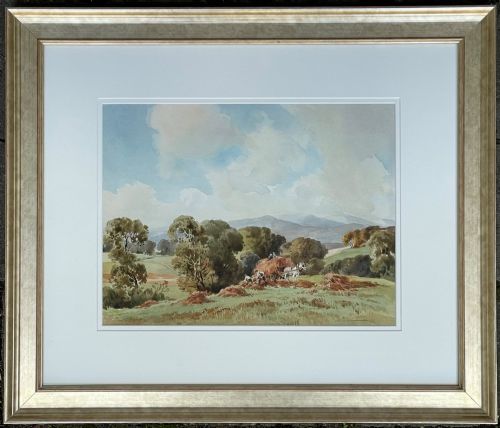
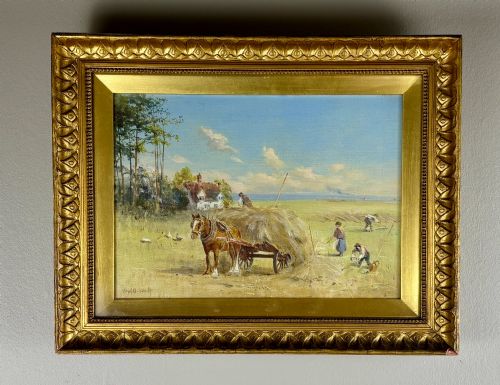
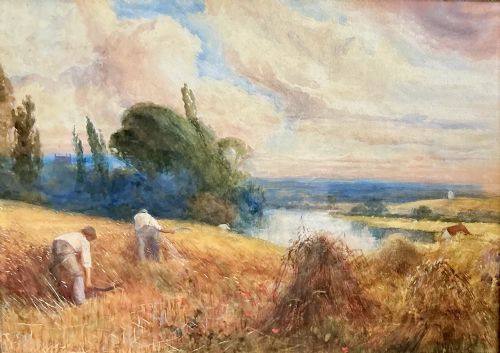
A harvest scene painting depicts rural agricultural labour, haymaking and cornfields across the nineteenth and twentieth centuries. Buyers encounter both detailed oil paintings on canvas and delicate watercolours on paper reflecting pastoral life.
The selections span British Impressionism, Victorian realism and Edwardian landscape traditions. Works range from intimate watercolour studies by Percy Lancaster and Frederick Hines to large oil paintings by artists such as Henry John Boddington and Arthur Walker Redgate.
Rural subjects record agricultural methods involving horses, carts and manual scythe work. These canvases and watercolours preserve regional British landscapes from Yorkshire to Sussex and Hampshire.
Materials and technique
Artists painted primarily with oil paint on canvas or applied watercolour pigments to paper, framed beneath glass. Wooden stretchers and frames support the canvas or paper supports.
Brushwork varies from the tight academic realism of the nineteenth century to looser Impressionist touches in later Edwardian and Scottish works. Pigments capture natural light at dusk, sunset and midday across open fields.
Harvest Scene Painting Retail Price Guide 2026
Typical asking prices for harvest scene painting among the pieces listed under this phrase on Sellingantiques today, from the lower quarter to the upper quarter. They describe what is for sale here now, not the wider market.
Geese occasionally wander into the cornfields alongside the harvesters.
Judging quality and execution
Quality rests upon the artist's handling of atmospheric light, shadow and composition within the landscape. Master works integrate figures, horses and agricultural equipment naturally into the surrounding fields and sky.
Surface preservation of the oil paint or watercolour determines the visual integrity of the piece. Strong tonal balance and confident brushwork distinguish accomplished works by named painters from standard regional productions.
Percy Lancaster·Frederick Hines·James William Booth·Henry John Boddington·John Atkinson·William Grant Murray·J.C. Grey·Henry H Parker·Helmut Reuter·Walter Heath Williams·Herbert Royle·Arthur Walker Redgate·Rowland Henry Hill·Frederick J.Knowles·Joseph Paulman·Henry John Kinnaird·Frederick William Jackson·Walter Duncan·George Hamilton Constantine·George Cole·William Greaves·William Savage Cooper·Henry John Kinnaird·Joseph Thors·Alfred Augustus Glendening Snr
The Harvest Scene Painting Glossary
- Oil on canvas
- Pigments bound in a drying oil applied to a woven fabric stretched across a wooden frame. This medium allows for rich colour depth and textured brushwork.
- Watercolour
- A paint consisting of colour pigments suspended in a water-soluble vehicle, typically applied to paper. It creates luminous, transparent washes of tone.
- Hayrick
- A large stack of hay piled together in the open air to dry and cure. Artists frequently placed these structures as focal points in rural landscapes.
- Genre painting
- The pictorial representation of scenes from everyday life involving ordinary people. These works depict farmworkers, horses and domestic labour.
Harvest Scene Painting: Frequently Asked Questions
What periods do these paintings date from?
The available works date principally from the nineteenth and early twentieth centuries. Painters working during the Victorian and Edwardian eras produced the majority of these pastoral subjects.
Dates span from the 1860s through the 1950s, capturing shifting artistic movements from traditional realism to British Impressionism.
How were harvest paintings displayed?
Historically, these oil paintings and watercolours hung in domestic interiors within substantial wooden frames. Many retain their period framing, which complements the rustic subject matter.
Watercolours require protection behind glass to prevent moisture and light damage to the paper support.
What subjects appear alongside the harvest?
Artists frequently included farmworkers, hay carts, horses and dogs within the agricultural landscape. Coastal views, rivers such as the Kennet, and specific regional locations like Wharfedale or the Vale of Evesham provide the setting.
Depictions range from midday labour under bright sunlight to quiet scenes at dusk and sunset.