



Harvest Landscape Art
Harvest landscape art captures the agricultural labour and rural scenery of past centuries, offering a connection to traditional countryside life.
Harvest Landscape Art
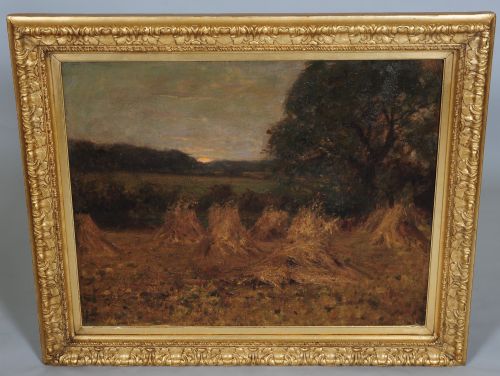
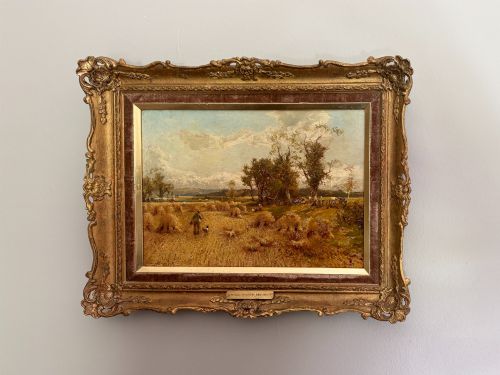
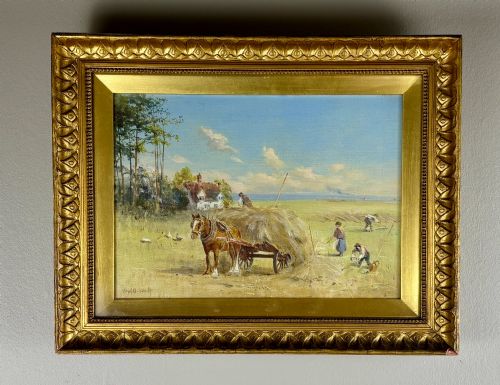
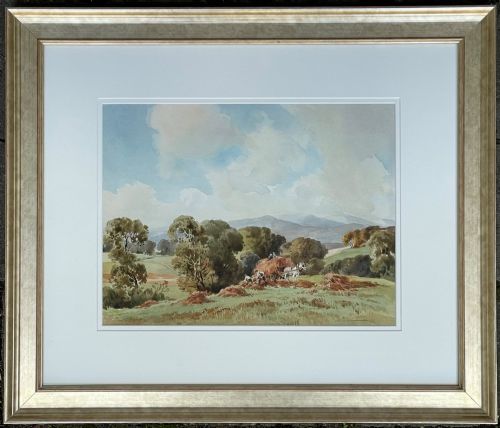
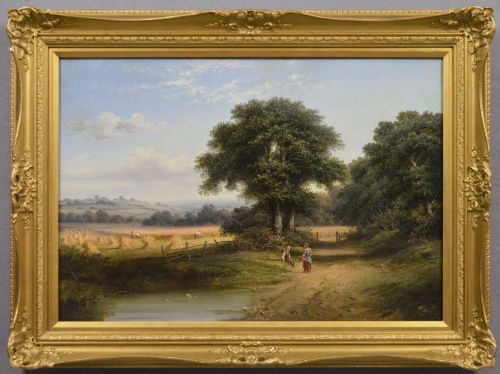
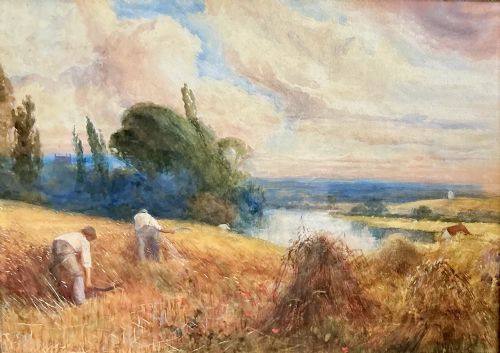
Harvest landscape art depicts rural scenes involving agricultural workers, hay carts, and cornfields set across various British locations. These pieces document historical farming practices through detailed depictions of figures gathering crops by rivers and valleys.
Most examples encountered here originate from the nineteenth and early twentieth centuries, spanning the Victorian and Edwardian periods up to the mid-twentieth century. Works range from intimate waterpapers to expansive oil paintings on canvas.
Subjects frequently centre on specific regional views, such as the Vale of Evesham, Hampshire, or the Grampians, painted by artists recording local topography and rural toil.
Materials and Technique
Artists utilised oil paint on canvas or wood panels alongside watercolour applied to paper to record these rural subjects. These traditional mediums allowed painters to build rich textures for fields, skies, and foliage.
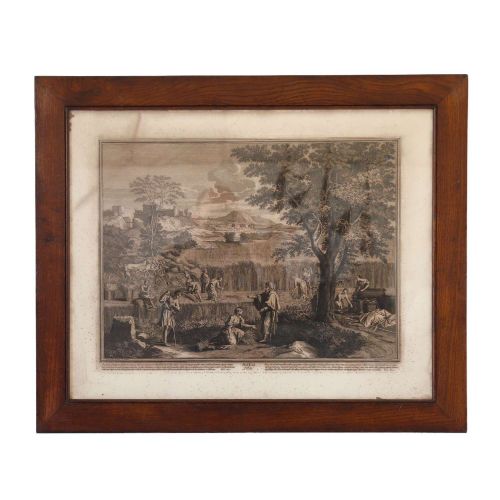
Selected works incorporate gold leaf framing or careful preparatory engraving techniques to enhance the presentation of the pastoral subject matter.
Harvest Landscape Art Retail Price Guide 2026
Typical asking prices for harvest landscape art among the pieces listed under this phrase on Sellingantiques today, from the lower quarter to the upper quarter. They describe what is for sale here now, not the wider market.
Listings span periods from the 1860s through the 1950s, employing wood, canvas, paper, and oil paint.
Assessing Quality
Quality rests upon the artist's handling of light, atmospheric perspective, and the naturalistic rendering of figures and farm animals within the landscape. Superior works demonstrate confident brushwork and a coherent sense of space.
Compositional balance and the accurate depiction of period agricultural activity distinguish accomplished academic works from simpler decorative paintings.
Hugh Barry Scott·William Manners·Percy Lancaster·Walter Heath Williams·Frederick Hines
The Harvest Landscape Art Glossary
- Oil on Canvas
- Pigments bound in a drying oil applied to a stretched woven fabric support. This combination permits deep tonal gradations and rich surface textures.
- Watercolour
- A paint consisting of colourants suspended in a water-soluble binder applied to paper. It yields transparent washes suited to atmospheric landscape effects.
- Wood
- A rigid organic panel material utilised as a painting support during the nineteenth century. It provides a smooth, stable surface for detailed brushwork.
- Gold Leaf
- Gold beaten into extremely thin sheets used to gild picture frames. It adds a reflective metallic border that complements the warm tones of pastoral paintings.
- Engraving
- A printmaking method where a design is cut into a metal plate with a burin. The resulting lines hold ink to transfer the image onto paper.
Harvest Landscape Art: Frequently Asked Questions
What periods do these pieces date from?
The works span from the nineteenth century through the Edwardian era into the mid-twentieth century. They reflect shifting artistic approaches to rural subject matter across these decades.
Victorian and Edwardian artists predominate, offering detailed records of traditional farming methods before mechanisation altered the countryside.
How were these artworks created?
Painters utilised oil on canvas, wood panels, or watercolours on paper to capture outdoor scenes. Pigments were layered to render natural light, vegetation, and agricultural workers.
Many pieces were created <i>en plein air</i> or developed from preliminary sketches made directly in the harvest fields.
Where were these scenes typically set?
Locations range widely across British landscapes, including Sussex, Hampshire, Yorkshire, and the Scottish Grampians. Artists sought out fertile valleys and coastal regions where seasonal farming was prominent.
Specific local landmarks, such as rivers and windmills, frequently anchor the composition of the pastoral view.
How do I care for a vintage painting?
Protect works from direct sunlight and maintain stable indoor humidity levels to prevent canvas warping or paper degradation. Glazed watercolours require acid-free mounting to preserve the paper.
Dust frames gently with a dry cloth and avoid chemical cleaners on oil paint surfaces.