
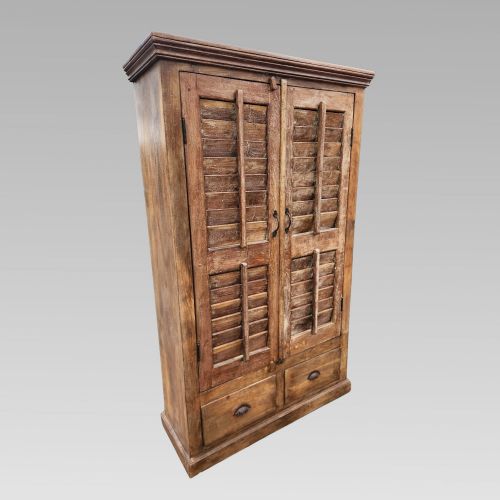


Hardwood Storage Cupboard
A hardwood storage cupboard offers substantial utility, drawing from diverse global traditions spanning Chinese, Indian, and colonial workshops.
Hardwood Storage Cupboard
A hardwood storage cupboard encompasses varied regional forms, from Chinese compound cabinets and sideboards to Indian rustic wardrobes and tabletop chests. The selection leans heavily toward 19th century Chinese and colonial pieces, alongside later 20th century iterations.
Buyers encounter distinct forms ranging from large floor cabinets with carved dragon details to smaller bedside lamp cabinets and jewellery caskets. Materials span elm, teak, rosewood, and padouk, often displaying traditional regional styles such as Qing Dynasty or Anglo-Indian.
Many examples serve specific historical functions, including former sheet music cabinets and specimen chests, while others provide general domestic storage. These items combine practical compartment layouts with distinct cultural aesthetics.
Materials and construction
Construction relies upon dense timbers including mahogany, rosewood, elm, and teak, selected for durability and rich grain patterns. Artisans frequently incorporated brass and iron hardware, such as hinges, handles, and mounts, to reinforce structural joints.
Decorative techniques involve intricate carving, such as animal motifs and dragon designs, alongside lacquered finishes and inlaid details. Some pieces utilise reclaimed woods, reflecting local carpentry traditions across Asian and colonial workshops.
One unexpected survivor once held Victorian sheet music before finding a second life storing modern clutter.
Assessing quality
Quality rests upon the density and selection of the timber, distinguishing robust hardwoods like zitan and padouk from lighter utility woods. The precision of traditional joinery and the integrity of original surface treatments dictate the longevity and authenticity of each piece.
Refinement appears in the execution of hand-carved decorative elements, bronze or brass hardware embellishments, and the preservation of early lacquered finishes. Pieces retaining undisturbed structural assemblies demonstrate superior craftsmanship.
The Hardwood Storage Cupboard Glossary
- Hardwood
- Dense timber derived from broad-leaved deciduous trees, noted for strength and durability in furniture construction. It forms the primary structural material across these listings.
- Sideboard
- A long furniture piece designed for storage and serving, typically equipped with cupboards and drawers. These examples frequently incorporate regional Asian and colonial carving styles.
- Specimen Chest
- A small cabinet fitted with multiple shallow drawers intended for organising natural history collections or small valuables. They showcase fine miniature craftsmanship.
Hardwood Storage Cupboard: Frequently Asked Questions
What is a hardwood storage cupboard?
A hardwood storage cupboard is a robust piece of furniture built from dense timber, designed to hold household goods, clothing, or specialised items. The selections available encompass diverse global traditions, including Chinese floor cabinets and Indian rustic wardrobes.
These pieces utilise materials such as teak, elm, rosewood, and padouk, often enhanced with brass or iron hardware. They combine functional compartmentalisation with distinctive regional carving and decorative finishes.
How were these cupboards used historically?
Historically, these cabinets served a variety of domestic and administrative functions, ranging from general garment storage to housing sheet music and jewellery. Larger compound cupboards stored precious textiles and family possessions in traditional households.
Smaller tabletop cabinets and specimen chests accommodated delicate collections or personal valuables. Each form reflects the specific domestic needs of its region of origin, whether in a Qing Dynasty interior or a colonial household.
How do I care for hardwood furniture?
Caring for dense timber involves maintaining stable indoor humidity levels to prevent the wood from splitting or warping. Regular dusting with a soft, dry cloth preserves the original surface finish without abrasive chemical cleaners.
Avoiding direct sunlight protects lacquered and polished surfaces from fading over time. Periodic treatment with appropriate natural waxes helps maintain the moisture balance of older hardwoods.
How do I distinguish regional styles?
Distinguishing regional styles involves examining the structural form, decorative motifs, and joinery techniques unique to each geographic origin. Chinese examples frequently display traditional framing, dragon carvings, or lacquered surfaces associated with the Qing period.
Colonial and Indian pieces often incorporate British architectural influences combined with native timbers like padouk or reclaimed rosewood. Details such as bronze animal decoration or specific brass mountings further identify the workshop tradition.