


Chinese Style Cabinet
A Chinese style cabinet brings decorative lacquer, rich hardwood, and intricate carving into a room, offering both display space and enclosed storage.
Chinese Style Cabinet
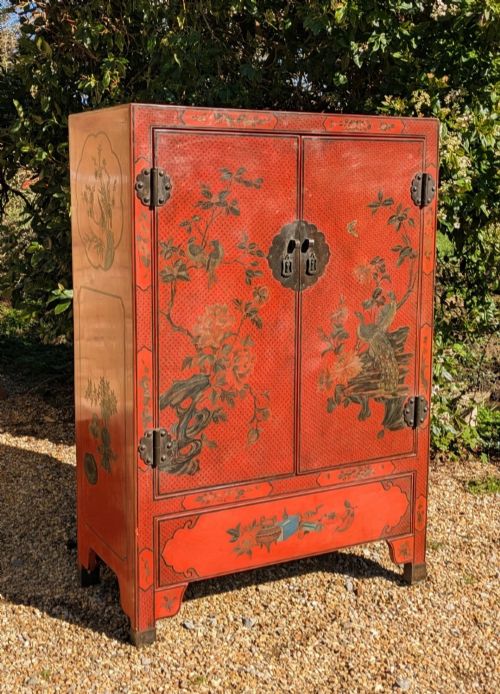
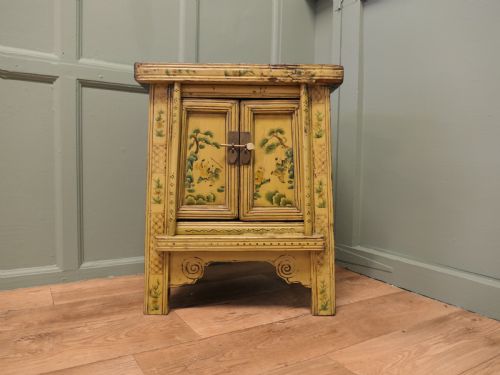
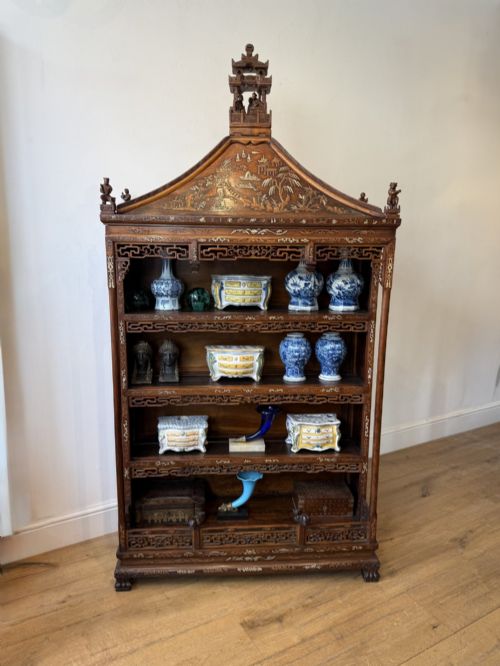
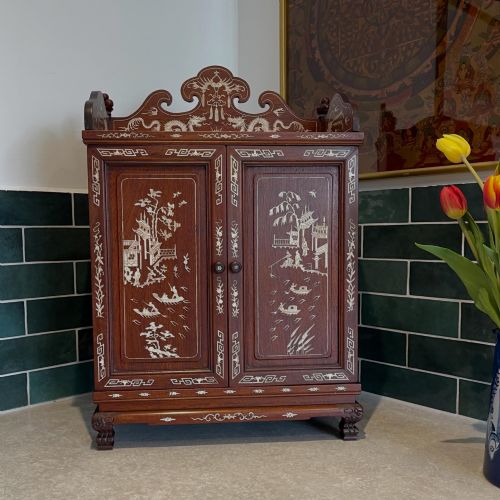
A Chinese style cabinet encompasses a variety of storage and display forms, ranging from tall wedding cabinets and compound cupboards to compact table cabinets and apothecary chests. These pieces frequently emerge from nineteenth century and early twentieth century production, reflecting diverse regional influences and aesthetic traditions.
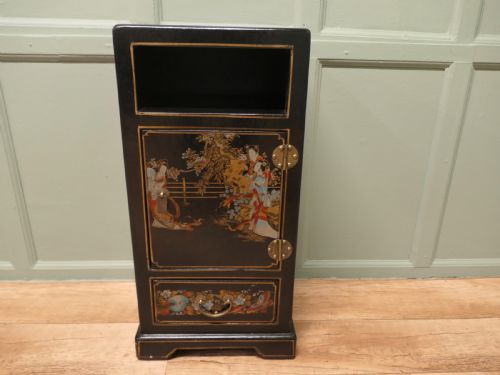
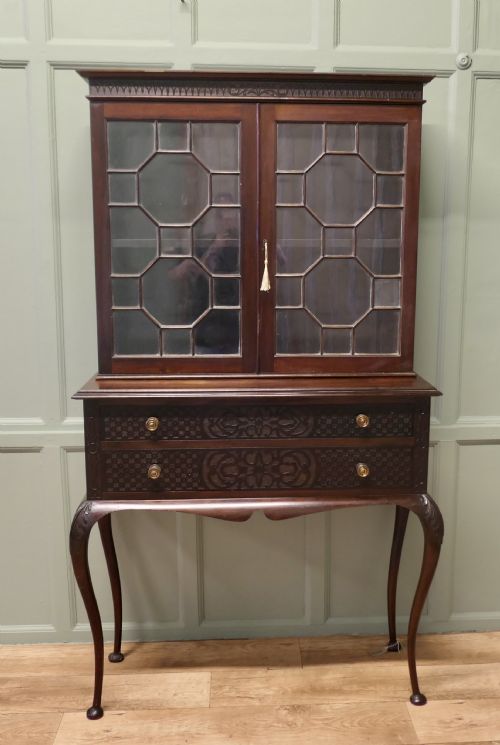
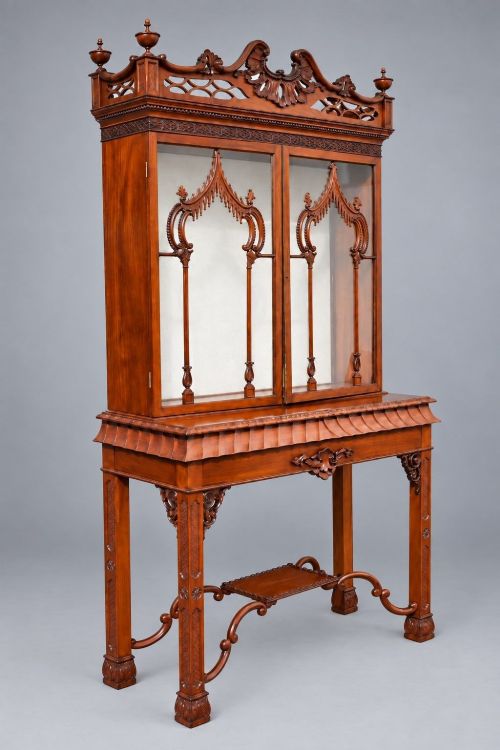
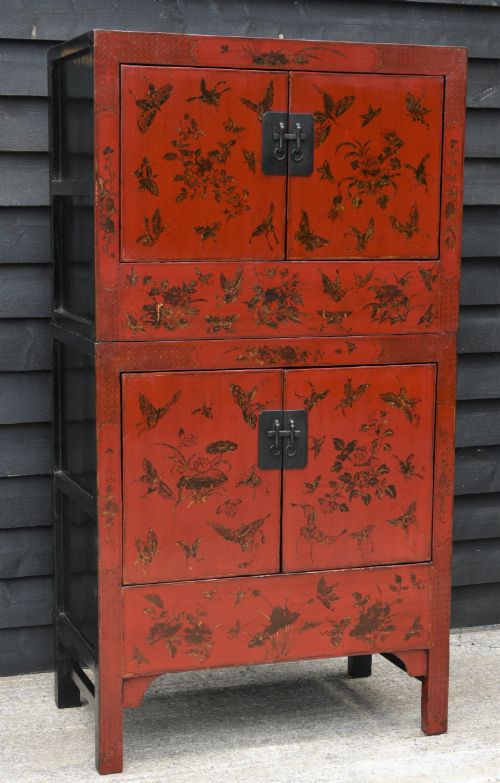
The most common examples on this page combine traditional forms with decorative surface treatments, particularly Chinoiserie lacquerwork and Chinese Chippendale mahogany designs. Buyers encounter everything from floor-standing display cabinets with astral glazing to small bedside lamp cabinets and side cupboards.
Makers and workshops across different periods utilised specific stylistic vocabularies, including Qing Dynasty motifs, provincial carvings, and revival styles. Selecting the right piece involves understanding whether the construction follows traditional joinery methods or later British and European interpretations.
Materials and construction
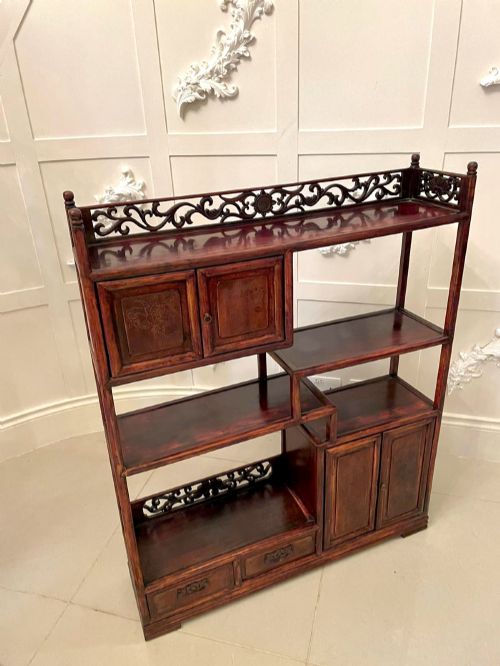
Makers relied heavily on dense hardwoods such as mahogany, rosewood, teak, and zitan, alongside secondary timbers like elm for internal elements and drawer construction. These timbers provided the structural stability required for large compound cabinets and intricately carved display pieces.
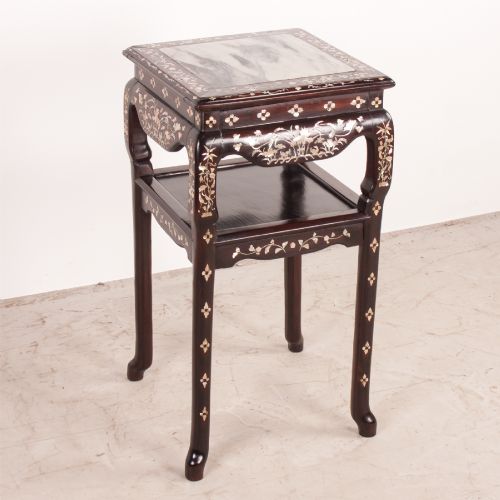
Surface ornamentation often involved layers of red, black, or cinnabar lacquer, complemented by mother of pearl inlay, brass hardware, and hand-painted Chinoiserie decoration. Lacquering techniques required patient application and drying between coats to achieve a durable, glossy finish.
Joinery techniques varied between traditional Chinese frame-and-panel construction and Western cabinet-making methods seen in Chinese Chippendale revival pieces. Glazed doors frequently incorporated astral bars to divide the glass into geometric panes.
Listings feature pieces spanning the nineteenth and early twentieth centuries, incorporating materials such as brass, mother of pearl, and zitan.
Evaluating craftsmanship and condition
Quality separates pieces through the depth and crispness of the hand-carving, the stability of the timber, and the preservation of the original lacquer or polish. Superior examples display sharply defined motifs on panels and stands, whereas lesser pieces show softened details from wear or later refinishing.
The integration of decorative elements such as mother of pearl inlay and brass mounts indicates the tier of production. Firmly seated inlay work and well-fitted doors distinguish finer display cabinets and apothecary chests from standard utility cupboards.
Surface patination plays a central role in visual appeal, as authentic age shows through natural craquelure in lacquer and minor, stable shifts in hardwood timbers. Altered surfaces or heavy restoration diminish the integrity of an antique piece.
Edmé Samson et Cie·C.J. Mason
The Chinese Style Cabinet Glossary
- Chinoiserie
- European theatrical interpretation of Chinese artistic traditions, popular in furniture decoration. This style employs painted lacquer scenes, motifs of pagodas, and gilded figures.
- Zitan
- A dense, heavy hardwood prized in traditional Chinese furniture making. Its dark purple-black tone lends itself to fine carving.
- Astral Glazing
- Window or door framing using thin wooden bars to hold multiple small panes of glass. This technique is frequently seen on Chinese Chippendale display cabinets.
- Cinnabar Lacquer
- A technique involving numerous layers of red lacquer carved with intricate patterns. The depth of the carved layers reveals the rich colour beneath.
- Apothecary Chest
- A multi-drawer cabinet originally designed for storing herbs and medicines. These pieces often feature numerous small drawers with brass pulls.
Chinese Style Cabinet: Frequently Asked Questions
How do I date a Chinese style cabinet?
Dating relies on examining the timber species, construction joinery, and the wear patterns on the lacquer or polish. Nineteenth-century examples often exhibit hand-cut joints and denser hardwoods, while early twentieth-century pieces reflect revival movements.
Hardware details such as brass hinges and lock plates also provide clues to the period. Comparing construction methods against documented regional styles helps confirm the era of manufacture.
Where should I place a lacquer cabinet?
Lacquer cabinets benefit from stable indoor environments away from direct sunlight and excessive heat sources. Sunlight fades pigmented finishes, while fluctuating humidity causes wood and lacquer to expand and contract at different rates.
Positioning the piece against an interior wall preserves the surface condition. Allowing adequate clearance prevents accidental knocks to delicate carved elements and mother of pearl inlay.
What is the difference between Chinoiserie and Chinese Chippendale?
Chinoiserie refers to European decorative motifs inspired by Chinese art, typically expressed through painted or lacquered surfaces featuring figures, landscapes, and pagodas. It focuses on pictorial decoration.
Chinese Chippendale represents a distinct furniture style originating in eighteenth-century Britain and revived later, characterised by straight legs, pierced fretwork brackets, and pagoda pediments executed in mahogany.
How do I maintain the finish on hardwood?
Maintenance involves dusting with a soft, dry cloth and avoiding standard silicone polishes that build up residue over time. Hardwood surfaces respond best to occasional applications of appropriate natural wax to nourish the grain.
Keeping the environment stable protects both the timber and any applied lacquer from cracking. Professional conservation is recommended for any structural repairs or surface consolidation.