


Hardwood Side Chairs Pair
These hardwood side chairs pair offerings bring substantial seating into a room, prized for their dense timbers and carved detail.
Hardwood Side Chairs Pair
A hardwood side chairs pair typically presents sturdy seating shaped by makers across multiple continents and centuries. Buyers searching this phrase encounter examples ranging from nineteenth-century pieces to twentieth-century workshop creations.
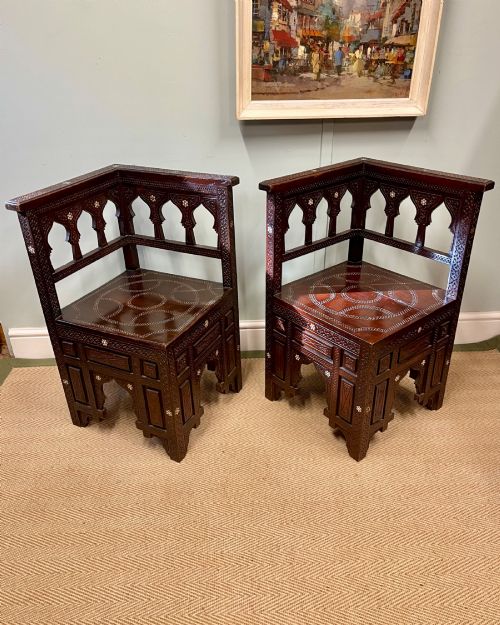
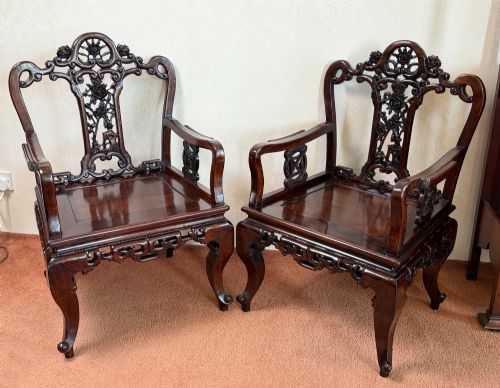
The selections span several distinct geographic traditions, prominently featuring Chinese Qing Dynasty and export items alongside Indian and Moorish Revival designs. Forms include carved hall chairs, elbow seats, and occasional armchairs.
Victorian interpretations and French Art Nouveau expressions also appear within these listings, demonstrating varied regional responses to heavy timber construction. Most examples emerge as matching pairs suited for balancing room layouts.
How they were made
Carpenters utilised dense timbers such as rosewood, walnut, huanghuali, and hongmu to construct these frames. These heavy hardwoods permitted deep, intricate carving without compromising the structural integrity of the seat or backrest.
Surface treatments vary according to regional tradition, incorporating natural lacquering, hand-carved relief work, and occasional bone inlay. Additional elements such as woven cane panels and silk upholstery introduce textural contrast to the wooden frameworks.
Several chairs feature intricate elbow seats designed specifically to accommodate voluminous historical garments without cracking the woodwork.
What varies in quality
The depth and crispness of the carved ornamentation largely dictate the visual merit of each piece. Skilled carvers achieved sharp relief work that maintains clean edges across dense timber, whereas lesser examples show softer, shallower execution.
The selection and stability of the underlying wood stock also separate standard production from superior examples. Dense grain patterns and intact joinery preserve the structural balance of the pair over decades of use.
The Hardwood Side Chairs Pair Glossary
- Hongmu
- A category of dense, dark tropical hardwoods utilised in traditional Chinese furniture manufacturing. The term translates literally to red wood.
- Cane
- Woven material utilised for chair seats and back panels, offering flexibility and breathable comfort. It requires careful handling to prevent breakage over time.
- Bone Inlay
- Decorative technique embedding pieces of carved bone into wooden surfaces to form geometric or floral patterns. This method adds striking contrast to dark timber frames.
- Moorish Revival
- An architectural and decorative style popular in the nineteenth century that incorporates Islamic design motifs. Furniture in this style often displays elaborate geometric lattice carving.
Hardwood Side Chairs Pair: Frequently Asked Questions
How do I style a hardwood side chairs pair?
These chairs function effectively as flanking elements in a hallway or framing a console table. Their robust carving and dark timbers command visual attention in living spaces.
Positioning them away from direct heat sources helps protect the dense timber and any delicate cane or inlay work from drying out.
Are these chairs comfortable for daily use?
Most antique side chairs were designed for formal rooms rather than prolonged lounging. Their upright backs and solid wooden seats encourage an erect posture.
Adding small, period-appropriate cushions can increase comfort without altering the visual balance of the seating.
How do I clean carved hardwood furniture?
Dusting regularly with a soft, dry cloth prevents particulate accumulation within deep carvings. Avoid harsh chemical polishes that can degrade traditional lacquered or waxed finishes.
Moisture should be kept away from woven cane panels and bone inlay sections to maintain their structural integrity.
How can I tell Chinese export pieces apart?
Chinese export furniture often combines traditional domestic joinery with decorative motifs intended for Western markets. These items frequently display influences from European styles while retaining Asian timber species.
Examining the carving depth and secondary woods helps clarify the origin and period of manufacture.