




Carved Chinese Elbow Chair
These carved Chinese elbow chair examples bring distinct regional character and traditional joinery to a room, offering both sculptural presence and functional seating.
Carved Chinese Elbow Chair
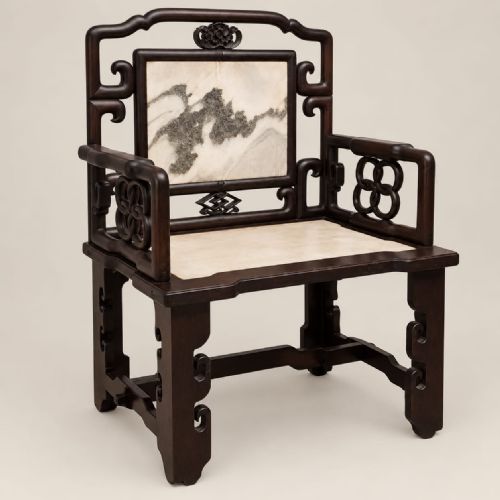
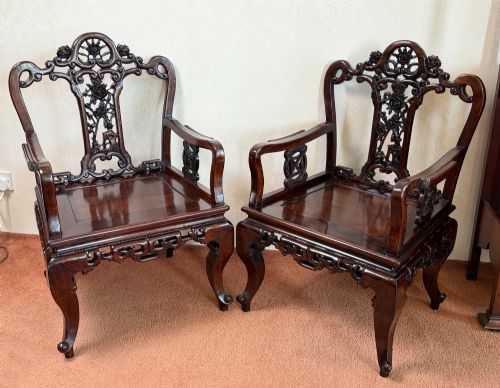
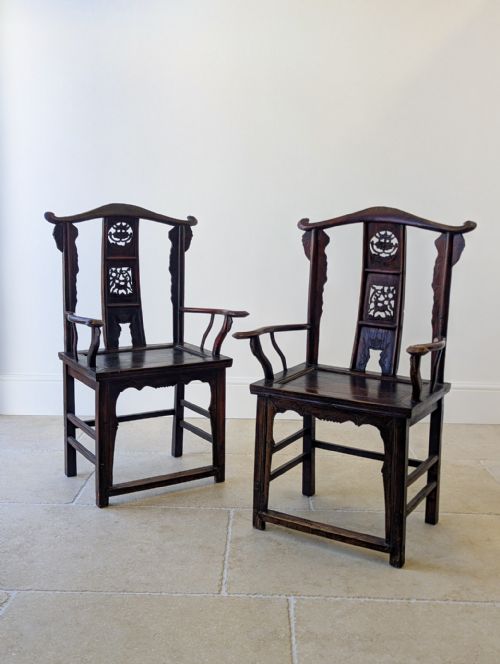
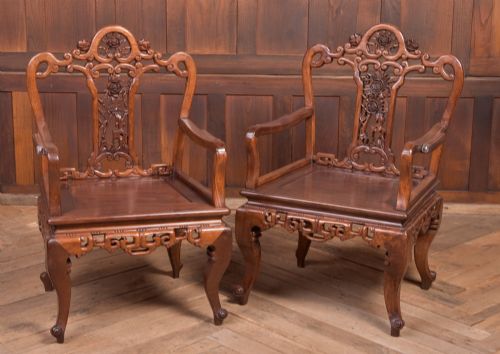
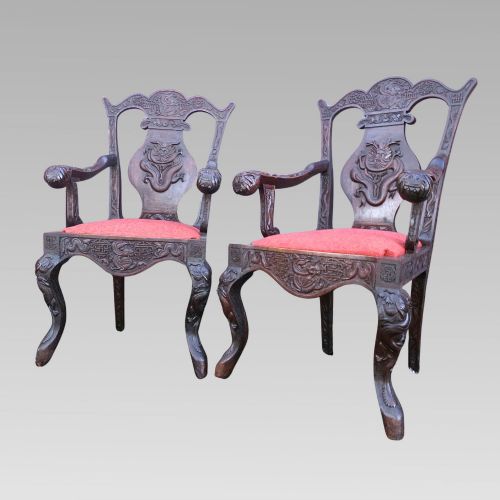
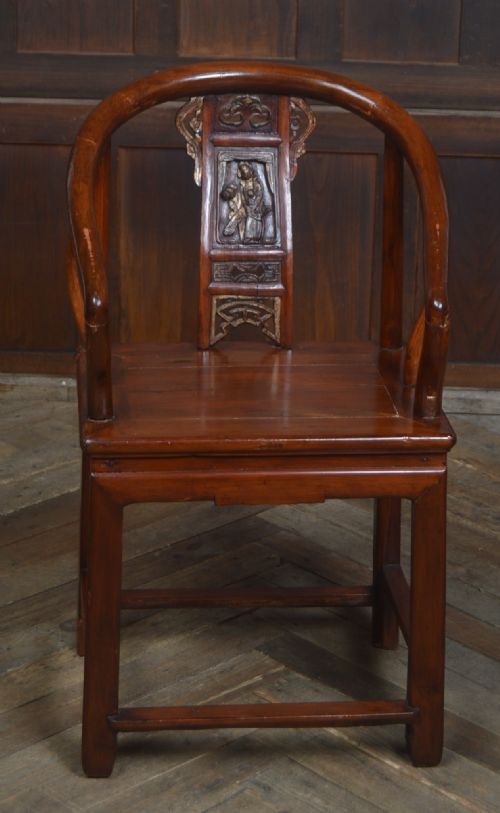
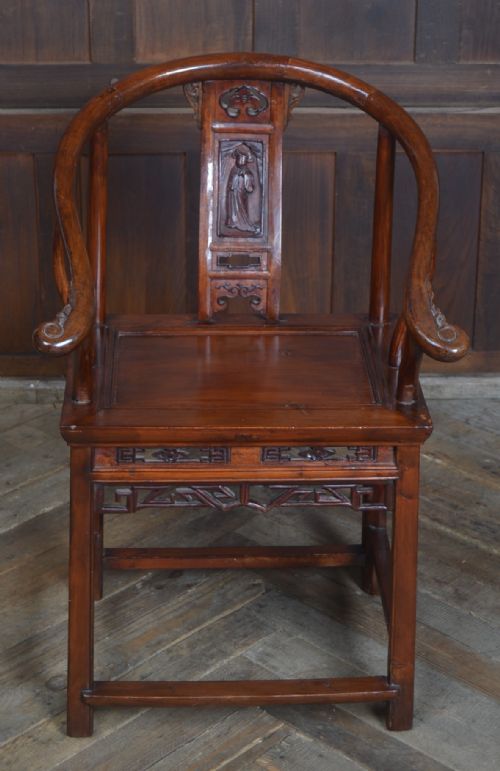
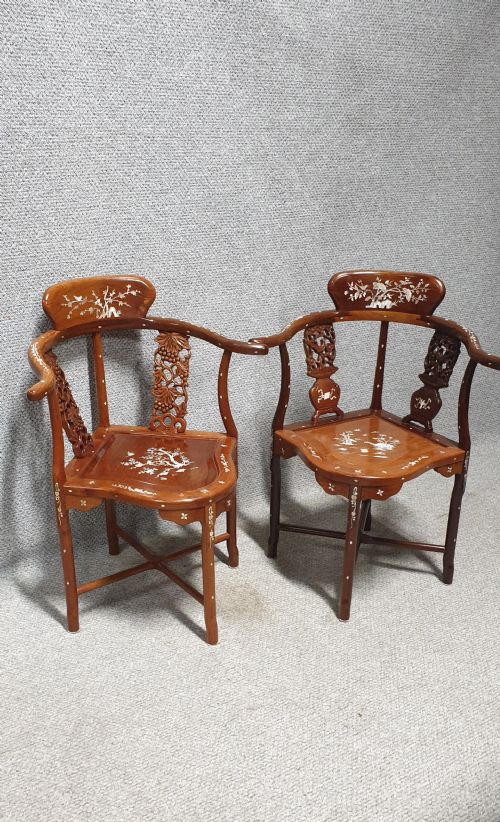
When you search for carved Chinese elbow chair, you encounter a selection of armchairs and throne chairs rooted in the Qing dynasty and later Victorian or Edwardian periods. The forms range from yoke-back designs to elaborate dragon-carved armchairs and corner chairs.
Most pieces seen here date from the nineteenth century up to the early twentieth century, spanning hardwood, elm, and teak constructions. Buyers frequently find pairs or single armchairs featuring lacquered finishes and inset marble panels.
How they were made
The construction relies on dense timbers such as hardwood, rosewood, elm, and teak, shaped through traditional woodworking and mortise-and-tenon joinery. Artisans applied red lacquer and black lacquer finishes to protect and decorate the wooden frames.
Carving techniques defined the surface ornamentation, producing detailed oriental dragon motifs and relief patterns. Selected examples incorporate inset marble seats or panels alongside cane work and fabric upholstery.
Listings span the nineteenth century, nineteen twenty, Victorian era, nineteen hundred, eighteen ninety, eighteen seventy, and the Edwardian period.
What varies in quality
The depth and crispness of the carving separate standard workshop pieces from exceptional examples. Finer chairs display intricate detailing on the arms and backsplats that remains sharp and well-defined.
The choice and grain of the timber heavily influence the character of the chair. Heavy hardwoods and figured rosewood or teak command greater attention than simpler elm or softer secondary woods.
The Carved Chinese Elbow Chair Glossary
- Yoke-back armchairs
- A traditional chair style featuring a top rail shaped like an ox yoke, curving upwards at the ends. This design provides ergonomic support for the sitter's shoulders.
- Elbow chair
- A term for an armchair with distinct armrests designed to support the elbows. These pieces function well as desk chairs or occasional seating.
- Hardwood
- A dense, durable timber derived from angiosperm trees, commonly used in fine Asian furniture. Woods in this category include rosewood and teak.
- Lacquer
- A durable resin finish applied in multiple layers to wood surfaces, often pigmented red or black. It creates a smooth, glossy protective coating.
Carved Chinese Elbow Chair: Frequently Asked Questions
How do I identify a Qing dynasty chair?
Look for traditional forms like yoke-back frames combined with dense timbers such as hardwood or rosewood. Carved details often feature oriental dragon motifs.
Construction methods rely on traditional joinery rather than modern fasteners. The presence of period characteristics helps place the piece within the nineteenth century.
Where should I place an elbow chair?
These armchairs suit studies, libraries, or living rooms where their sculptural carved backs stand out against a wall. They also function well as standalone statement pieces in a hallway.
Ensure the chair has adequate clearance so the armrests and carved details are fully visible from multiple angles.
Are these chairs comfortable for daily use?
Traditional wooden armchairs offer a firm, upright sit dictated by historical design preferences. Models with inset marble panels or wooden seats provide a rigid support.
Some variants incorporate fabric upholstery or loose cushions to soften the seat. Consider adding a bespoke cushion if you plan to use the chair for extended periods.
How do I care for lacquered wood?
Maintain lacquered surfaces by dusting gently with a soft, dry cloth. Avoid abrasive cleaners or excess moisture that could damage the finish.
Keep the furniture away from direct sunlight and rapid temperature fluctuations to prevent the wood and lacquer from splitting.