



Chinese Carved Back Chairs
Chinese carved back chairs bring distinct regional forms and rich timber grains into domestic spaces, connecting traditional craftsmanship with functional seating.
Chinese Carved Back Chairs
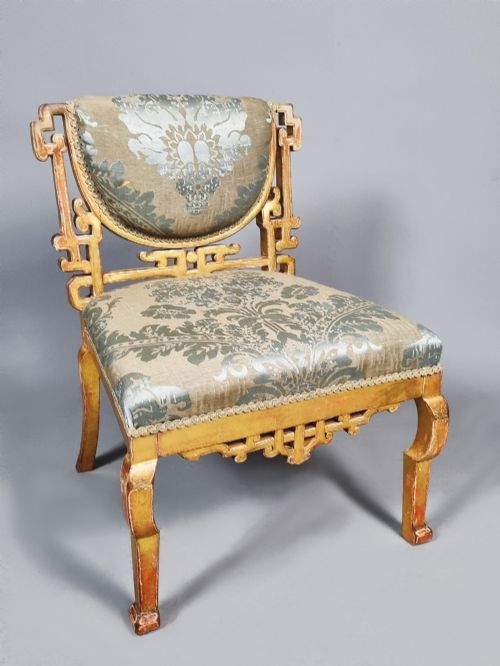
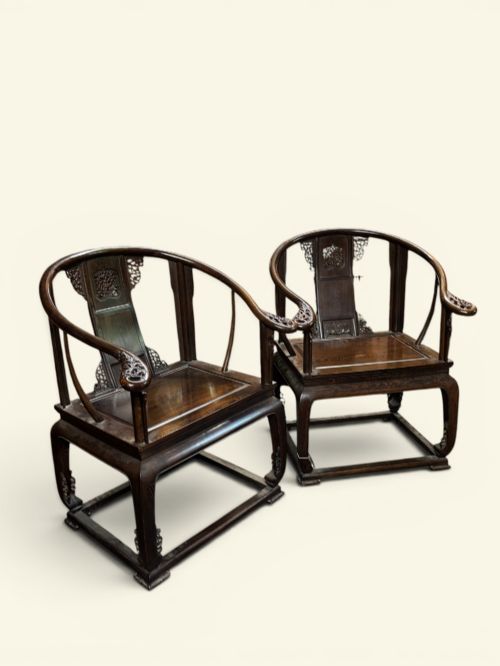
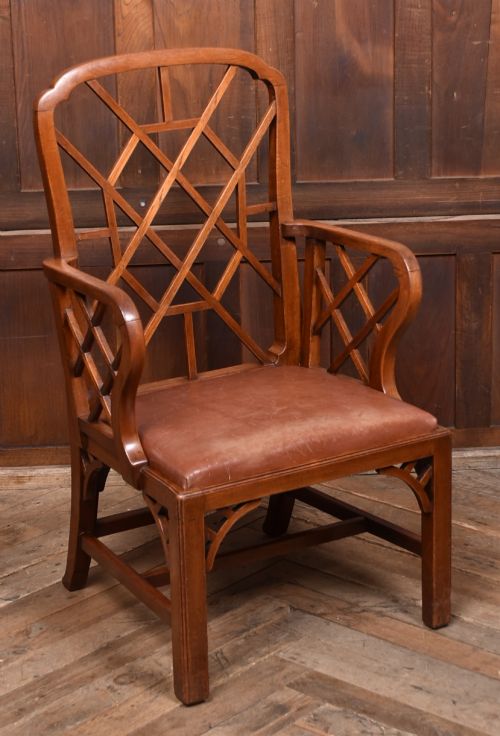
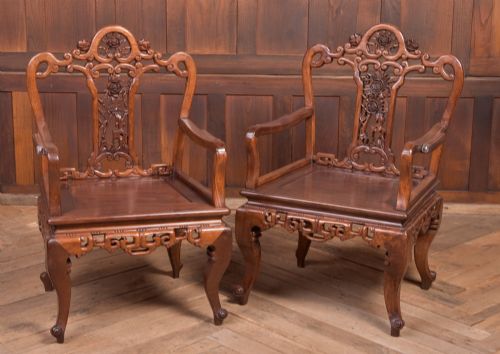
Chinese carved back chairs encompass seating forms spanning elm, hardwood, rosewood, and mahogany across the nineteenth and early twentieth centuries. These pieces reflect traditional designs including yoke-back armchairs, horseshoe-back thrones, and scholars chairs alongside British interpretations in the Chinese Chippendale style.
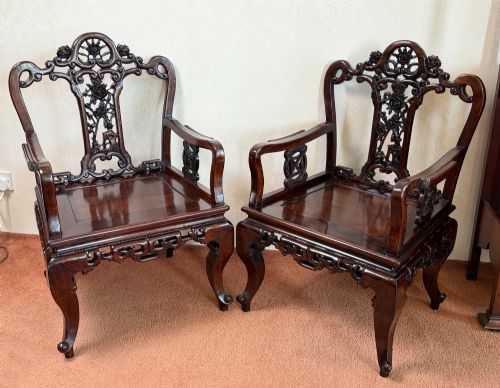
The most common examples met here are nineteenth-century hardwood and elm armchairs, often featuring detailed carving on the back splat. Pieces range from simple hall chairs to substantial throne chairs and folding designs originating from Qing Dynasty and later workshop traditions.
Materials and construction methods
Construction relies heavily on dense timbers such as elm, hongmu, rosewood, and mahogany, chosen for their structural strength and capacity to hold fine detail. Joinery techniques allow timber components to fit securely without extensive metal fixings.
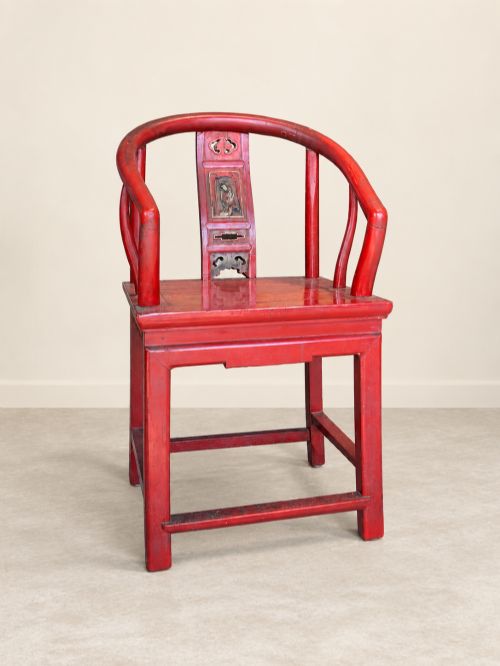
Surfaces receive varying treatments, from clear finishes that highlight natural wood grain to red lacquer and giltwood applications. Carving is applied directly to back splats and frames, rendering traditional motifs with crisp relief.
Some folding chairs were built to travel easily with travelling scholars.
Judging quality in construction and carving
Quality rests primarily on the crispness of the carved back splat and the integrity of the timber joinery. Denser hardwoods like hongmu and rosewood support sharper, deeper relief work than softer woods.
Proportion and balance distinguish finer examples from standard production. Well-executed seating maintains harmonious lines between the curved back, arm supports, and seat frame.
Waugh and Son·Thomas Chippendale
The Chinese Carved Back Chairs Glossary
- Yoke-back
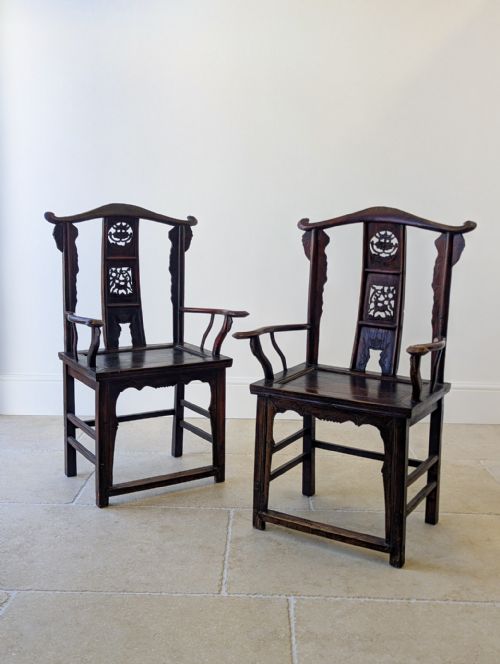
- A chair design featuring a curved top rail resembling a traditional ox yoke. This form provides ergonomic support for the sitter's shoulders.
- Horseshoe-back
- A continuous curved arm and back rail shaped in a smooth semicircle. It creates an enveloping seat frequently seen on folding and throne chairs.
- Hongmu
- A translation meaning red wood, applied to dense tropical hardwoods used in traditional Chinese furniture. It develops a rich patina over time.
- Qing Dynasty
- The final imperial dynasty of China, lasting from sixteen forty-four to nineteen twelve. Pieces from this era often feature elaborate carved decoration and traditional forms.
- Splat
- The vertical central strip of wood down the middle of a chair back. On these pieces, it is frequently carved with symbolic motifs.
Chinese Carved Back Chairs: Frequently Asked Questions
How do I care for antique elm furniture?
Antique elm requires stable indoor humidity levels to prevent timber movement. Keep pieces away from direct heat sources and strong sunlight.
Apply occasional appropriate wax polish to nourish the wood surface. Dust gently with a soft dry cloth.
Are horseshoe-back chairs comfortable?
Horseshoe-back chairs wrap around the sitter to provide supportive arm rests at a natural height. The curved rail distributes weight evenly across the upper body.
Many examples include woven or solid wood seats designed for upright posture. Cushions are often added for extra softness.
How do I distinguish Qing Dynasty styles?
Qing Dynasty furniture typically displays dense hardwoods, symmetrical layouts, and deeply carved back splats. Motifs often draw from traditional symbolism and nature.
Later pieces from the nineteenth and early twentieth centuries continue these stylistic traditions. Examining timber weight and joinery helps clarify the period.