






Hardwood Plant Pedestal
A hardwood plant pedestal elevates greenery or art, bringing nineteenth-century craftsmanship and carved oriental form into a room.
Hardwood Plant Pedestal
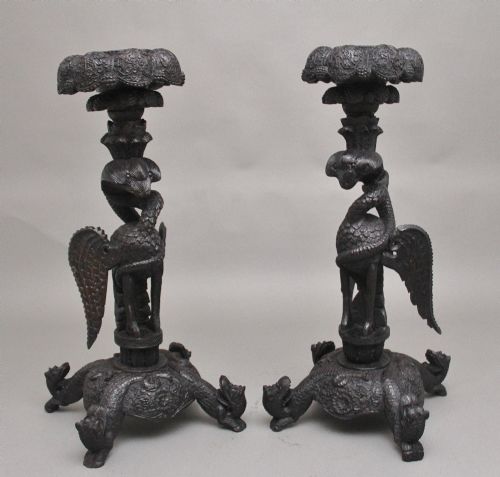
A hardwood plant pedestal serves as an elevated support for flowers, jardinieres, and decorative vessels in the interior. These pieces appear primarily in nineteenth-century and early twentieth-century designs, originating from Chinese Export workshops, Anglo-Indian carvers, and Victorian British cabinet makers.
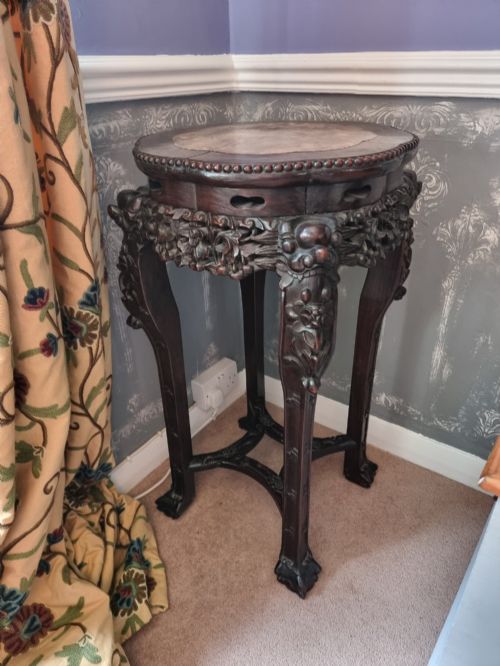
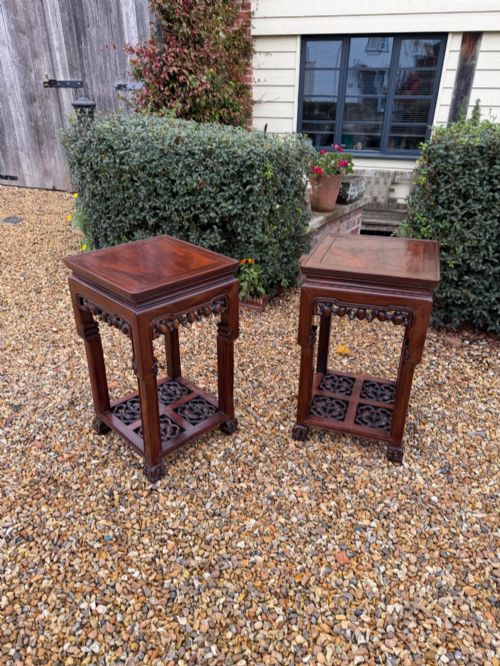
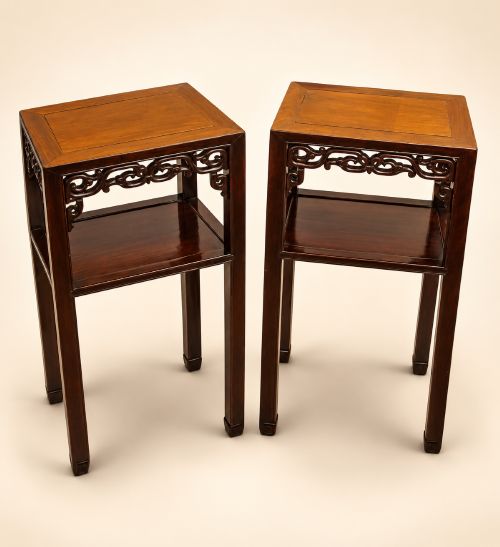
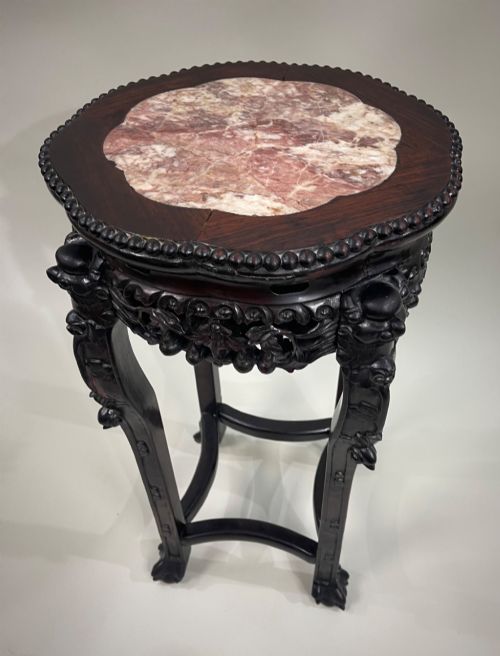
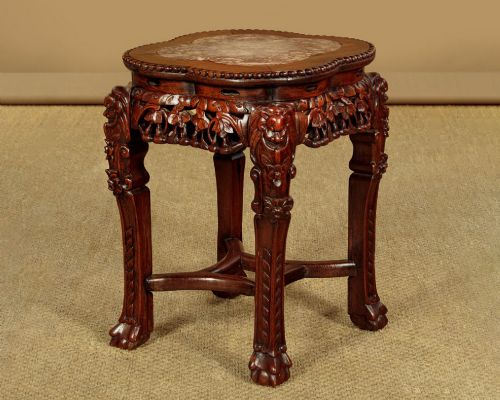
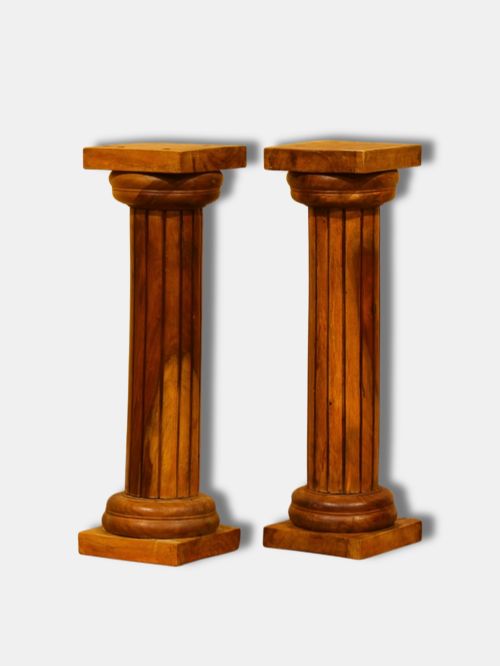
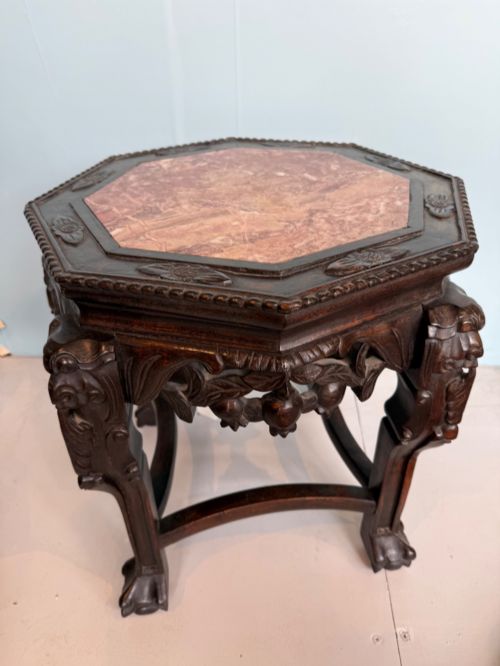
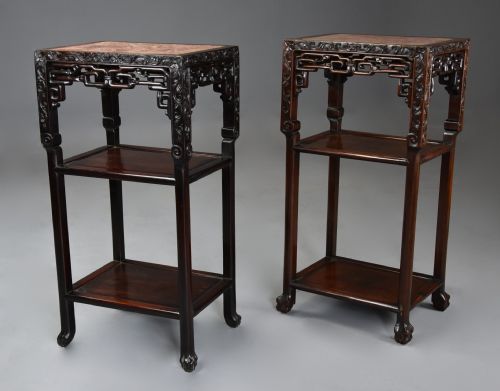
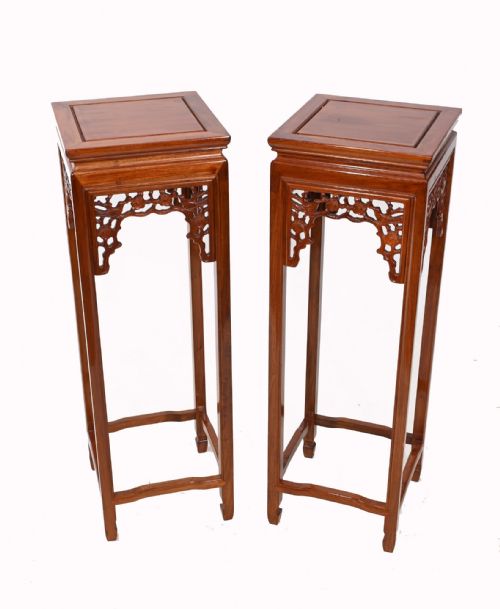
The most common version met on this page is the Chinese hardwood stand featuring an inset marble top and heavily carved framing. Forms range from low pot stands and rectangular side tables to tall torcheres and pedestal stands.
Originating during periods such as the Qing Dynasty and the Edwardian era, these objects function equally well as lamp tables, wine stands, and occasional tables. Their construction spans compact stools to large architectural column supports.
Materials and Construction
Construction relies on dense tropical timbers including rosewood, padouk, teak, and huali hardwood, often complemented by ebonised wood and lacquered finishes. Workshops utilised traditional joinery to support heavy stone inserts without warping.
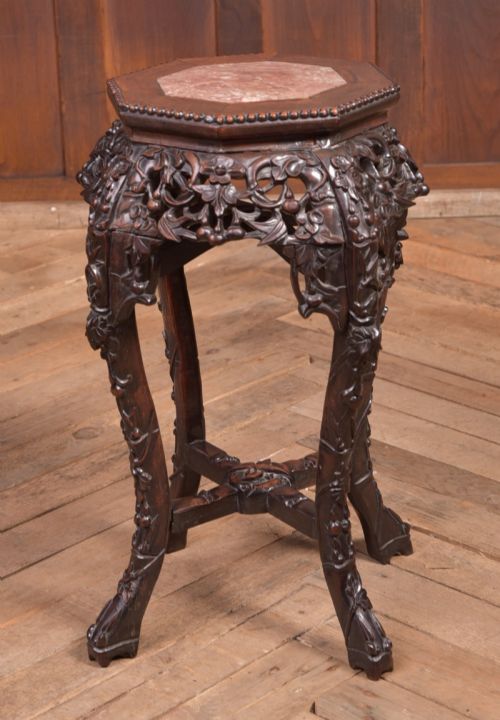
Many examples incorporate smooth inset panels of rouge or white marble, contrasting sharply with the dark, heavily carved timber frames beneath. Manual carving yields intricate floral, dragon, and scroll motifs across the skirts and cabriole legs.
Hardwood Plant Pedestal Retail Price Guide 2026
Typical asking prices for hardwood plant pedestal among the pieces listed under this phrase on Sellingantiques today, from the lower quarter to the upper quarter. They describe what is for sale here now, not the wider market.
Listings feature items spanning the Victorian era through the Edwardian period, utilising rosewood, padouk, teak, and ebonised wood.
Quality and Execution
Superior examples display deep, crisp relief carving with high definition in the details of the foliage and figures, whereas lesser pieces show shallow or mechanical incision. The selection of the timber dictates the weight and resonance of the frame.
The integration of the marble insert into the wooden chassis reveals the standard of the workshop. Snug, flush seating of the stone without excessive packing filler distinguishes master execution from hurried assembly.
The Hardwood Plant Pedestal Glossary
- Hardwood
- Dense, durable timber derived from angiosperm trees, chosen for structural strength and resistance to indentation. Rosewood and padouk are common examples found in these stands.
- Jardiniere Stand
- A low table or pedestal specifically designed to support a ceramic flower bowl or plant pot. These pieces often feature water-resistant stone tops.
- Torchere
- A tall, slender stand originally intended to support a candle or lamp, adapted later for vases and tall arrangements. Their vertical proportions suit corners and narrow wall spaces.
- Ebonised
- Timber treated with a chemical stain or finish to simulate expensive ebony wood. This dark, uniform coating appeared frequently on nineteenth-century European interpretations of oriental forms.
- Huali
- A traditional Chinese hardwood prized for its rich grain and durability, frequently utilised in Qing Dynasty furniture. Pieces in this material command attention for their warm natural lustre.
Hardwood Plant Pedestal: Frequently Asked Questions
What is a hardwood plant pedestal used for?
These pieces serve as elevated display surfaces for heavy ceramic planters, bronze vases, and decorative table lamps. Their sturdy frames safely lift botanical displays off the floor.
Beyond plant display, they function easily as compact side tables for holding drinks or small ornaments in reception rooms.
How do I tell Chinese Export pieces from Victorian ones?
Chinese Export and Qing Dynasty pieces rely on dense exotic timbers like padouk and rosewood paired with inset marble panels and deep traditional carving. They reflect eastern joinery methods.
Victorian interpretations made in Britain often utilise ebonised wood or softwoods finished to mimic exotic species, following contemporary domestic interior trends.
Where should I place a torchere stand?
Tall torchere stands work best in corners, empty wall spaces, or flanking doorways where their vertical height adds architectural interest to a room. Their slender profiles require minimal floor space.
Ensure they stand on level flooring so that top-heavy arrangements of vases or sculptures remain stable and secure.
Are marble top stands fragile?
The inset marble slabs add significant weight to the furniture, anchoring the base while providing a cool, wipe-clean surface for damp plant pots. The stone is heavy and solid but can chip if struck hard along the exposed edges.
Routine maintenance requires only a soft cloth to dust the timber carvings and a damp sponge for the stone surface.