







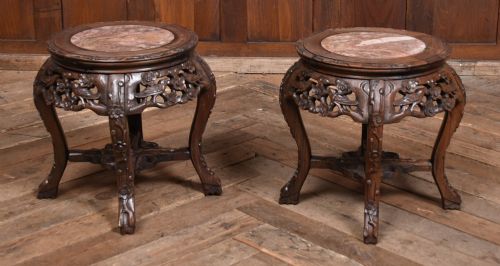

Hardwood Pedestal Table
A hardwood pedestal table brings dense tropical timber and stone into a room, serving as a plant stand, jardinière or occasional table.
Hardwood Pedestal Table
When a buyer searches for a hardwood pedestal table, they encounter a range of forms designed to elevate decorative objects or serve as compact surfaces. These items include plant stands, jardiniere stands, occasional tables, centre tables, and side tables produced across multiple continents.
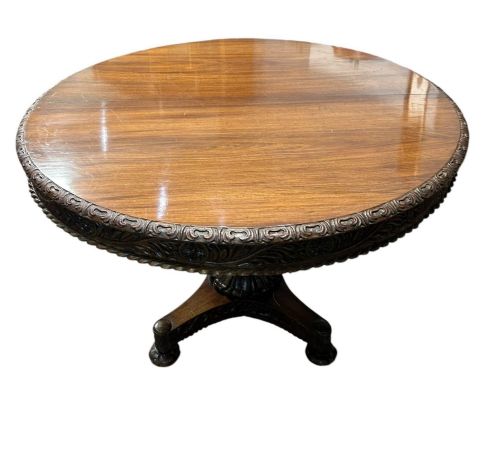
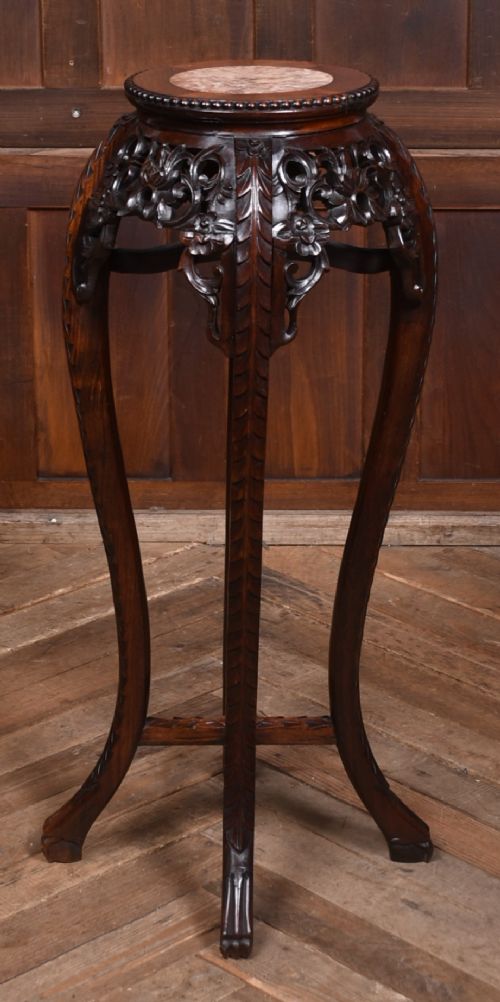
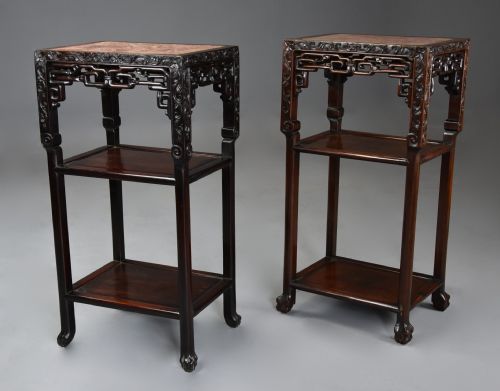
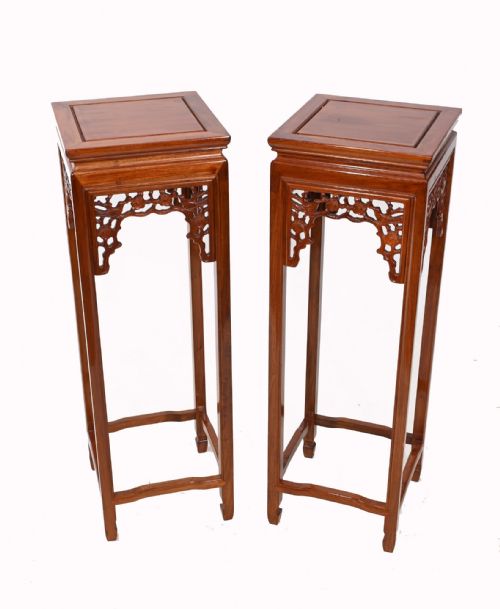
The pieces on this page lean heavily towards Asian and Anglo-Indian production, alongside 19th-century British and European examples utilising exotic timbers. Chinese export pieces and regional stands dominate the selection, often featuring carved details and inset surfaces.
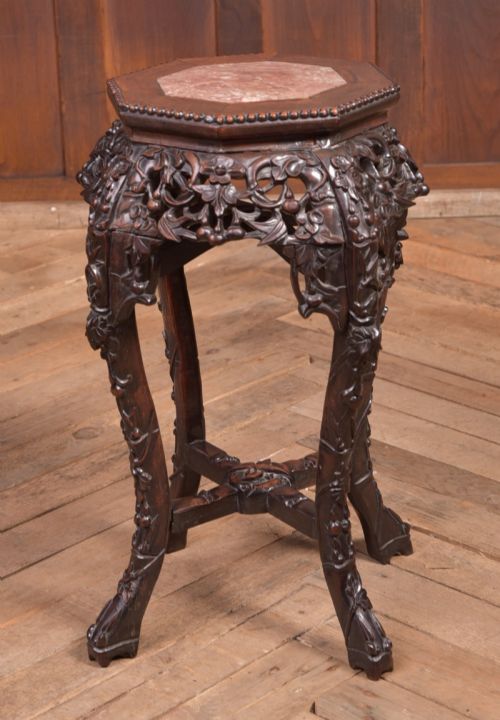
Dates span from the 18th century through the Victorian era and into the early 20th century. Buyers will frequently meet 19th-century Chinese hardwood stands paired with marble tops, as well as Anglo-Indian occasional tables and padouk centre tables.
How they were made
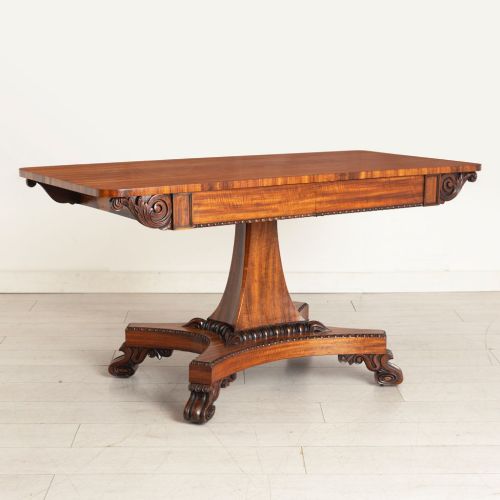
Maker-craftsmen constructed these tables from dense timbers such as padouk, rosewood, teak, and mahogany, frequently combined with contrasting materials like marble inserts, mother of pearl inlay, and brass fittings. These woods provided the structural strength required for slender pedestal supports and heavily carved aprons.
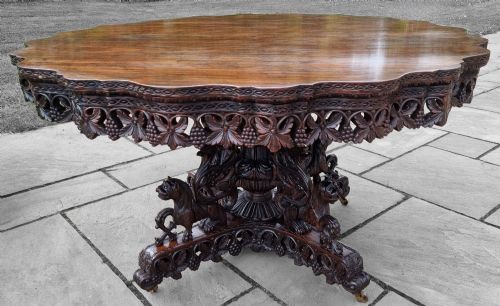
Joinery techniques supported intricate relief carving, pierced galleries, and tilt-top mechanisms found in Burmese and Anglo-Indian examples. Ebonised finishes and lacquered surfaces also appear, reflecting specific regional preferences for darkening or protecting the timber ground.
Hardwood Pedestal Table Retail Price Guide 2026
Typical asking prices for hardwood pedestal table among the pieces listed under this phrase on Sellingantiques today, from the lower quarter to the upper quarter. They describe what is for sale here now, not the wider market.
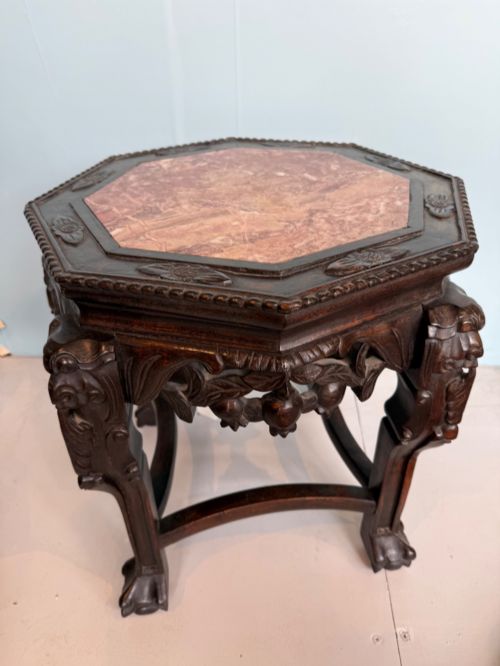
A dragon occasionally guards the side table.
What varies in quality
Quality separates through the depth and crispness of the carving, the selection of the timber, and the integration of secondary materials. Deeply undercut relief work and sharply defined motifs indicate a higher tier of workshop production compared to shallow or mechanical milling.
The choice of inset material also distinguishes the piece, such as a well-fitted rouge marble top or dense rosewood grain without excessive filler. Structural stability in the pedestal base and the integrity of joints under heavy stone tops mark the difference between standard utility items and finer display pieces.
The Hardwood Pedestal Table Glossary
- Jardiniere stand
- A tall pedestal or small table specifically designed to hold a plant container or ceramic jardiniere. These pieces often feature an inset marble top to resist water damage from watering plants.
- Padouk
- A heavy tropical hardwood known for its reddish-brown colour and dense grain. Craftsmen in British India and China utilised it extensively for carved furniture and centre tables.
- Tilt-top
- A tabletop mechanism allowing the surface to pivot to a vertical position when not in use. This feature appears on occasional and dining tables originating from Burma and the Anglo-Indian region.
- Marble top
- A stone slab fitted directly into the surface frame of a stand or table. It provides a cool, durable surface suited for displaying vases and lamps.
Hardwood Pedestal Table: Frequently Asked Questions
What were hardwood pedestal tables used for?
These tables served primarily as display furniture for heavy decorative objects, ceramic planters, and lamps within domestic interiors. Their elevated surfaces brought plants and ornaments to eye level.
Smaller versions functioned as occasional tables for wine or reading materials, whilst larger centre tables anchored principal rooms. Regional variations adapted these forms to both Western drawing rooms and Eastern domestic spaces.
How do I identify a Chinese export stand?
Chinese export stands typically exhibit traditional motifs executed in dense tropical hardwoods like rosewood or padouk. Many incorporate inset marble panels or mother of pearl inlay.
They frequently date from the 19th century and reflect specific Qing dynasty design influences tailored for Western markets. Look for distinct joinery methods and carved floral or dragon details native to these workshops.
Where were Anglo-Indian tables made?
Anglo-Indian tables originated in workshops across regions such as Bombay and Burma during the 19th century. Local artisans combined British furniture forms with traditional Indian and Far Eastern carving techniques.
These pieces often utilise padouk or teak timber, featuring dense foliage carving and tilt-top mechanisms. They reflect the cross-cultural exchange of the colonial period.
How do I care for a marble top table?
Marble inserts require gentle cleaning with a damp cloth and mild soap to avoid scratching the polished stone surface. Harsh chemical cleaners can etch or dull the natural finish.
Using coasters and protective pads beneath heavy planters prevents moisture pooling and staining. Regular dusting preserves both the stone and the surrounding hardwood frame.
What is the difference between a pot stand and a centre table?
A pot stand is typically tall and narrow, built to support a single plant or vase in a corner or window recess. Its surface area is restricted to the footprint of the container.
A centre table stands larger and lower, designed to sit freestanding in the middle of a room for general use. Centre tables often feature more expansive timber tops and substantial pedestal bases.