



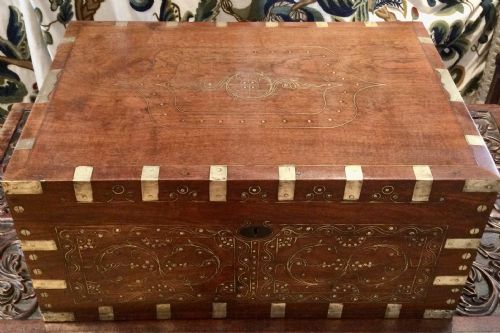


Hardwood Mounted Carving
Hardwood mounted carving brings together solid timber and metalwork, offering practical storage and decorative presence for the home.
Hardwood Mounted Carving
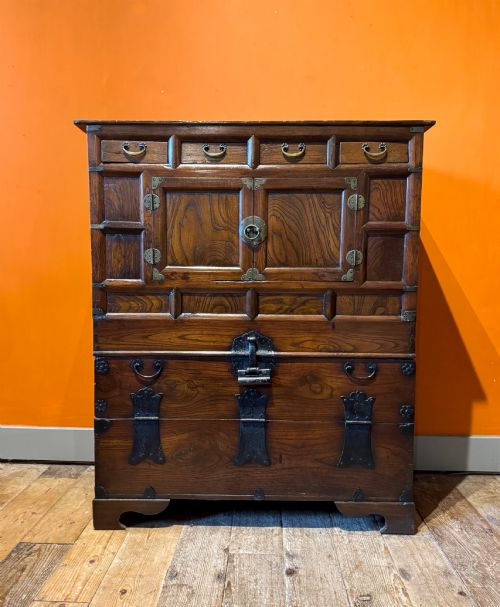
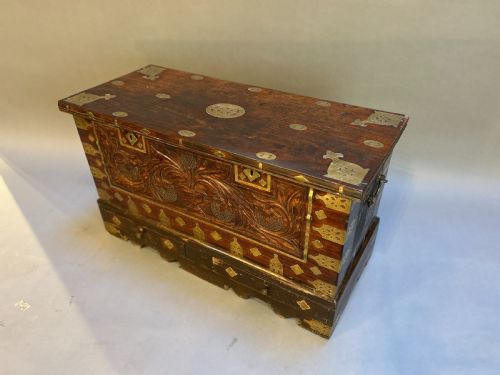
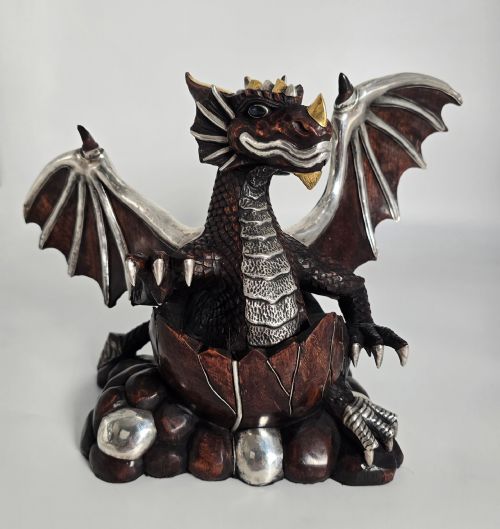
When you search for hardwood mounted carving, you encounter pieces that combine dense timber with metal elements like brass, iron, or silvered metal. These items range from large storage furniture and chests to smaller tables, cabinets, and decorative sculptures.
The versions most commonly met on this page span from the nineteenth century into the early twentieth century, taking stylistic cues from Chinese, Indian, Korean, and European traditions. Forms include low tables, floor cabinets, walking sticks, and torcheres.
Makers and workshops from various regions applied metal mounts functionally to reinforce corners and joints or purely for decorative contrast against the dark timber.
Materials and construction methods
Constructed primarily from heavy timbers such as elm and general hardwood, these pieces rely on dense woods selected for durability and grain pattern. Artisans shaped these materials into functional forms like chests, cabinets, and tables.
Metal components, including brass strapwork, iron brackets, and gilt bronze highlights, are fixed to the wood using traditional fastening methods. Mixed metal work and horn details appear on specific decorative items and sculptures.
Surface treatments preserve the natural colour and texture of the wood while integrating the contrasting sheen of the mounted metal elements.
Hardwood Mounted Carving Retail Price Guide 2026
Typical asking prices for hardwood mounted carving among the pieces listed under this phrase on Sellingantiques today, from the lower quarter to the upper quarter. They describe what is for sale here now, not the wider market.
One listed walking stick conceals a novelty parrot head, proving that Victorian practicality could still make room for a cheeky bird.
Judging quality in mounted carvings
Quality rests upon the precision of the joinery and the integration of the metal mounts into the wooden structure. Finer examples display tight joints and metalwork that follows the contours of the timber accurately.
The depth and detail of the carving work distinguish standard utility items from more ambitious decorative pieces. Sculptures and cabinets with intricate dragon motifs or careful regional carving show greater artisanal skill.
Condition of the original mounts and the stability of the timber frame dictate the overall integrity of the piece.
Gabriel Viardot
The Hardwood Mounted Carving Glossary
- Hardwood
- Dense and durable timber derived from angiosperm trees, chosen for heavy furniture and structural objects. It resists wear better than softwood alternatives.
- Mount
- A decorative or structural piece of metal attached to the surface or edges of wood. Brass and iron mounts provide both reinforcement and visual contrast.
- Torchère
- A tall ornamental stand or candlestick holder designed to elevate a light source. These wooden pedestals often feature carved details.
- Japonisme
- A nineteenth-century European artistic style influenced by Japanese art and design. It appears in furniture and decorative objects of the period.
- Bandaji
- A traditional Korean storage chest featuring prominent metal strapwork and hinges. These pieces combine practical storage with decorative hardware.
Hardwood Mounted Carving: Frequently Asked Questions
What is a hardwood mounted carving?
These pieces are furniture items, decorative sculptures, or utility objects made from dense timber and fitted with metal mounts. They combine wooden construction with brass, iron, or mixed metal elements.
Items range from nineteenth-century chests and cabinets to small tables and walking sticks originating from various global traditions.
How were these items used historically?
Chests and cabinets provided secure storage for textiles, valuables, and household goods in domestic settings. Tables and torcheres served functional roles for display and lighting.
Decorative sculptures and walking canes functioned as personal accessories or interior ornamentation reflecting specific cultural styles.
How do I care for hardwood furniture?
Keep wooden pieces away from direct heat sources and dramatic humidity shifts to prevent timber splitting. Regular dusting with a dry cloth maintains the surface.
Avoid harsh chemical cleaners that can damage the finish on both the wood and the attached metal mounts.
How can I tell the period?
Dating relies on construction methods, timber choice, and stylistic markers associated with specific manufacturing eras like the nineteenth century or the art deco period. Metalwork styles also offer clues to the date of production.
Comparing the hardware and joinery techniques to documented examples helps establish the likely decade or century of origin.