





Hardwood Hall Seat
A hardwood hall seat is a sturdy entrance bench built to impress callers and manage heavy outdoor wear.
Hardwood Hall Seat
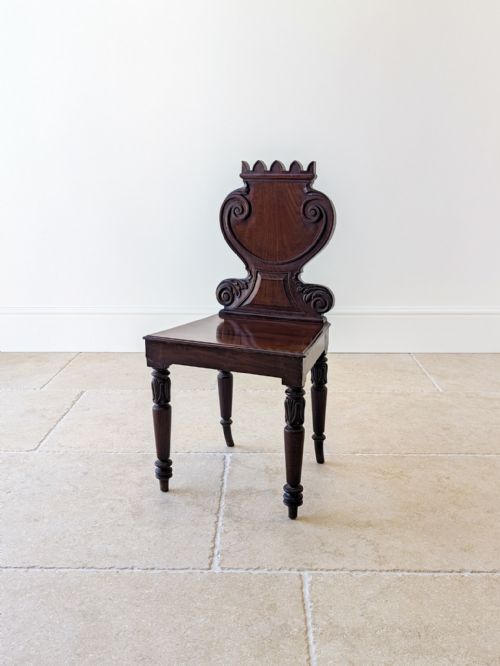
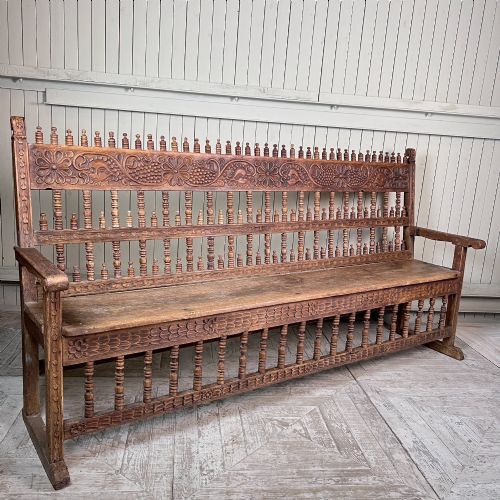
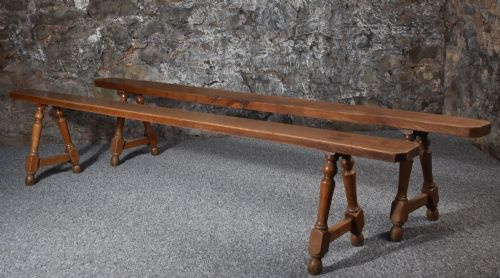
A hardwood hall seat provides a firm place to sit in an entranceway, drawing on designs from the eighteenth century to the twentieth century. These pieces range from simple Spanish Colonial benches to elaborate Chinese Qing Dynasty settles and British William IV forms.
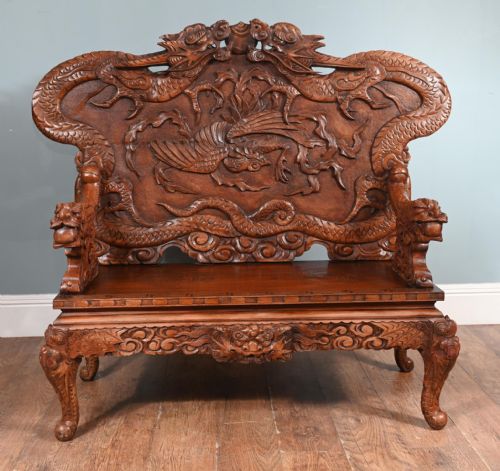
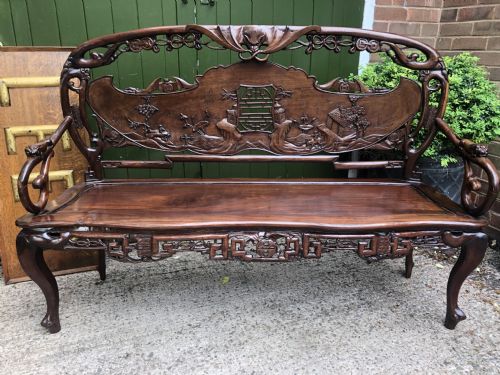
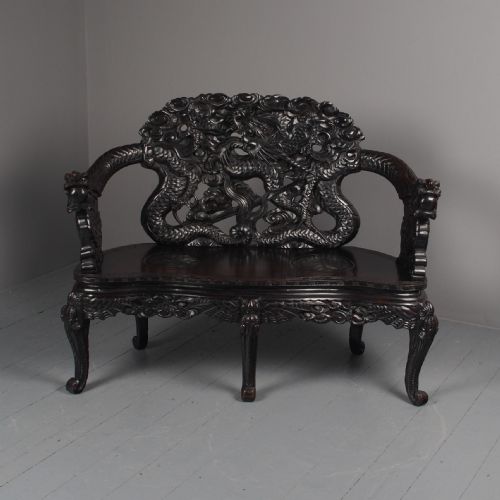
The version most commonly met on this page is the carved Chinese hardwood hall bench or settle, often dating from the nineteenth century. Buyers also encounter Anglo Indian box settles, cherry wood benches, and occasional pairs of matching hall chairs.
How they were made
Craftsmen built these seats using dense timbers like mahogany, rosewood, teak, cherry wood, and heavy polished hardwood. These durable woods resisted the knocks and scrapes typical of busy hallways.
Makers employed deep relief carving, cinnabar lacquer, and brass decoration to ornament the wood. Joinery techniques varied from traditional Chinese mortise and tenon frames to robust colonial box construction.
Materials recorded across the selection include mahogany, rosewood, teak, cherry wood, lacquer, and brass embellishments.
What varies in quality
The depth and crispness of the hand carving separate standard seating from exceptional examples. Fine pieces display sharply undercut dragon motifs or fluid floral details rather than shallow, mechanical stamping.
The choice of primary timber also dictates the grade of the piece, with dense rosewood and well-figured mahogany achieving greater visual weight than softer blonde woods.
The Hardwood Hall Seat Glossary
- Settle
- A wooden bench with a high back, solid arms, and often a storage compartment beneath the seat. This form kept draughts away from people sitting in cold hallways.
- Qing Dynasty
- The final imperial dynasty of China, lasting from the mid-seventeenth century until the early twentieth century. Furniture from this period frequently incorporates intricate dragon carvings and polished hardwood.
- Cinnabar lacquer
- A decorative technique involving multiple layers of red mineral lacquer applied to a wooden base before being deeply carved. This method creates a rich, textured surface seen on specific oriental hall benches.
- Anglo Indian
- A term describing furniture made in India during the British colonial period, often combining local dense hardwoods with European seating forms.
Hardwood Hall Seat: Frequently Asked Questions
Where did people put a hardwood hall seat?
These seats stood near the front door in grand entrance halls and vestibules. Households used them for putting on boots or waiting for carriages.
They also served to impress visitors immediately upon entering the home with the owner's taste and the quality of the furnishings.
How do I care for polished hardwood furniture?
Keep the wood away from direct heat sources and sudden temperature changes to prevent splitting. Dust the carved surfaces regularly with a dry cloth.
Apply a traditional wax polish sparingly when the timber appears dry, buffing it gently to maintain the natural sheen.
Are these benches comfortable to sit on?
Most historic hall seating was designed for brief use rather than lounging. The wooden or lacquered seats are firm and upright by design.
Owners often added loose cushions to soften the seat when placing them in living areas or dining rooms.