






Hardwood Chinese Bench
A hardwood chinese bench brings solid timber architecture and centuries of carving tradition directly into a modern room.
Hardwood Chinese Bench
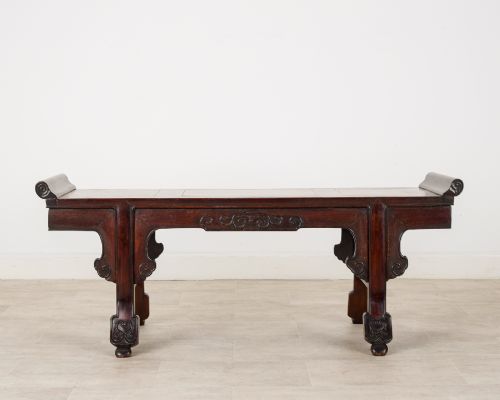
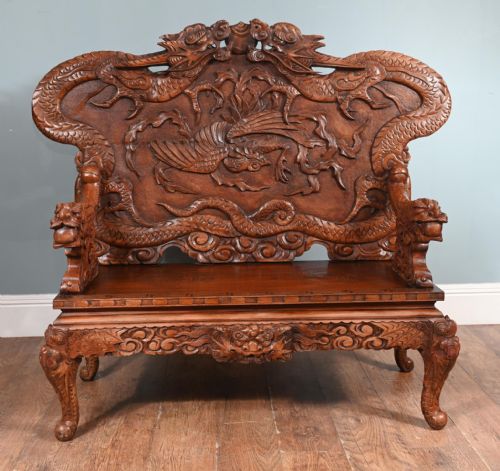
A hardwood chinese bench encompasses seating forms ranging from nineteenth-century altar seats and window benches to larger hall settles and day beds. These pieces emerge from periods spanning the Qing Dynasty through the early twentieth century, reflecting traditional Chinese joinery and domestic design.
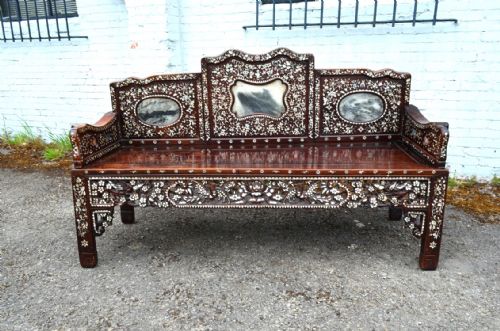
Origins vary between traditional domestic workshops and pieces produced for the export market, incorporating decorative elements like mother of pearl inlay and cinnabar lacquer. The forms serve both functional seating roles and sculptural functions within contemporary interiors.
Determining quality
Quality rests upon the depth and precision of the hand-carved detail across the timber frame, distinguishing fluid dragon reliefs and crisp scroll ends from plainer work. The choice of material dictates the underlying character, with heavy hongmu and dense rosewood carrying more presence than softer blonde woods or elm.
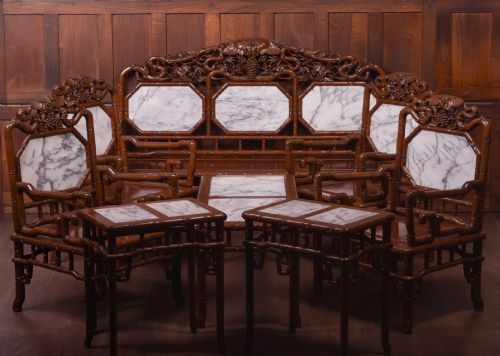
The complexity of the form and its decorative additions separate standard utility pieces from ambitious export or parlour suite items. Integration of mother of pearl inlay, carved lacquer surfaces, and balanced proportions elevate certain benches into notable examples of period craftsmanship.
The Hardwood Chinese Bench Glossary
- Hongmu
- A dense, heavy Chinese hardwood prized for dark colour and fine grain. It provides a stable base for intricate carving.
- Kang table
- A low platform table traditionally used on a heated brick bed for dining or tea. These items share construction traits with low benches.
- Cinnabar lacquer
- Layers of coloured tree sap carved into relief designs. This technique creates a richly textured red surface on wooden substrates.
- Qing Dynasty
- The final imperial dynasty of China, lasting from sixteen forty-four to nineteen twelve. Pieces from this era often feature traditional motifs and dense hardwoods.
- Mortise and tenon
- A traditional joint connecting two pieces of wood by inserting a peg into a slot. This method underpins durable antique Chinese furniture construction.
Hardwood Chinese Bench: Frequently Asked Questions
How were these benches used traditionally?
These benches served practical seating and resting purposes in traditional Chinese homes, often positioned near windows or along main hall walls. Low variants functioned on heated platforms for daily domestic life.
Larger settles and hall benches provided formal seating areas for guests entering the household, reflecting status through their carved decoration.
What woods should I expect to find?
Makers relied on dense native Asian timbers such as hongmu, rosewood, elm, and blonde wood to construct durable frames. Ebonised finishes and red lacquers were also applied to alter the appearance of the timber.
Selected pieces incorporate contrasting decorative panels made from mother of pearl or marble inserts set directly into the wooden structure.
How do I date a Chinese hardwood bench?
Dating relies on stylistic markers associated with the Qing Dynasty and early twentieth-century export periods, alongside the wear patterns visible on the timber. Nineteenth-century examples typically show deep hand-carving and mature patination across the unpolished grain.
Later pieces from around nineteen hundred to nineteen thirty may combine traditional joinery with distinct export styling or specific inlay combinations.
Can I use an antique bench as daily seating?
These solid hardwood pieces offer robust physical construction built upon traditional joinery methods designed to last generations. Their sturdy frames support regular everyday use in hallways, living rooms, or dining spaces.
Placing cushions on the timber seat provides comfort while preserving the antique wooden surface underneath.