





Hanging Stained Glass
Hanging stained glass brings colour and light into a room, capturing daylight through leaded panels and suspended lanterns.
Hanging Stained Glass
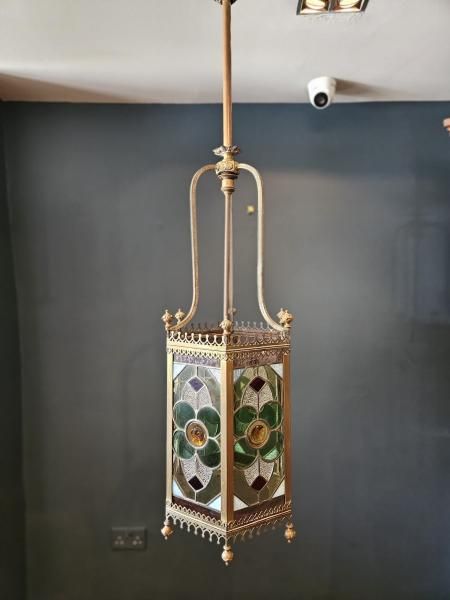
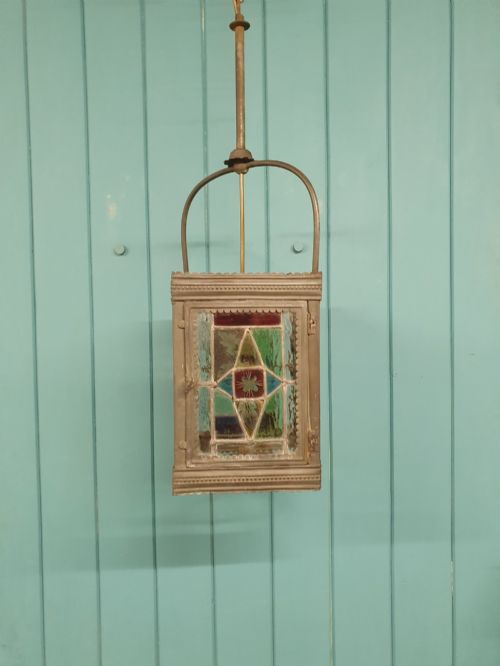
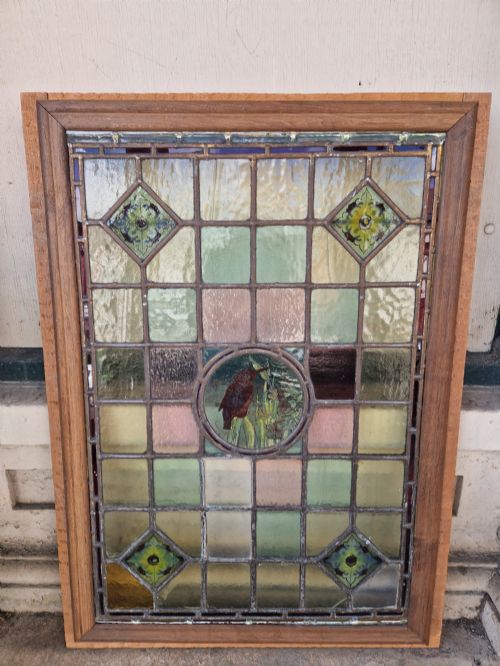
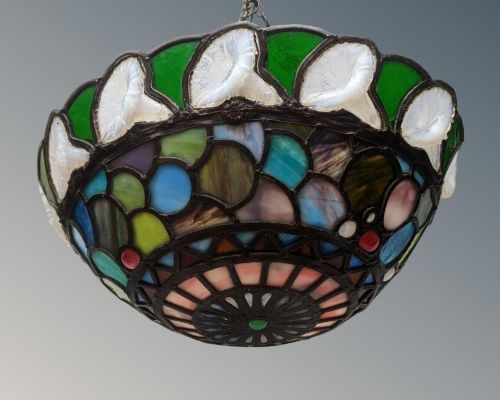
Hanging stained glass encompasses suspended lanterns, ceiling lights, panels, and windows from the Victorian, Edwardian, and 19th Century periods. These pieces utilise lead, glass, and stained glass to create decorative illumination and window displays for interiors.
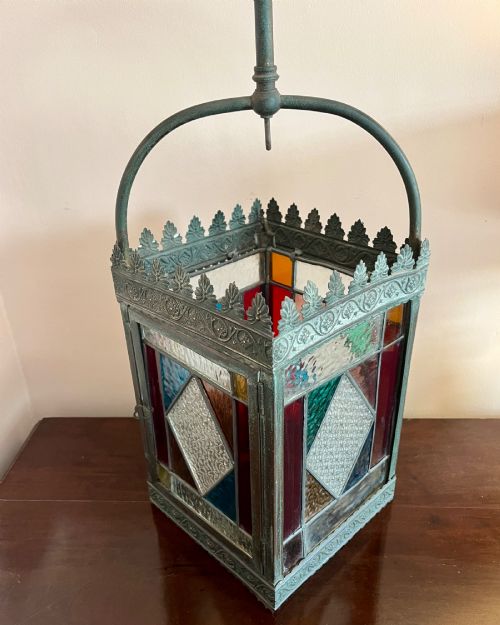
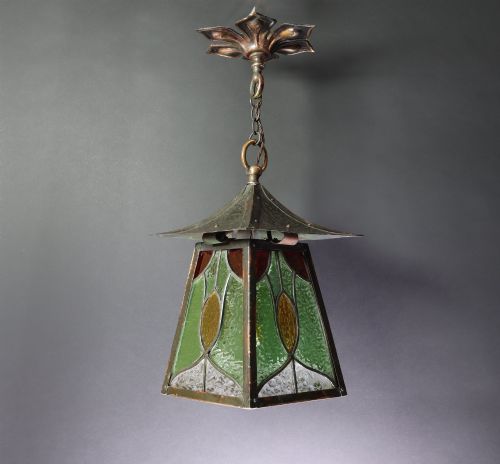
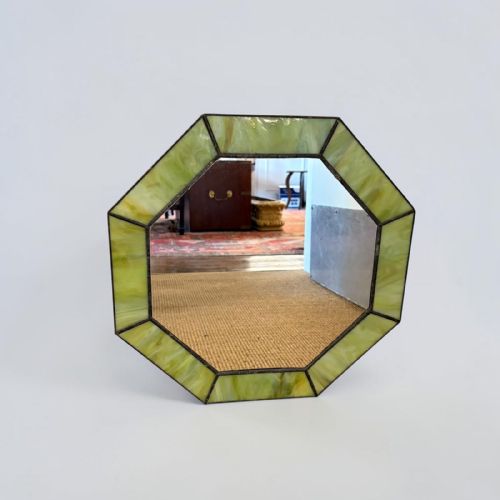
You will most commonly meet hanging stained glass in the form of brass, copper, or wrought iron lanterns fitted with coloured leaded glass panels. Windows and panels designed for hanging also appear frequently across Gothic Revival and Arts and Crafts styles.
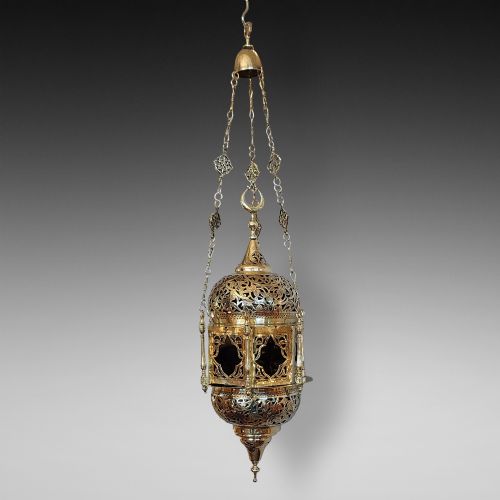
The selection ranges from church windows and hall lights to Moroccan revival lanterns and domestic pendant lamps. Each piece relies on suspended placement to catch and filter light from windows or interior bulbs.
Materials and Construction
Pieces are constructed using lead cames to join individual pieces of coloured or painted glass into pictorial and geometric designs. Metal frames in brass, copper, iron, and wood provide structural support for the suspended glass panels.
Techniques range from traditional leaded construction and hand painting on glass to planished metalwork found in Arts and Crafts pieces. Bullseyes and specific glass textures are incorporated into windows to add depth to the design.
Hanging Stained Glass Retail Price Guide 2026
Typical asking prices for hanging stained glass among the pieces listed under this phrase on Sellingantiques today, from the lower quarter to the upper quarter. They describe what is for sale here now, not the wider market.
Judging Quality
Quality rests in the intricacy of the glass selection, from simple geometric leaded patterns to detailed hand-painted religious scenes and bird motifs. The integration of the glass with the metal frame determines the overall rigidity and presence of the piece.
Heavier framing metals like planished copper and wrought iron distinguish sturdier hanging lanterns from lighter domestic fixtures. The clarity and hue of the coloured glass, including cobalt blue and amber bullseyes, elevate the visual impact when light passes through.
The Hanging Stained Glass Glossary
- Came
- A slender grooved strip of lead used to hold pieces of glass together in a window or panel. These strips form the structural grid of the design.
- Bullseye
- A circular patch of glass with a raised centre formed at the point where the blowpipe was removed. They appear as decorative accents within leaded windows.
- Planished
- A metalworking technique where the surface is hammered with a small-faced tool to create flat facets. This finish is typical of Arts and Crafts copperwork.
- Gothic Revival
- An architectural and decorative style drawing inspiration from medieval forms. Pieces in this style often feature pointed arches and ecclesiastical motifs.
- Pendant Lighting
- A single light fixture that hangs from the ceiling by a cord, chain, or metal rod. These often incorporate stained glass shades or lantern bodies.
Hanging Stained Glass: Frequently Asked Questions
How do I hang a heavy stained glass panel?
Hanging a heavy leaded glass panel requires secure fixing points into ceiling joists or robust wall studs using appropriate chains and hooks. The weight of the lead and glass demands hardware rated well beyond the actual load of the piece.
Ensure the hanging chains distribute the weight evenly across the frame to prevent twisting or bowing of the lead cames over time.
How do I clean antique stained glass?
Clean antique stained glass gently with a soft cloth and mild, non-ammonia soap solution to avoid damaging painted surfaces or fragile lead. Avoid excessive moisture around the lead cames and old putty.
Dry the panel thoroughly with a lint-free cloth to preserve the finish of both the glass and the surrounding metal frame.
What defines the Arts and Crafts style in glass?
Arts and Crafts glasswork emphasises honest construction, visible hand-worked metal details, and nature-inspired motifs like birds and branches. The design values craftsmanship over mass production.
Lanterns from this movement often feature planished copper and leaded panels that showcase simple, strong geometric or organic forms.