
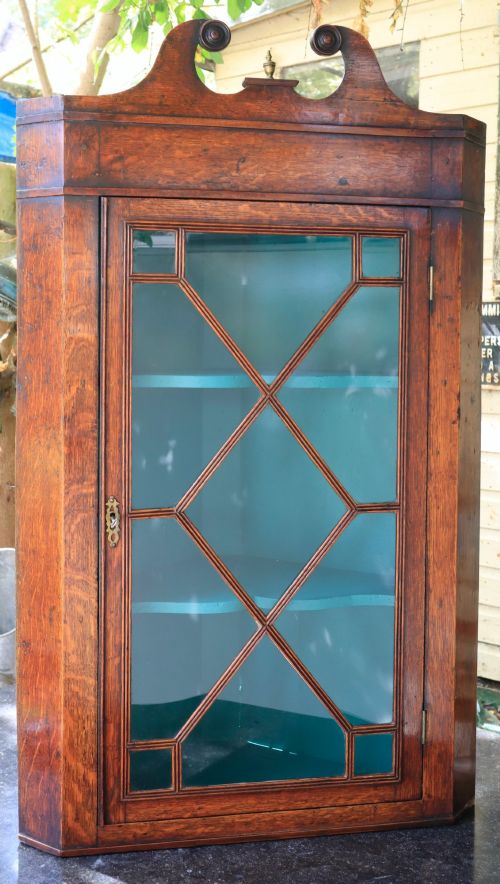


Hanging Glass Cabinet
A hanging glass cabinet clears floor space while framing your collections on the wall.
Hanging Glass Cabinet
When you search for a hanging glass cabinet, you find wall-mounted pieces designed to display small collections behind glazed doors. These items utilise vertical wall space in rooms where floor area is at a premium, frequently taking the form of corner cabinets or flat wall units.
The versions you meet most often on this page date from the Georgian, Victorian, and Edwardian eras. They appear in formats ranging from simple oak and mahogany corner cupboards to bow-fronted display cases and wall vitrines.
Makers shaped these wall units to fit domestic interiors, producing glazed cabinets with shelves for china, glassware, or decorative objects. Many incorporate locking doors with keys and internal drawers for secure storage.
Materials and construction
Cabinet makers utilised dense hardwoods such as mahogany, oak, and walnut to build durable carcases that could support the weight of glass panels and stored items. Workshops frequently added satinwood inlay and fine brass hardware to accentuate the timber grain on the front elevation.
Glazing techniques employed single panes or multi-pane lattice doors to frame the interior display area. Wall mounting required sturdy internal hanging brackets or secure fixing points integrated into the backboards of the cupboards.
One walnut cabinet carries later hand-written advertising for Fry's Chocolate, recording its past life as a village shop display case.
Quality differences
The standard of timber selection and inlay work marks the divide between standard utility cupboards and finer pieces. Cabinets featuring figured mahogany, detailed satinwood stringing, or curved bow fronts demonstrate greater ambition from the workshop.
Joinery detail in the door framing and the clarity of the original glass panels also distinguish better examples. Superior units retain original brass hinges, working locks with keys, and uncompromised internal shelving.
The Hanging Glass Cabinet Glossary
- Bow front
- A convex, curved front elevation that projects outward. This shape requires advanced woodworking skills to bend timber and fit matching curved glass.
- Vitrines
- Glass-fronted display cabinets designed specifically for showing ornaments and curiosities. They utilise transparent panels on multiple sides to maximise light penetration.
- Corner cabinet
- A storage unit constructed with a flat front and angled sides to fit neatly into room junctions. These pieces make efficient use of unutilised architectural angles.
- Satinwood inlay
- Contrasting decorative wood veneer inserted into the primary timber surface in geometric or floral patterns. It provides pale, lustrous highlights against darker cabinet woods.
- Glazed
- Fitted with glass panes rather than solid wooden panels. This allows visibility of the interior contents while protecting them from dust.
Hanging Glass Cabinet: Frequently Asked Questions
What were hanging cabinets originally used for?
These units stored precious tablewares, tea canisters, and drinking glasses out of the reach of domestic staff and children. Their glazed doors permitted guests to admire the owner's best china.
In later periods, they served as display spaces for small ornaments, curios, and smoking paraphernalia in parlours and drawing rooms.
How do I tell a Georgian cabinet from a Victorian one?
Georgian pieces often display restrained classical proportions, dense mahogany, and simple architectural cornices. They rely on clean lines and fine timber grain for visual impact.
Victorian and Edwardian examples frequently introduce eclectic revival styles, satinwood inlay, bow fronts, and specialised advertising or painted finishes.
Can these cabinets support heavy items on the shelves?
Most antique hanging cabinets feature fixed or grooved wooden shelving designed for lighter decorative items, tea wares, or glassware. Overloading them with heavy books or dense ceramics strains the historical glue joints and wall brackets.
Check the thickness of the shelves and the strength of their internal supports before placing heavier objects inside.
How do I care for the wood and glass?
Dust the timber surfaces regularly with a dry, soft cloth and apply quality beeswax periodically to nourish the historic finish. Avoid placing cabinets in direct sunlight or near heat sources to prevent timber splitting.
Clean the glass panels with a mild solution applied to a cloth rather than sprayed directly, protecting the surrounding wood and putty.