
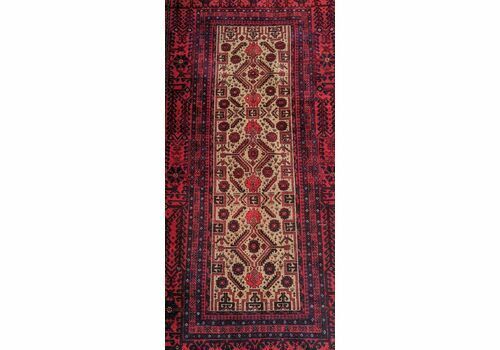
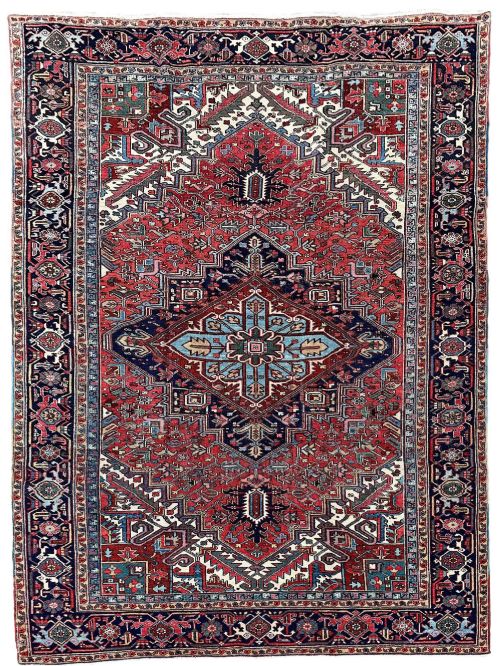
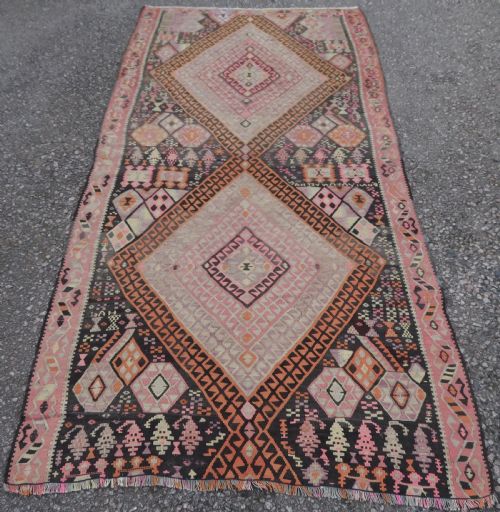
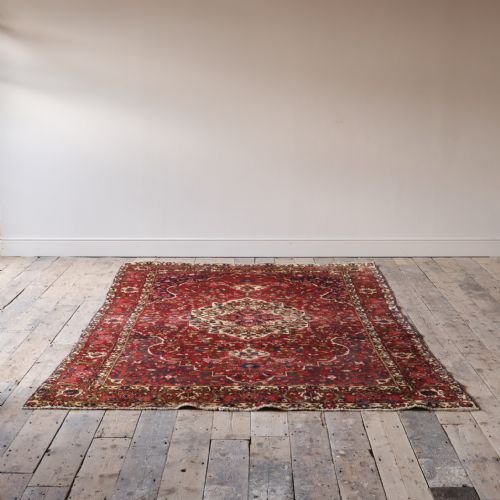
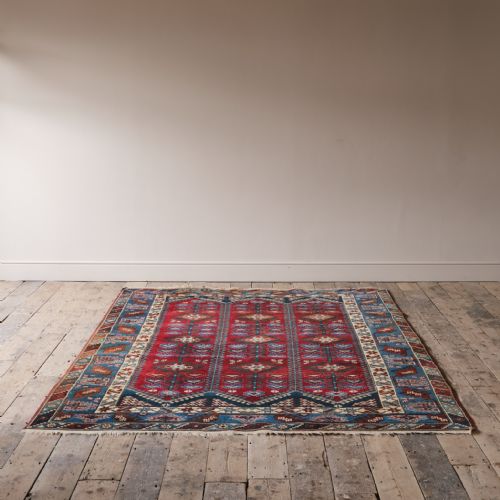
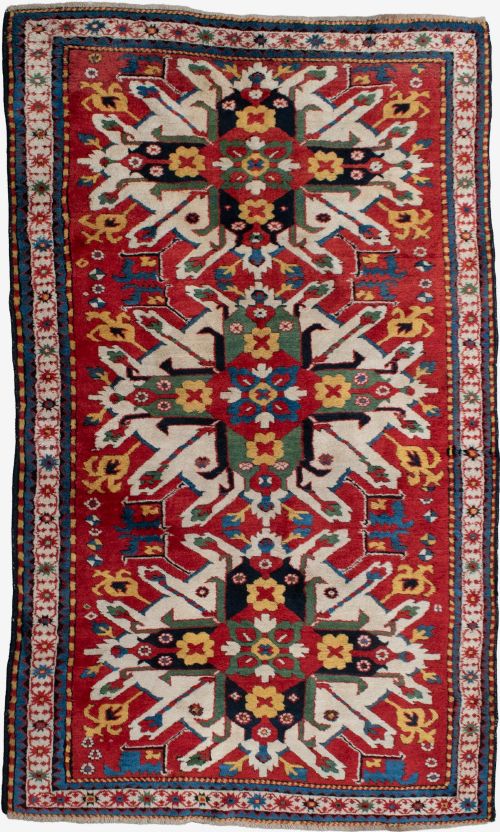
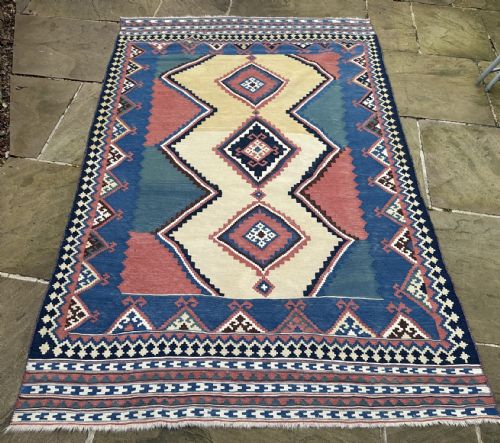
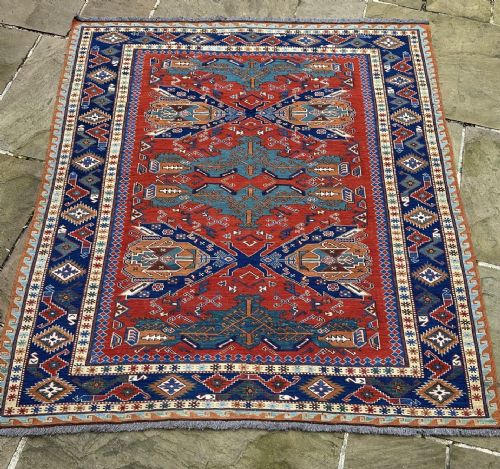

Handwoven Vintage Rug
A handwoven vintage rug brings texture, tribal geometry and rich natural dye colour into a room.
Handwoven Vintage Rug
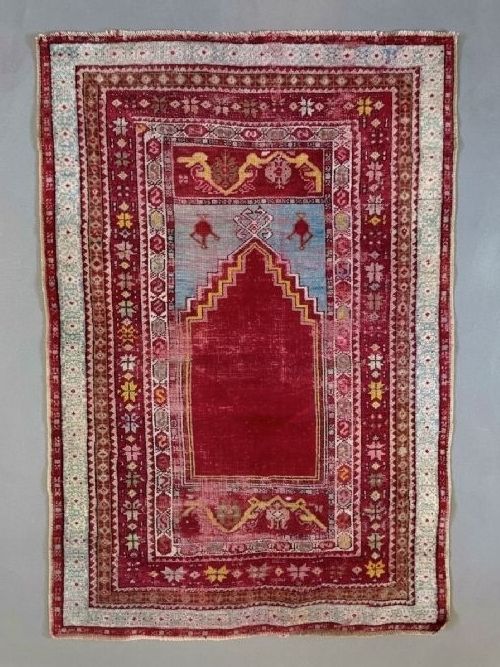
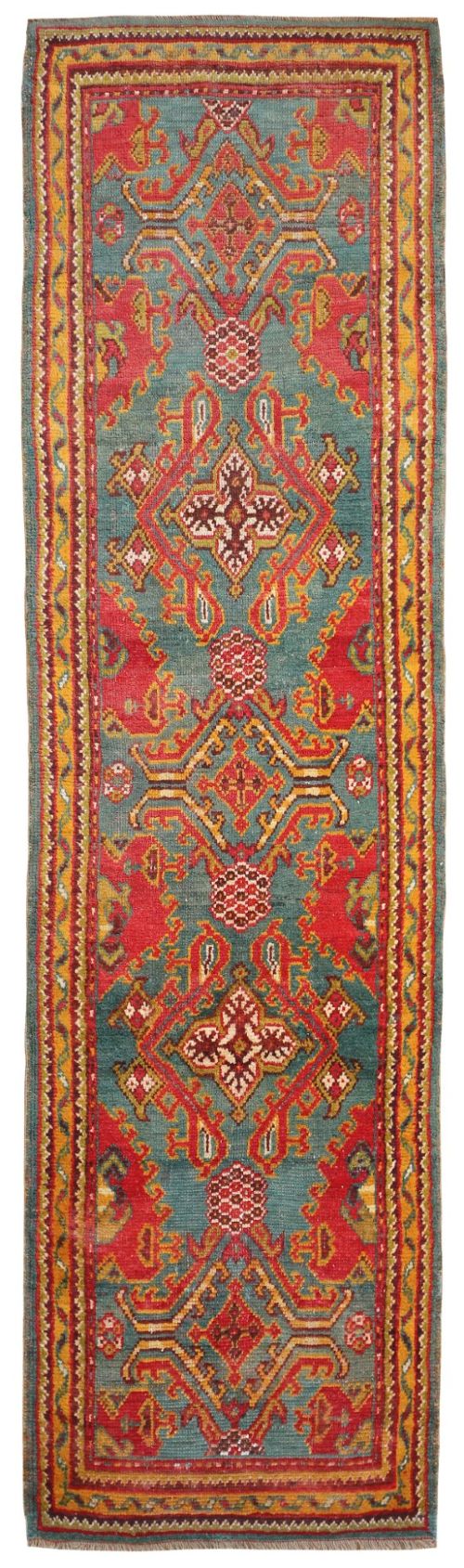
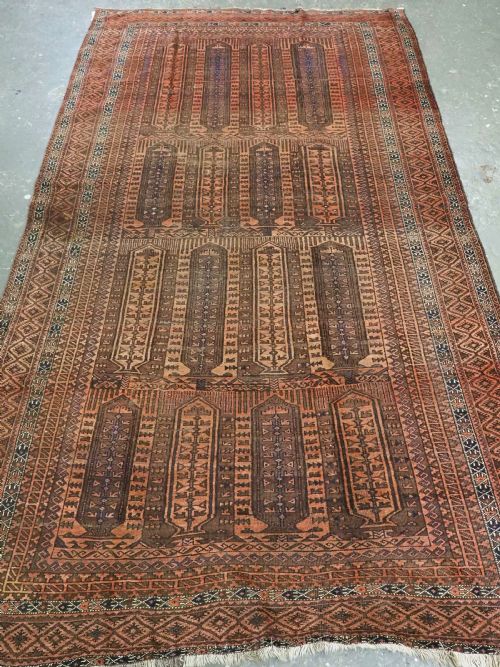
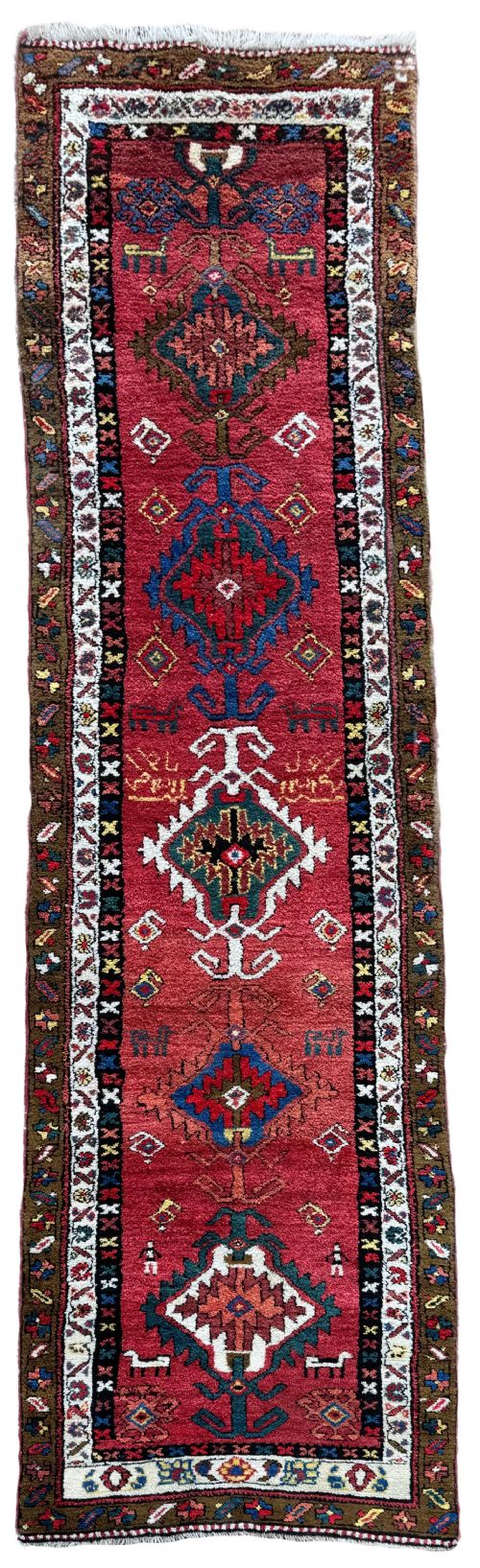
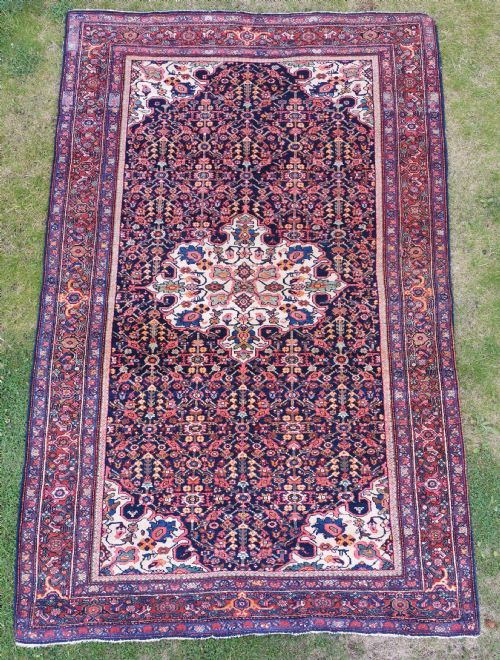
When you search for a handwoven vintage rug, you encounter floor coverings and tribal textiles originating from Persian, Caucasian, Anatolian, Turkmen and Afghan regions. These pieces span from the mid-nineteenth century through the early twentieth century, taking the form of large carpets, narrow runners, prayer rugs, kilims and smaller utilitarian bags.
The inventory on this page relies heavily on Persian styles such as Heriz, Jozan Sarouk, Bidjar and Qashqai, alongside Caucasian examples like Kazak, Shirvan and Karabagh. Village and nomadic weavers produced these textiles for domestic utility, ceremonial use or trade, embedding regional motifs directly into the weave.
Nomadic and village groups such as the Baluch, Luri, Yomut and Afshar created smaller formats like salt-bags, vanity-bags and saddle bags, which function today as compact decorative panels or cushion covers. Larger formats include room-sized carpets and runners designed for corridors and central living spaces.
How they were made
Weavers constructed these textiles using hand-spun wool for the pile and foundation yarns, often incorporating cotton for warps and wefts in workshop pieces. Natural dyes provided the palette, yielding deep reds, indigos and earthy tones that age with distinct patination.
Nomadic and tribal workshops utilised flatweave techniques for kilims and pile-knotting for carpets, occasionally incorporating materials such as cactus silk, sabra fibre or glass beads in specific regional formats like Moroccan textiles.
Several nomadic weavers embedded protective glass beads directly into their textile work to ward off the evil eye.
What varies in quality
The standard of a piece rests upon the density of the knotting, the precision of the tribal geometry and the complexity of the design layout. Finer wool selection and superior natural dye saturation separate standard utility items from masterwork ceremonial carpets.
Structural integrity, intact original selvages and the preservation of secondary details such as specific tribal symbols or signatures dictate the distinction between everyday village weaving and collectable examples.
The Handwoven Vintage Rug Glossary
- Kilim
- A flatwoven carpet or rug produced without a pile, common throughout Anatolia, the Caucasus and Persia.
- Heriz
- A style of Persian carpet known for large geometric medallions and robust structural wool.
- Soumak
- A flatweave technique involving wrapping weft threads over warps to create a textured, durable surface.
- Kazak
- A style of Caucasian rug characterised by bold primary colours and large geometric motifs.
- Baluch
- A nomadic group from the borderlands of Persia and Afghanistan known for dark, rich palettes and geometric tribal bags.
Handwoven Vintage Rug: Frequently Asked Questions
Where were these rugs made?
These textiles originate from weaving centres and nomadic regions across Persia, the Caucasus, Anatolia, Afghanistan and Morocco. Specific tribes and towns, such as Heriz, Shirvan, Yomut and Qashqai, developed distinct regional aesthetics.
Production methods varied from urban workshops in Persia to nomadic tents across the Caucasus and Afghanistan, resulting in diverse structural formats including carpets, runners, kilims and utility bags.
How do I care for a vintage wool rug?
Vacuum gently without using a rotating brush bar to protect the hand-spun wool pile and delicate flatweave edges. Professional cleaning suited to antique textiles preserves the natural dyes and fibres.
Keep the textile out of direct, continuous sunlight to prevent fading of the natural dye colours. Rotating the piece periodically ensures even wear in high-traffic interior spaces.
What is the difference between a kilim and a carpet?
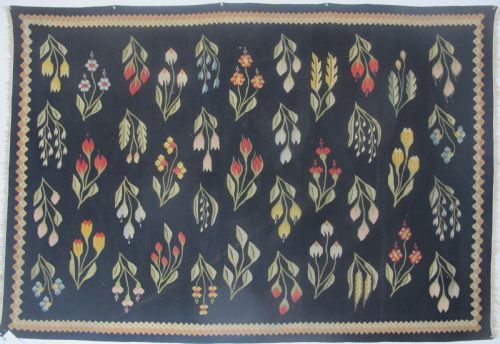
A kilim is a flatwoven textile constructed without a pile, resulting in a lighter, thinner fabric suitable for floors or wall hanging. Carpets feature a dense pile knotted onto a foundational warp and weft.
Flatweaves rely on interlocking weft threads to form geometric patterns, whereas knotted pile rugs allow for intricate curved designs and deep, plush surfaces.
How do I identify a tribal rug?
Tribal rugs typically display geometric medallions, hooked motifs, animal symbols and repeating border patterns generated from memory rather than formal cartoons. The wool often exhibits hand-spun irregularities and varied natural dye lots.
Originating from nomadic confederations or village groups like the Baluch, Afshar, Luri or Qashqai, these pieces reflect the specific cultural iconography and local materials of their makers.