




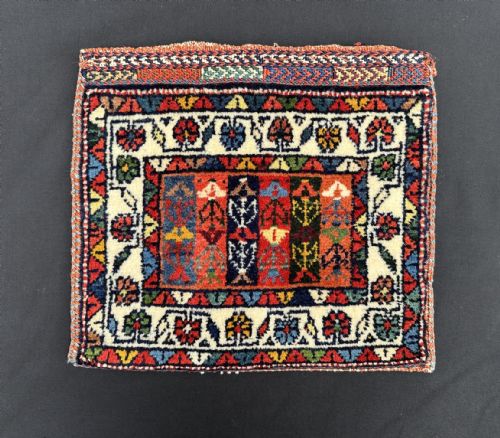
Handwoven Tribal Wall Hanging
When you search for handwoven tribal wall hanging, you encounter historic nomadic bags, covers and panels made for daily life and ceremony.
Handwoven Tribal Wall Hanging
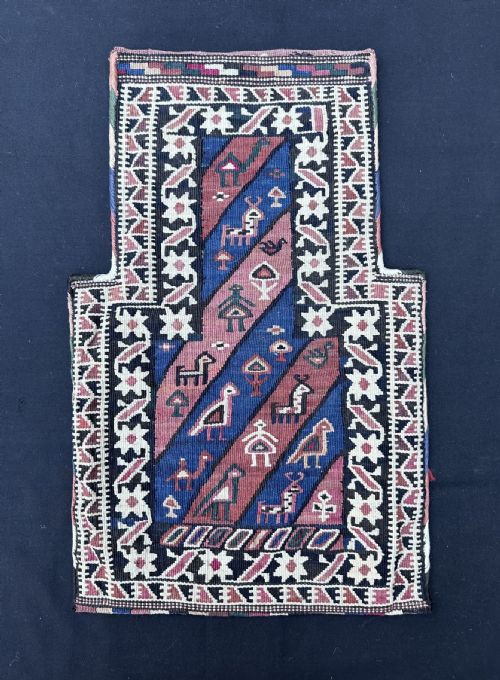
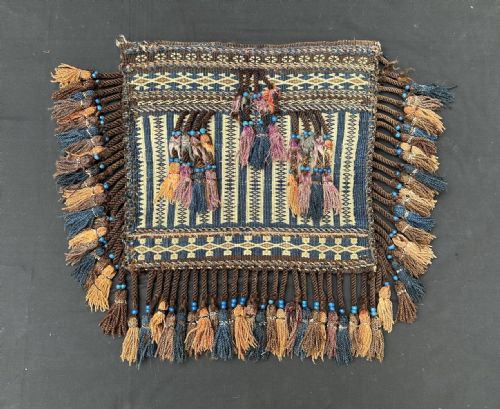
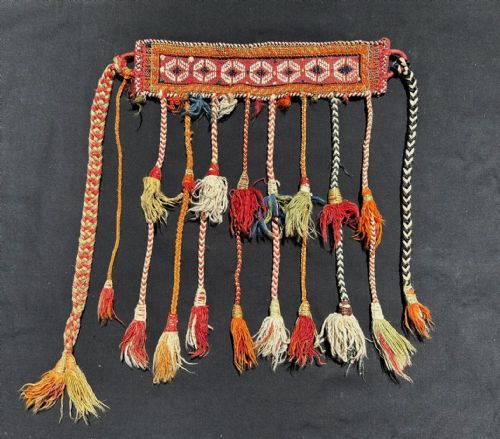
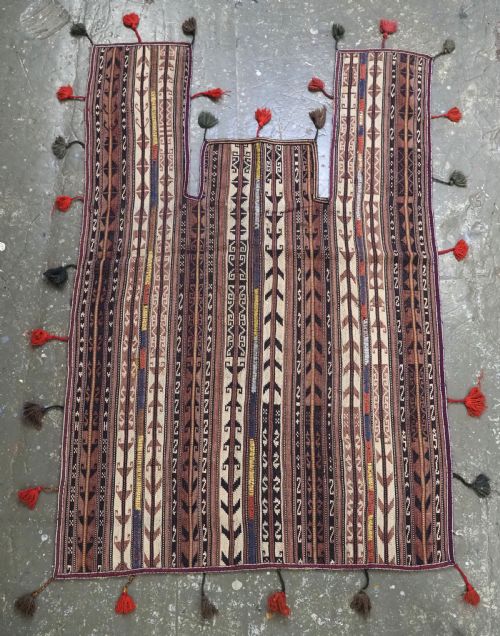
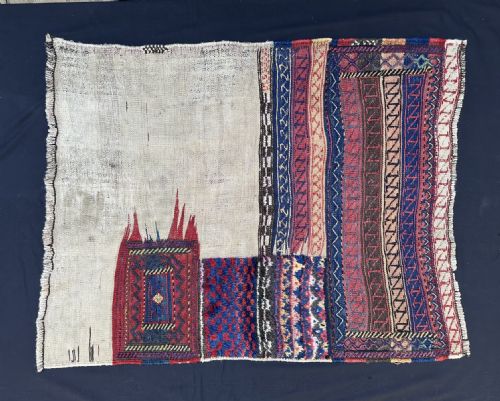
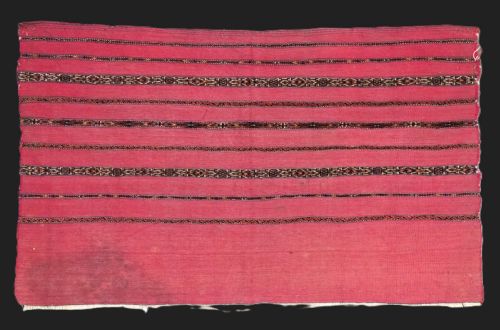
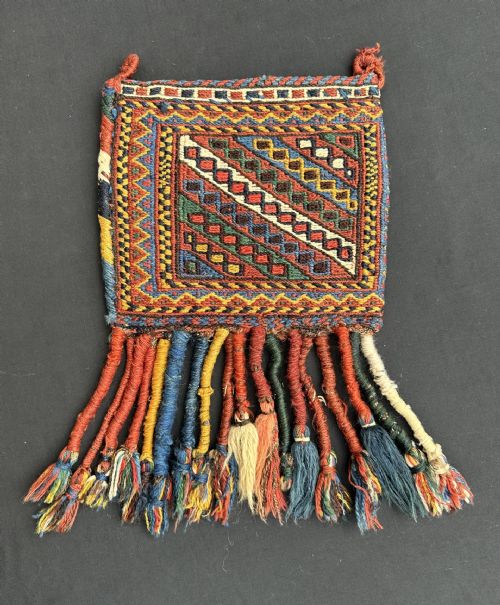
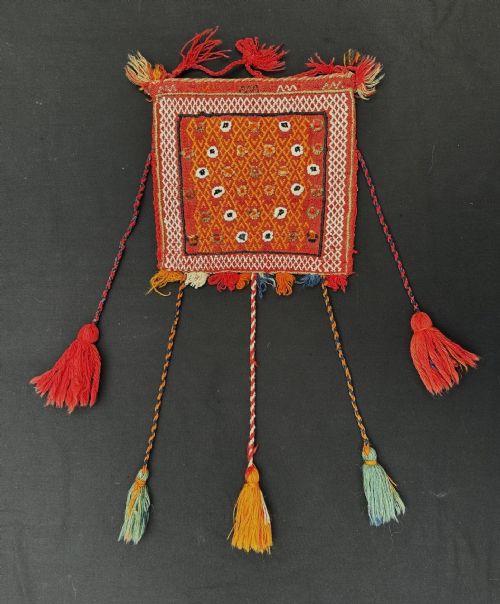
A handwoven tribal wall hanging on this page typically originates as a utilitarian nomadic textile rather than a piece made purely for display. These items include salt bags, vanity bags, saddle covers, tent trappings and storage faces produced across Persia, Central Asia, Afghanistan and Morocco. Makers wove them for practical domestic use within specific tribal confederacies and weaving traditions.
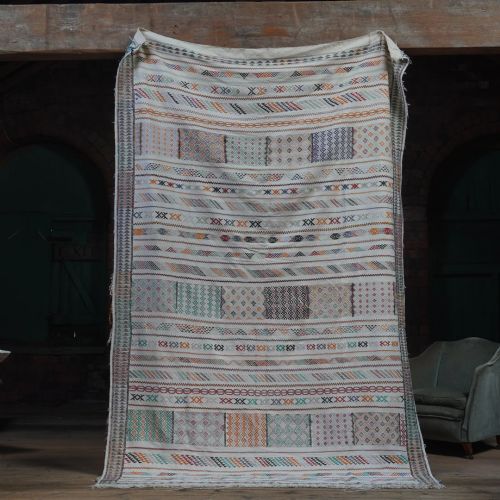
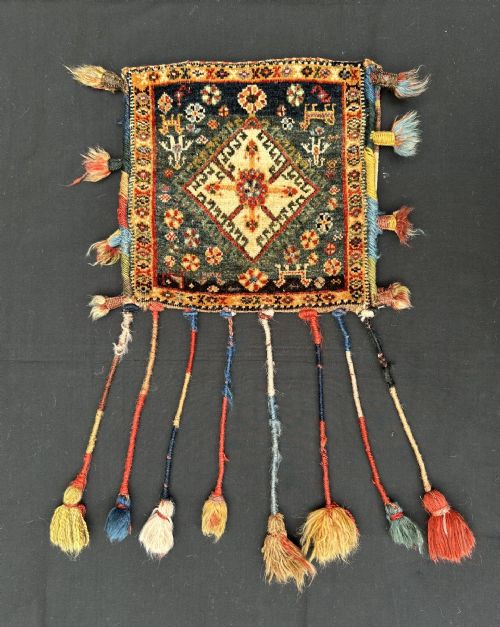
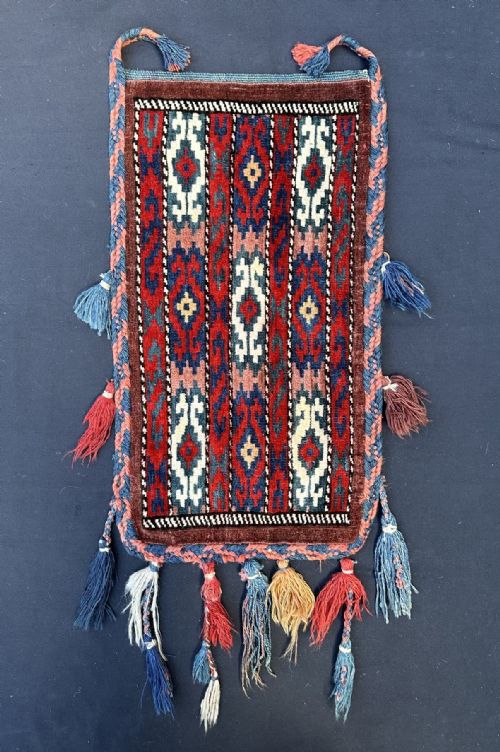
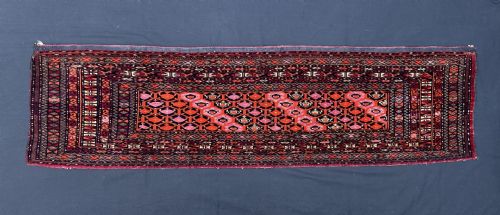
The selection ranges from nineteenth-century Turkmen torbas and Yomut spindle bags to Afshar and Qashqa'i nomadic bags from southern Persia. Moroccan kilim rugs woven with cactus silk also appear among the forms. Each object reflects the specific regional iconography and utilitarian design of its maker.
Most pieces date from the nineteenth and early twentieth centuries, spanning periods from eighteen-fifty to nineteen-twenty. They arrive on the wall as textile art carrying the structural marks of nomadic life. The forms present varied geometric arrangements, repeating guls and symbolic motifs rooted in tribal heritage.
What varies in quality
Quality rests in the density of the weave, the precision of the tribal motifs and the clarity of the natural dyes. Finer knotting and tightly packed structures distinguish exceptional bag faces and torbas from simpler utility pieces.
The integrity of the remaining wool, the completeness of original plain-weave backs and the preservation of distinct regional patterns also determine the standing of an individual textile.
Handwoven Tribal Wall Hanging Retail Price Guide 2026
Typical asking prices for handwoven tribal wall hanging among the pieces listed under this phrase on Sellingantiques today, from the lower quarter to the upper quarter. They describe what is for sale here now, not the wider market.
The inventory records diverse functional forms including salt bags, vanity bags, horse covers, spindle bags and bread sofrehs from distinct tribal confederacies.
The Handwoven Tribal Wall Hanging Glossary
- Torba
- A small utilitarian bag or tent hanging produced by Turkmen and other Central Asian tribes. These pieces typically feature repeated guls and served practical storage functions inside the yurt.
- Gul
- A medallion or repeating primary motif found in Turkmen and Central Asian carpets and bags. Each tribal group utilised distinct geometric guls to signify lineage and origin.
- Sofreh
- A flatwoven spread or cloth used by nomadic groups for kneading dough, sharing meals or handling bread. They display striking geometric minimalism.
- Jollar
- A long, horizontal bag or trapping utilised by Turkmen nomads for camel flank decoration or tent storage. They showcase intricate banded designs and detailed field patterns.
- Asmalyk
- A ceremonial pentagonal trapping hung on the flanks of a bride's camel during Turkmen wedding processions. These highly decorative textiles display elaborate secondary ornamentation.
Handwoven Tribal Wall Hanging: Frequently Asked Questions
How do I hang a tribal textile safely?
Support the weight evenly across the top edge using a cotton sleeve stitched to the reverse, threaded with a flat wooden batten or metal rod. Avoid hanging textiles directly from small nails or pins that concentrate stress on a single point of the weave.
Keep the hanging away from direct sunlight to prevent natural dye fading and preserve the wool fibres. Periodic gentle dusting with a soft brush maintains the surface without stressing the historic material.
What is the difference between a torba and a mafrash?
A torba is typically a smaller storage bag face or hanging designed for use within the tent, often featuring prominent guls and structured borders. A mafrash refers to a larger storage sack or panel used for transporting household goods during nomadic migrations.
Both forms utilise traditional pile or flatweave techniques but serve distinct functional roles in daily nomadic life. Their dimensions and proportions usually reflect these original storage purposes.
How can I tell which tribe made a piece?
Attribution relies on identifying specific structural elements, wool qualities, colour palettes and repeating motifs characteristic of groups such as the Yomut, Tekke, Saryk, Afshar or Qashqa'i. Regional weaving centres and confederacies employed particular design grammars that differentiate their work.
Examining the side corduroy finishes, end finishes and selvedges provides additional clues to tribal origin. Comparing specific guls against known regional examples clarifies the geographic source.
Are these textiles fragile?
Historic nomadic textiles constructed from natural wool and cotton maintain surprising durability due to the tight spinning and knotting of the original makers. However, centuries of age mean that certain pieces exhibit localized wear or dry fibres that require mindful handling.
Displaying them out of high-traffic zones ensures the antique material remains undisturbed. Proper weight distribution during hanging prevents undue strain on the historic foundation threads.