





Handwoven Saddlebag
A handwoven saddlebag is a tribal textile of practical utility and geometric design, sought after by collectors for its authentic nomadic artistry.
Handwoven Saddlebag
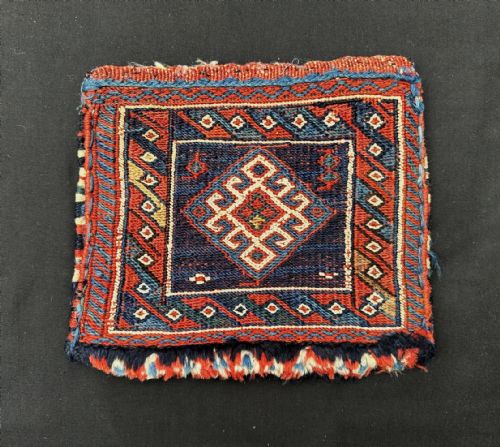
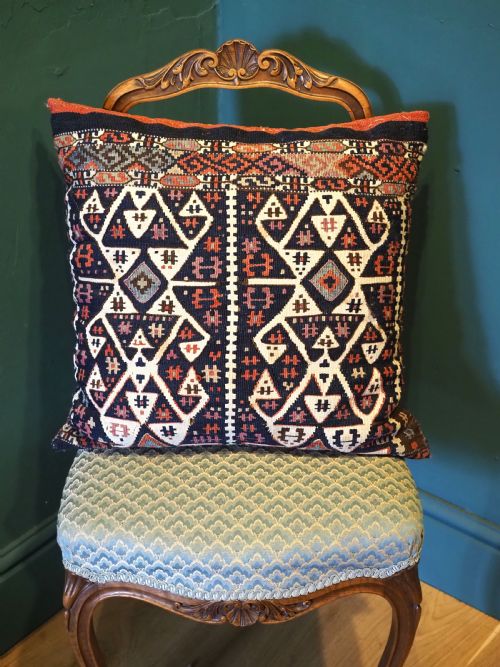
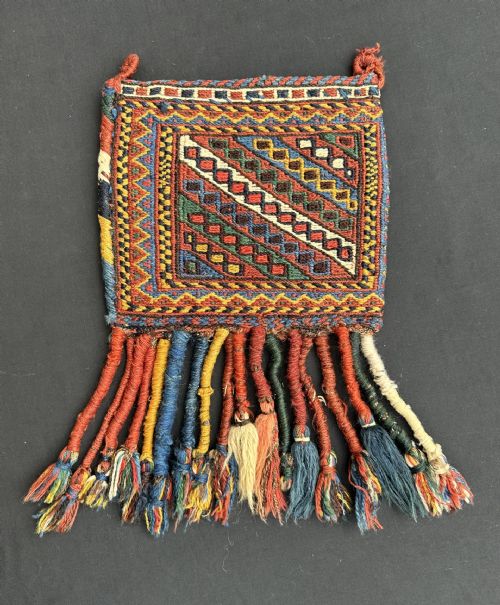
When you search for a handwoven saddlebag, you encounter utilitarian tribal textiles originally created by nomadic groups for transport and storage. These pieces encompass complete double saddlebags, half bags, and individual bag faces adapted into cushions.
The selections on this page originate from Persian, Anatolian, and Central Asian tribal weaving traditions. Pieces span the late nineteenth century into the early decades of the twentieth century, representing specific tribal confederations such as the Qashqai, Shahsavan, and Afshar.
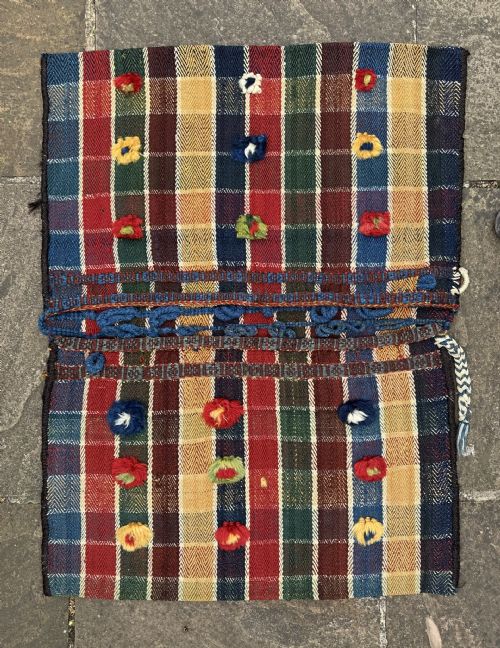
Forms vary from sturdy storage pouches designed for animal transport to decorative panels and complete sets retaining their original plain weave backs. Collectors find these items function equally well as wall-hung textile art or decorative floor cushions.
Materials and construction
Weavers utilised hand-spun wool for the primary structure, combining it with cotton and occasionally leather or metal elements for reinforcement and closure. Natural dyes provide the enduring palette observed across these tribal artefacts.
Techniques range from slit-weave kilim construction to pile-woven surfaces and banded weft work designs. These methods produced dense, durable fabrics capable of withstanding the rigours of nomadic migration and daily use.
Handwoven Saddlebag Retail Price Guide 2026
Typical asking prices for handwoven saddlebag among the pieces listed under this phrase on Sellingantiques today, from the lower quarter to the upper quarter. They describe what is for sale here now, not the wider market.
Nomads wove these heavy-duty bags on ground looms staked out under the open sky, occasionally trapping the odd desert pebble in the wool.
Quality and craftsmanship
Quality in a handwoven saddlebag rests upon the tightness of the weave, the clarity of the tribal motifs, and the depth of the natural dyes. Finer knots and precise geometric execution distinguish superior examples from standard utility pieces.
The preservation of original structural elements, such as complete backs or leather attachments, elevates an example. The integrity of the wool and the vibrancy of the palette determine the standing of each piece.
The Handwoven Saddlebag Glossary
- Bag face
- The decorative front portion of a storage bag, often removed and preserved independently as a textile art panel.
- Kilim
- A flat-weave textile produced by tightly interweaving warp and weft strands without creating a pile surface.
- Khorjin
- The traditional Persian term for a double-sided saddlebag utilised by nomadic and village populations.
- Heybe
- The Turkish term designating a traditional saddlebag or carrying pouch used across Anatolia.
- Warp
- The stationary vertical threads stretched upon a loom that receive the horizontal weft to form the textile.
Handwoven Saddlebag: Frequently Asked Questions
What is a saddlebag face?
A saddlebag face represents the decorative front panel of a utilitarian nomadic container. These sections often feature the most intricate geometric designs while the sturdy plain-weave backs served functional purposes during transport.
Collectors frequently encounter these panels separated from their original reverse sides. They are mounted on walls as textile art or repurposed into decorative cushions.
How were tribal bags used?
Nomadic groups utilised these textiles loaded in pairs across pack animals to transport belongings during seasonal migrations. They served as durable storage pouches for household goods, grain, and personal possessions within tents.
Their robust construction of wool and natural dyes ensured they endured harsh travel conditions. Today, owners adapt them as decorative interior furnishings.
How do I identify Persian tribal work?
Persian tribal pieces display distinctive motifs associated with specific confederations such as the Qashqai, Afshar, and Shahsavan. Stylised zoomorphic figures, medallions, and characteristic palettes indicate the regional origins of the weavers.
Structure and material further distinguish these items, with hand-spun wool and natural dye variations pointing to late nineteenth and early twentieth-century production.
Are complete sets common?
Complete sets featuring both sides joined by a connecting web are less frequently encountered than single bag faces. Many historical bags were separated over time as wear affected one side or as pieces were adapted for the collector market.
Surviving examples retaining both pouches provide a complete view of the original nomadic utility. They show the symmetrical planning employed by tribal makers.