






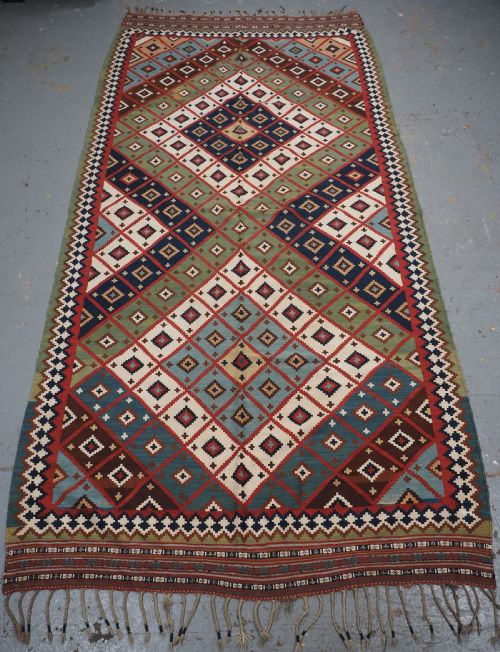
Handmade Geometric Rug
A handmade geometric rug brings authentic tribal pattern and rich wool texture directly to the floor.
Handmade Geometric Rug
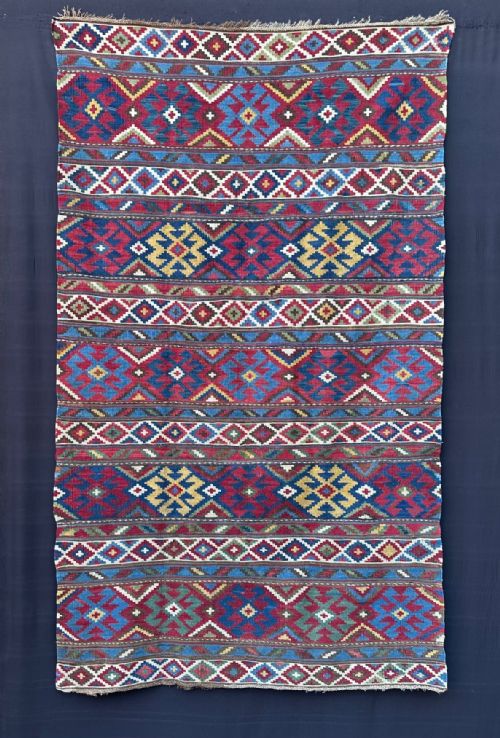
A handmade geometric rug encompasses tribal weavings, village carpets, and flat-woven kilims produced across the Caucasus, Persia, Anatolia, and Central Asia during the nineteenth and early twentieth centuries. These textiles range from hearth-sized floor coverings and area rugs to yurt rugs woven in strips and small decorative cushions.
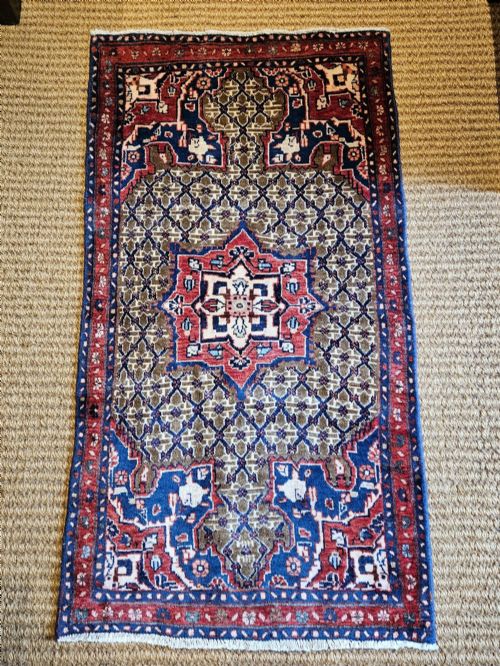
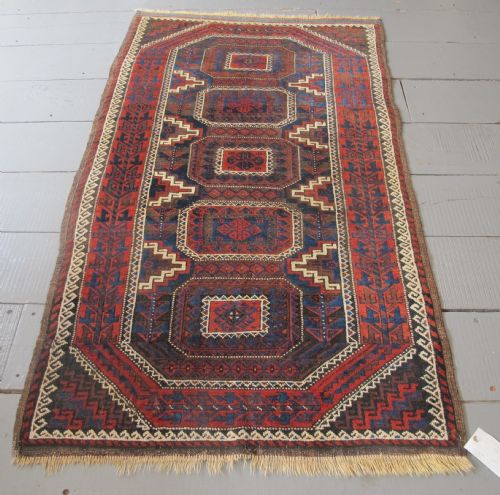
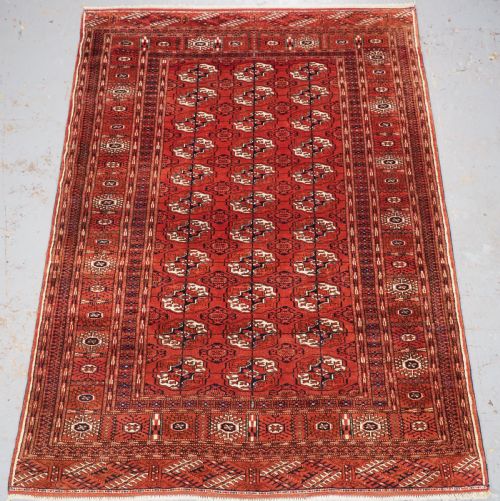
Buyers seeking a handmade geometric rug will frequently encounter Persian tribal pieces, Turkmen torbas and ensis, and Anatolian village prayer rugs originating from periods spanning the eighteen-fifties to the nineteen-twenties. The forms include distinctive regional formats such as Heriz, Karadja, Qashqai, Shirvan, and Baluch editions.
The aesthetic relies on rectilinear medallions, repeating motifs, and structured angular layouts rather than fluid floral curves. This geometry reflects ancient tribal symbols and regional weaving traditions passed down through generations.
Materials and construction
The construction relies on natural wool pile knotted onto sturdy foundations, frequently utilising cotton warps or hand-spun wool for structural integrity. Hand-spun wool provides the tactile warmth and heavy drape characteristic of these older pieces.
Weavers employed traditional upright looms and flat-weaving techniques, occasionally joining multiple narrow strips together to form larger carpets and yurt rugs. Natural dye sources produced deep colour palettes that age gracefully over decades of use.
Handmade Geometric Rug Retail Price Guide 2026
Typical asking prices for handmade geometric rug among the pieces listed under this phrase on Sellingantiques today, from the lower quarter to the upper quarter. They describe what is for sale here now, not the wider market.
Listings feature wool and cotton materials across periods from the mid-nineteenth century to the nineteen-twenties.
Evaluating quality and execution
Quality rests in the precision of the tribal design, the crispness of the angular motifs, and the depth achieved by natural dye wool. Finer knotting and careful handling of complex geometric repeats distinguish superior examples from standard village production.
The condition of the wool pile and the structural stability of the foundation determine the longevity of the weaving. Pieces that retain their original borders and robust selvedges demonstrate higher integrity.
The Handmade Geometric Rug Glossary
- Kilim
- A flat-woven carpet or rug produced without a pile, created by tightly interlocking the warp and weft threads.
- Ensi
- A traditional Turkmen carpet type traditionally hung as a tent door hanging or threshold rug.
- Torba
- A small Turkmen bag face or storage sack featuring characteristic tribal gul motifs.
- Warp
- The vertical threads stretched tightly on the loom that carry the tension and form the foundation of the rug.
- Mina Khani
- A repeating botanical pattern composed of four-petalled flowers linked by a geometric lattice framework.
Handmade Geometric Rug: Frequently Asked Questions
How do I clean a antique rug?
Professional specialist washing is essential for nineteenth-century wool and cotton textiles to prevent dye migration and shrinkage. Regular gentle vacuuming without a beater bar removes surface dust safely.
Avoid harsh chemical cleaners or immersion in domestic washing machines at all costs. Proper maintenance preserves the natural lanolin in the hand-spun wool.
Where were these tribal rugs made?
The pieces originate from nomadic and village communities across regions including Persia, the Caucasus, Anatolia, and Central Asia. Specific styles correspond to distinct groups such as the Qashqai, Tekke, Saryk, and Yomut.
Each weaving region utilised particular colour combinations and geometric symbol sets. These local variations allow experts to attribute provenance accurately.
Can I use these rugs on modern floors?
Placing a suitable breathable rug underlay underneath protects the historic wool foundation from premature wear against hard flooring. This prevents slipping and cushions the textile against heavy foot traffic.
Ensure the area receives balanced light exposure to maintain even colour ageing across the wool surface. Regular rotation distributes wear evenly over time.
What does geometric design mean here?
Geometric design refers to patterns built from straight lines, triangles, diamonds, polygons, and interlocking tribal medallions rather than curved florals. These rectilinear motifs carry traditional symbolic meanings within tribal weaving cultures.
The strict geometry results from the pixelated nature of knotting and weaving on traditional vertical looms.