
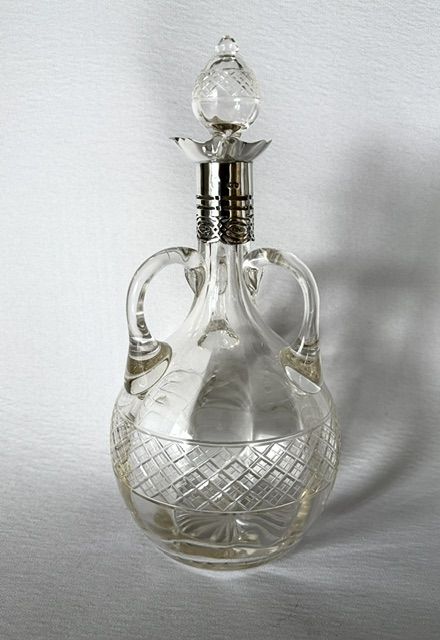
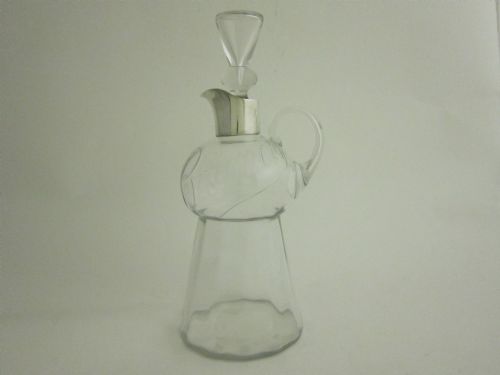
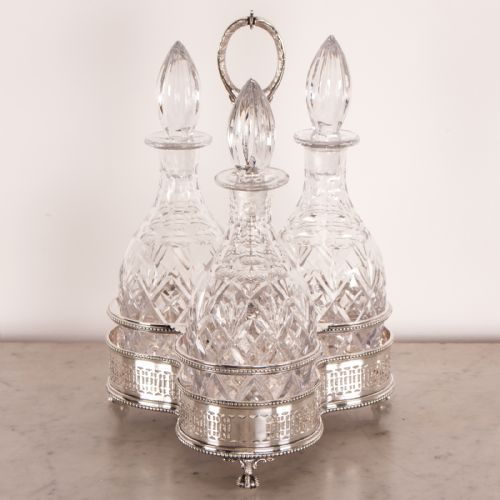
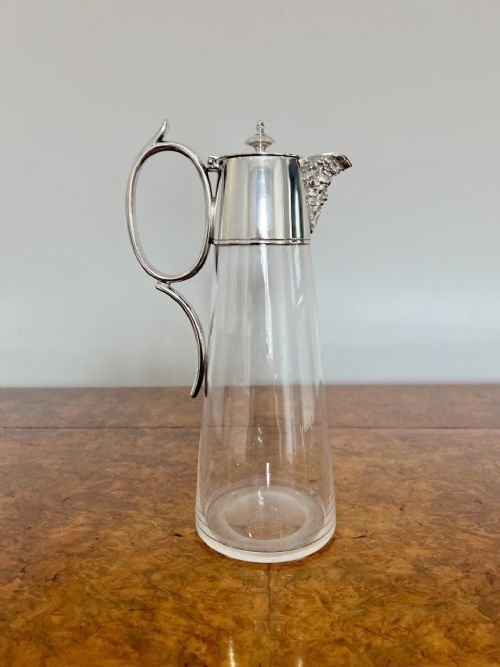



Handled Glass Decanter
A handled glass decanter is a practical vessel for serving wine and spirits, combining utility with decorative metalwork and glass.
Handled Glass Decanter
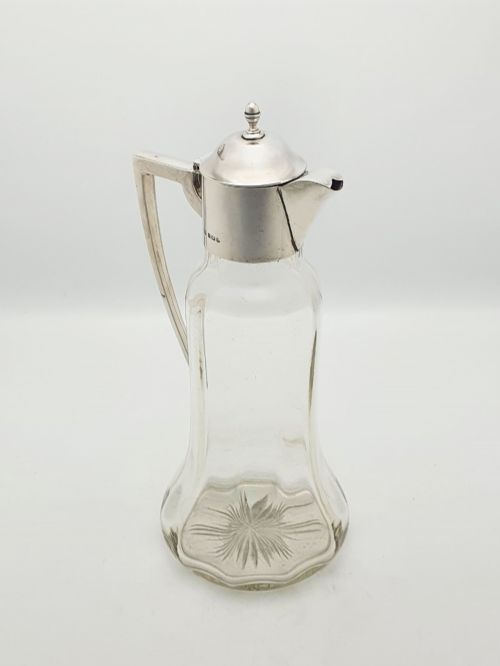
When you search for a handled glass decanter, you encounter functional serving vessels originating from the nineteenth and early twentieth centuries, spanning periods such as the Victorian and Edwardian eras. These pieces include claret jugs, spirit decanters, and ewers fitted with handles for pouring wine and spirits at the table.
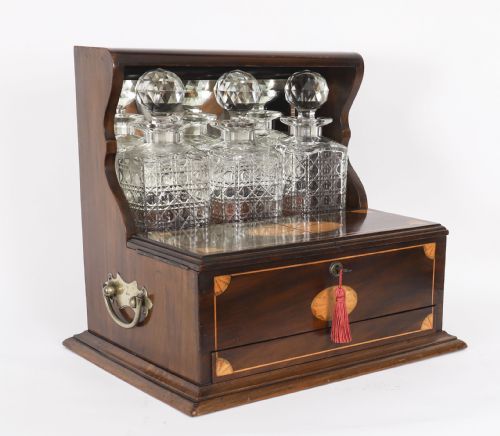
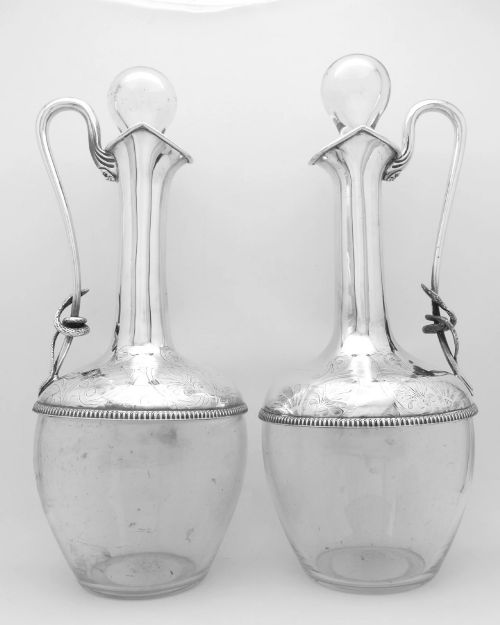
The most common examples on this page pair clear, cut, or coloured glass bodies with silver plate or sterling silver mounts, often featuring integrated handles. Forms range from single standalone jugs to pairs housed in mahogany stands or tantalus frames.
Makers and designers produced these items in various styles including Aesthetic Movement, Art Nouveau, and Art Deco, reflecting the changing tastes of the period from the eighteen-eighties onwards.
How they were made
Glass bodies were formed using techniques such as cutting, moulding, and engraving on clear crystal, green glass, or cranberry glass. Some specialist pieces incorporate latticinio decoration within the glass itself.
Mounts, collars, and handles utilise silver plate, sterling silver, brass, or mahogany to secure the glass vessels and provide pouring spouts and grips. Metalwork components were cast, chased, or electroplated to achieve the desired finish.
Materials recorded across the inventory include mahogany, brass, and silver plate alongside various forms of clear and coloured glass.
What varies in quality
The sophistication of the glass cutting and the weight of the metal mounts determine the standing of an individual piece. Deeper, crisper facet cutting on crystal and heavier gauges of silver plate or solid silver indicate superior production standards.
Attribution to documented designers or silversmith firms elevates certain pieces, whilst the presence of matching pairs or original fitted mahogany tantalus frames distinguishes standard utility items from more ambitious presentation pieces.
Walker & Hall·Hukin & Heath·Mappin & Webb
The Handled Glass Decanter Glossary
- Claret jug
- A specialised pouring vessel designed specifically for serving red wine, typically featuring a handle and a hinged metal lid.
- Tantalus
- A locking wooden or metal frame that holds decanters securely to prevent unauthorised access to the contents whilst displaying them.
- Latticinio
- A decorative glass technique involving fine opaque white or coloured glass threads embedded within clear crystal.
- Cranberry glass
- A rich red-pink transparent glass coloured with gold chloride, popular during the Victorian period for decorative tableware.
- Ewer
- A large pitcher with a wide spout and a substantial handle, used for serving liquids or as a decorative display piece.
Handled Glass Decanter: Frequently Asked Questions
What is a handled glass decanter used for?
These vessels serve wine, claret, and spirits at the dining table, combining a glass container with a convenient handle for pouring. They allow drinks to breathe and provide an attractive presentation alongside matching glassware.
Many examples feature hinged lids operated by a thumbpiece on the handle, making one-handed pouring straightforward during meals.
How do I identify Victorian and Edwardian pieces?
Victorian examples often display heavy cut glass, rich cranberry coloration, or ornate Aesthetic Movement and early Art Nouveau motifs. Edwardian pieces tend to lean towards refined silver mounts and lighter forms.
Examining any silver hallmarks, maker marks, or the specific style of the glass cutting helps pinpoint the era of manufacture.
What is the difference between a decanter and a claret jug?
A traditional decanter is a stoppered bottle designed for storing and serving spirits or wine without a fixed handle. A claret jug incorporates a dedicated handle, a hinged metal lid, and a pouring spout specifically for table service.
Claret jugs are intended for immediate service of red wine rather than long-term storage.
How do I clean an antique decanter?
Cleaning requires gentle warm water and mild detergent, avoiding harsh abrasives that might scratch the interior or damage silver mounts. Residue inside narrow necks is typically addressed with specialist cleaning beads or soft brushes rather than harsh chemicals.
Silver-plated or sterling mounts should be polished carefully with appropriate cloths to protect the metal from excessive wear.