




Hand Stitched Textile
These hand stitched textile pieces bring tactile depth and historic needlework into a room, offering authentic craft from Victorian parlours and Central Asian workshops.
Hand Stitched Textile
When searching for a hand stitched textile, a buyer encounters a diverse range of historic needlework, from framed samplers and wall hangings to embroidered wall coverings and quilts. The selection spans the nineteenth century through to the mid-twentieth century, capturing both domestic British needlecraft and vibrant Central Asian traditions.
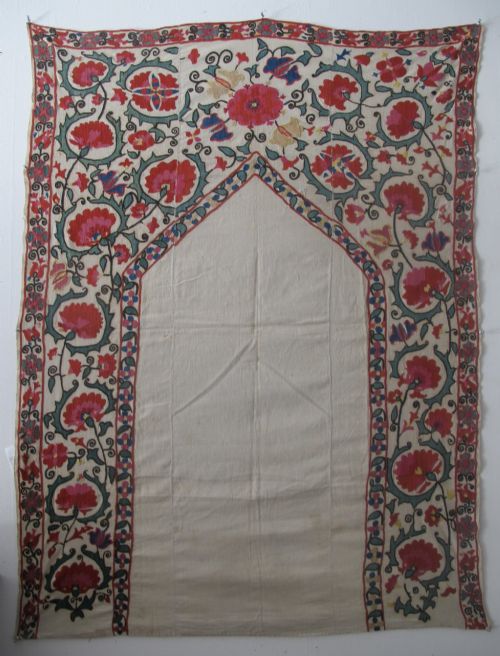
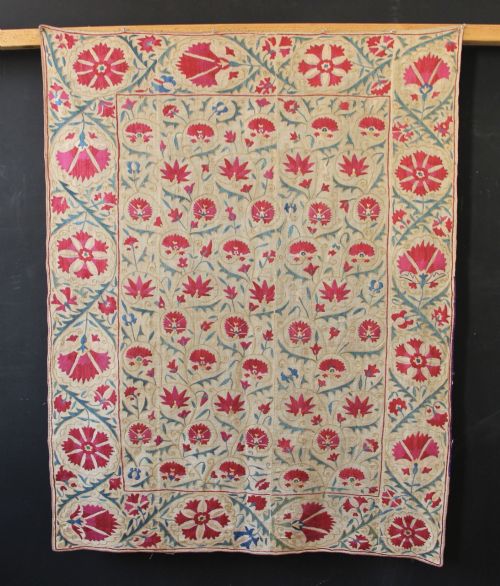
The version most likely to appear on this page is the Central Asian suzani, typically worked in silk thread on a cotton ground with bold floral or architectural motifs. Alongside these large embroideries, British sampler pieces worked in wool or cotton by young makers often surface, alongside regional quilts and needlepoint panels.
How they were made
Maker hands relied on natural grounds of cotton, linen, wool, or canvas, stitched over using fine silk or wool threads. Techniques span intricate gros and petit point wool work, counted thread alphabets, and dense chain stitch embroidery.
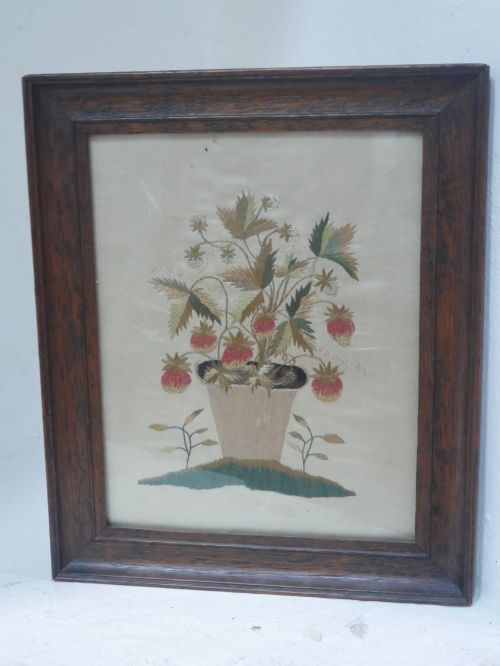
Makers framed their textile art in rosewood or displayed them as wall hangings and quilts. The structural integrity depends on the tenacity of the ground fabric and the tightness of the needlework stitches.
Young Mary Mason and Emma Barnes left their ages and names stitched permanently into the fabric of time.
What varies in quality
Quality rests in the precision of the needlework and the complexity of the design, distinguishing standard domestic exercises from masterworks. The intricacy of the stitching and the preservation of the ground material determine the standing of each piece.
The vitality of the thread colour and the harmony of the composition set the finest examples apart. Pieces that retain their structural integrity and vibrant visual rhythm sit at the top of the range.
The Hand Stitched Textile Glossary
- Suzani
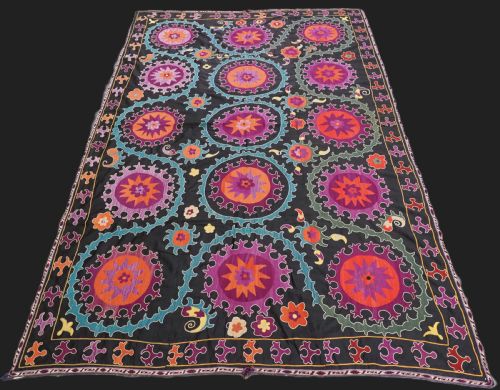
- A traditional embroidered tribal hanging originating from Central Asia, usually worked in silk on a cotton foundation. These large pieces often display floral, star, or architectural motifs.
- Sampler
- A piece of needlework demonstrating skill in various stitches and alphabets, frequently worked by young makers in the nineteenth century. They often record names, dates, and religious texts.
- Gros point
- A coarse needlepoint stitch worked on canvas, creating a durable and textured surface. It frequently appears in nineteenth-century wool work panels.
- Petit point
- A fine needlepoint stitch worked over a single thread of canvas, allowing for high detail and subtle shading. It is often paired with gros point in wool work.
- Palak
- A fully embroidered Uzbek suzani design type featuring a dense central star or medallion motif. The background is completely covered in needlework.
Hand Stitched Textile: Frequently Asked Questions
What is a suzani?
A suzani is a large embroidered textile from Central Asia, historically used as wall decoration or part of a dowry. These pieces are worked by hand with silk threads on cotton or linen foundations.
They often feature bold botanical patterns, central stars, or architectural elements reflecting regional traditions from places like Tashkent and Bokhara.
How were samplers used?
Needlework samplers were created by young makers to practice and demonstrate proficiency in various stitches, alphabets, and numbers. They served as a portfolio of a maker's skill.
Once completed, these linen or cotton pieces were typically framed and hung in domestic interiors as a record of accomplishment and family history.
How should I clean antique textiles?
Historic textiles require delicate handling and professional conservation rather than standard washing. Surface dust can be gently removed using low-suction vacuum attachments through a protective mesh.
Direct sunlight and moisture must be avoided to prevent thread degradation and colour fading on silk and cotton grounds.
How do I date an embroidery?
Dating relies on examining the materials, dyes, stitch types, and any inscribed dates or maker names. Nineteenth-century pieces often use specific wool and cotton grounds paired with traditional regional motifs.
Stylistic shifts between Victorian domestic samplers and Central Asian tribal work help narrow the period of origin.