




Hand Painted Tureen
A hand painted tureen brings floral and botanical artistry directly to the table, offering a decorative vessel for serving soups and sauces with historic charm.
Hand Painted Tureen
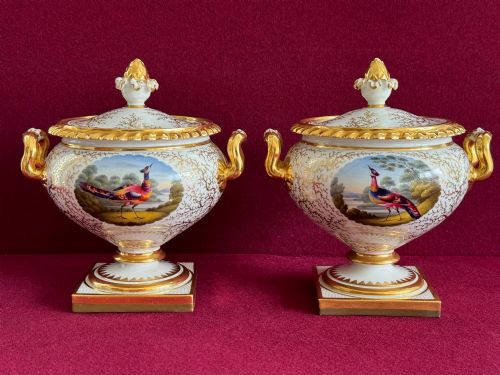
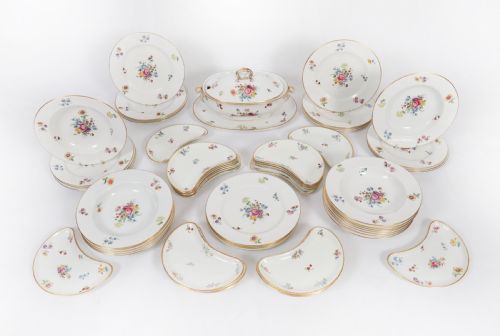
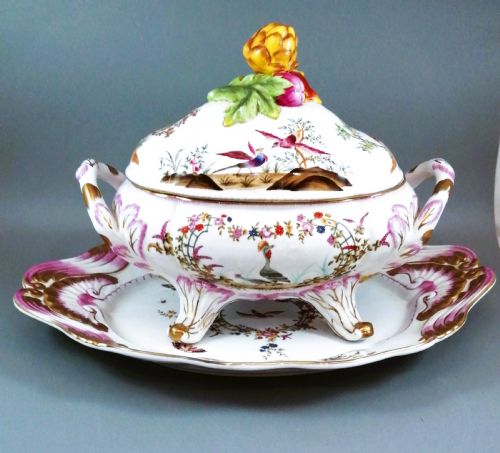
When searching for a hand painted tureen, buyers encounter serving vessels designed for soups, sauces, and vegetables across several centuries of ceramic production. These pieces range from compact sauce tureens with matching stands to large soup tureens and complete dinner services.
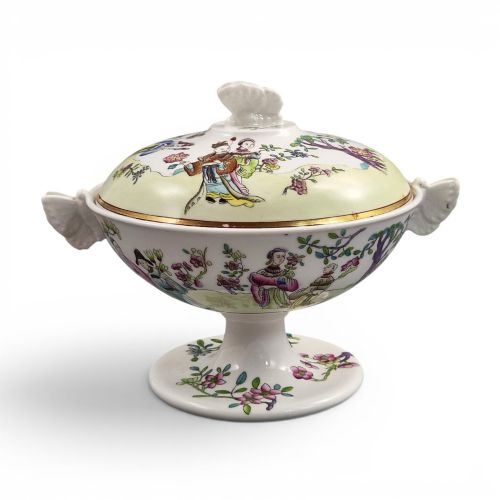
The selection includes English factories from the Georgian and Regency periods alongside continental European manufacturers and Chinese export pieces. Forms span from classical pedestal bowls with butterfly handles to elaborate Rococo revival designs with moulded details.
Buyers are most likely to meet 19th-century porcelain and ironstone examples featuring botanical studies, insects, and traditional European or Chinese motifs. These vessels combine functional lidded designs with intricate hand-painted decoration that reflects the aesthetic preferences of their period.
How they were made
Potters shaped these vessels using porcelain, pearlware, and ironstone, applying liquid glazes to seal the ceramic body before firing. Many pieces incorporate moulded handles, pedestals, and covers shaped into naturalistic or architectural forms.
Decorators applied pigments by hand, often combining polychrome enamel painting with gilding and gold leaf accents. Factories utilised specialised porcelain bodies such as Felspar porcelain to achieve brighter white surfaces and finer detail in the finished pieces.
Listings feature 18th-century, Regency, and Victorian periods with materials including pearlware, ironstone, and porcelain.
What varies in quality
Quality in these vessels depends on the precision of the ceramic body and the skill of the painter who applied the botanical or floral motifs. Finer pieces demonstrate crisp moulding in handles and pedestals, paired with balanced proportions and controlled use of gilding.
The distinction between standard production and exceptional work lies in the hand-painted details, where superior pieces feature finely rendered insects, flowers, and foliage rather than repetitive stencilled patterns. The inclusion of original matching stands and undamaged covers also elevates the standing of the piece.
Swansea·Spode·Coalport·Coalbrookdale·Mintons·Flight Barr And Barr·Müller Volkstedt MV Co·Richard Ginori·Meissen
The Hand Painted Tureen Glossary
- Pearlware
- A fine earthenware developed in the late 18th century featuring a bluish glaze that pooled in recesses to mimic Chinese porcelain. It provided a smooth white surface suitable for botanical hand painting.
- Ironstone
- A heavy, durable ceramic material patented in the 19th century to resist chipping and wear during daily use. It served as a robust body for large vegetable tureens and dinner services.
- Gilding
- The application of gold leaf or powdered gold to ceramic surfaces to highlight rims, handles, and moulded details. It added a reflective metallic finish to Regency and Victorian formal dining wares.
- Pedestal bowl
- A vessel raised on a central foot or base rather than resting flat on a surface. This form lifted tureens and cream bowls to give them greater presence on the dining table.
- Sauce tureen
- A small lidded container specifically made for serving gravies and sauces, frequently accompanied by an attached or separate matching stand. These diminutive vessels often featured delicate handles.
Hand Painted Tureen: Frequently Asked Questions
How were tureens used on the table?
Tureens served as the central vessels for holding and keeping warm soups, broths, sauces, or vegetables during formal meals. Servants brought them to the table filled from the kitchen, and hosts ladled portions directly onto guests' plates.
Smaller sauce and cream tureens remained on the dining table for individual or group access during a course. Their matching stands caught any drips and protected fine table linens from stains.
How do I care for a hand painted tureen?
Wash these fragile ceramic pieces gently by hand using lukewarm water and mild soap. Avoid soaking them, as moisture can infiltrate old glaze crazing and discolour the ceramic body underneath.
Keep them away from modern dishwashers and microwaves, which damage delicate hand-painted enamels and gold leaf gilding. Display or store them securely on stable flat surfaces away from direct sunlight.
How can I tell Regency pieces apart?
Regency tureens often exhibit classical architectural influences, crisp white porcelain bodies, and restrained gilding or botanical painting. Look for specific factory characteristics such as the fine porcelain formulas used by Worcester periods during the early 19th century.
Shape also offers clues, as Regency designs frequently favour urn-like pedestal forms with symmetrical handles. Comparing the painting style to documented examples from the same decade helps confirm the era of production.
What is Chinese export porcelain?
Chinese export porcelain refers to ceramics manufactured in China specifically for Western markets between the 18th and 19th centuries. These pieces combined traditional Eastern potting techniques with shapes and decorative motifs requested by European buyers.
Tureens from this origin display distinctive cobalt blue painting or famille rose enamels adapted to Western dining habits. They represent a significant cross-cultural exchange in the history of decorative ceramics.