
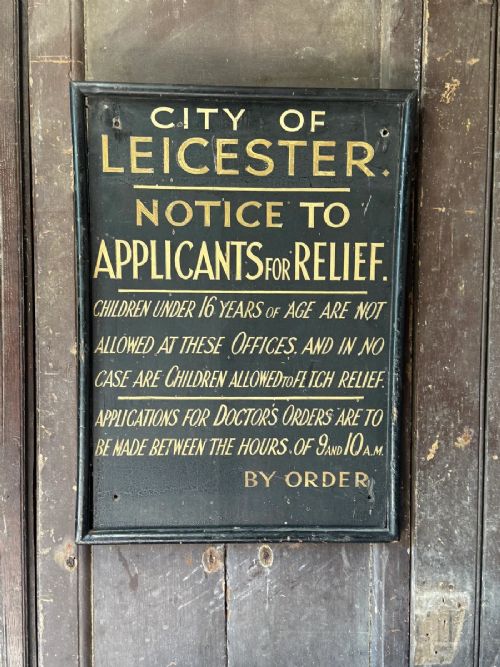
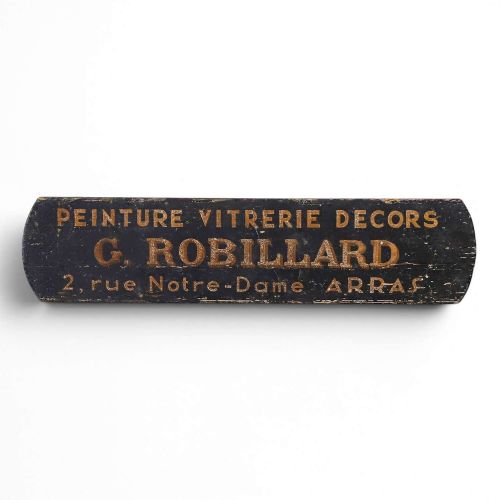
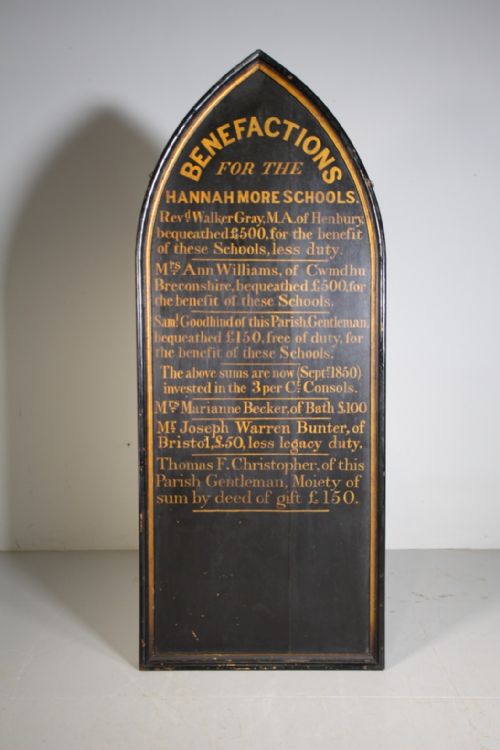
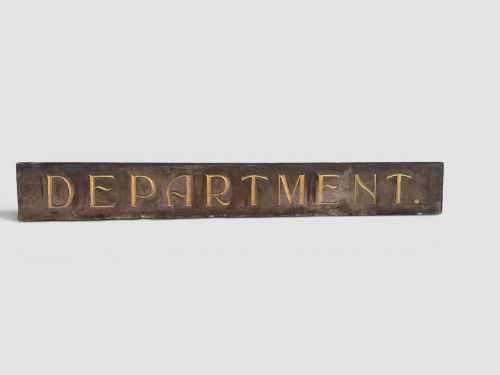
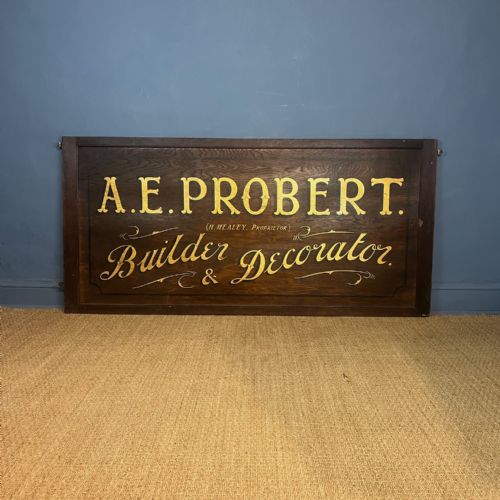


Hand Painted Trade Board
A hand painted trade board is a practical survivor of commerce past, offering bold lettering and direct utility for your walls.
Hand Painted Trade Board
A hand painted trade board is a sign created for commercial use, appearing on this page in forms such as trade signs, shop signs, wall panels, and advertising signs. Buyers searching this phrase look for authentic pieces of signage that once advertised businesses, trades, or departments.
The pieces listed here span the nineteenth century and the early twentieth century, including Victorian, Edwardian, and interwar British periods. You are most likely to meet wooden boards or framed panels bearing original painted lettering and graphics.
Origins vary across British and French workshops, encompassing folk art shop signs, department store signs, and specific trade boards for locksmiths, dentists, and decorators. Each object reflects the commercial vernacular of its specific era.
Materials and construction
These trade boards are constructed primarily from timber, oak, and general wood substrates, occasionally utilising metal or iron components. The makers applied paint and gold leaf directly to the wooden surfaces to ensure high visibility for passing trade.
Surviving examples frequently feature original wooden frames housing painted panels or glass elements. The construction method prioritised durability in commercial environments, resulting in robust boards built to withstand outdoor or interior shop conditions.
Locksmiths and dentists clearly needed robust advertising, leaving behind remarkably direct painted boards that brooks no confusion.
Assessing quality and character
Quality in a hand painted trade board rests on the strength of the lettering, the clarity of the original paint layer, and the visual impact of the design. Superior examples display confident brushwork and balanced typography that elevate simple commercial notices into striking visual art.
The depth of historical wear also defines the upper tier of these pieces. Original untouched surfaces with honest patina and intact gold leaf command greater appreciation than boards with later overpaint or unsympathetic repairs.
The Hand Painted Trade Board Glossary
- Trade sign
- A board or panel commissioned by a business to advertise goods, services, or premises to the public. These signs rely on bold lettering and clear iconography.
- Gold leaf
- Gold beaten into extremely thin sheets, utilised on signs to highlight lettering and catch the light. It adds durability and a luminous quality to the finished surface.
- Folk art
- Artistic work created within a traditional culture by self-taught makers, often seen in vernacular shop signs and trade boards. This style prioritises direct expression over academic convention.
- Patina
- The surface appearance developed through age, use, and exposure, including wear to paint and timber. It serves as an indicator of authenticity and historical depth.
Hand Painted Trade Board: Frequently Asked Questions
How were trade boards originally displayed?
These boards were mounted directly onto exterior shop walls, hung above doorways, or positioned inside windows to catch the attention of pedestrians. They acted as primary markers for businesses before standard municipal street numbering became universal.
Many larger panels, such as department store signs or cart sides, served specific functional roles within bustling commercial districts and industrial transport.
How do I hang a heavy wooden sign?
Due to the substantial weight of old timber, iron, and glass panels, secure wall fixings into masonry or direct studwork are essential. Using appropriate brackets that support the base or weight of the frame prevents strain on the original structure.
Consulting a professional framer or installer ensures the board remains secure without compromising the integrity of the original wood or painted surface.
How do I tell Victorian signs from later ones?
Victorian trade boards often exhibit serif typography, heavier wooden frames, and traditional gilding techniques associated with nineteenth-century signwriting. Pieces from the Edwardian era and the interwar period introduce cleaner sans-serif lettering styles and distinct folk art interpretations.
Comparing the specific paint chemistry, timber selection, and framing construction helps clarify the historical period of manufacture.