


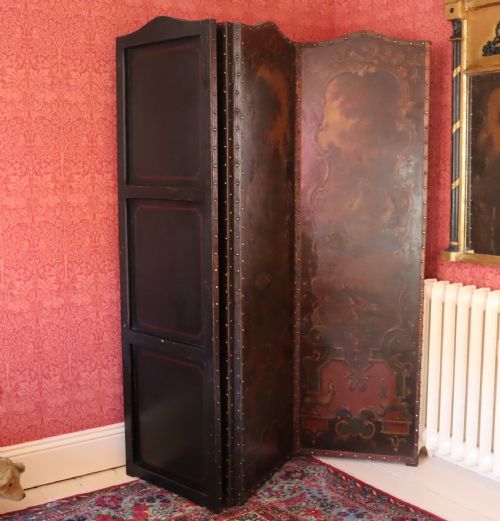


Hand Painted Screen
A hand painted screen brings brilliant pigment and deft brushwork to a room, offering both flexible division of space and striking pictorial art.
Hand Painted Screen
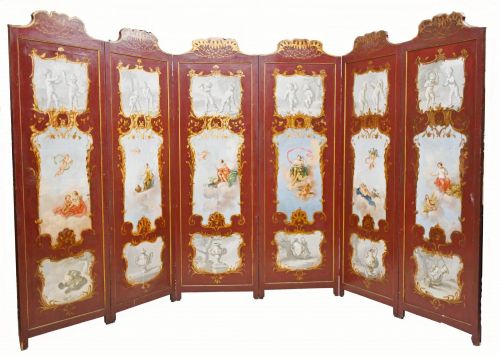
A hand painted screen functions primarily as a folding room divider or decorative panel, appearing across periods from the eighteenth century to the mid twentieth century. Buyers seeking this phrase frequently encounter multi-fold constructions in leather, lacquer, and wood, alongside smaller items such as fire screens and face screens. The inventory spans European styles like French Chateau and Continental Baroque alongside Chinese Republic Era and Indian fretwork pieces.
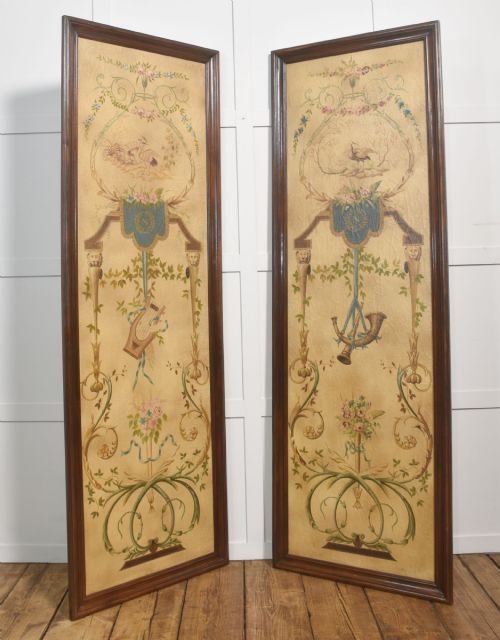
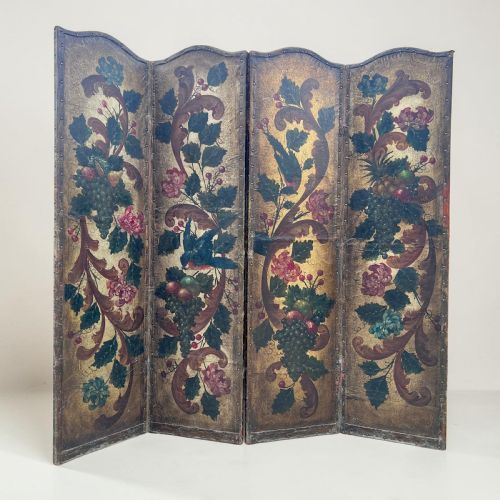
Most examples found here utilise folding configurations of three or four panels to partition interiors or decorate plain walls. The construction methods range from heavy embossed leather to delicate papier-mâché and framed canvas panels. Regional traditions dictate whether the artwork depicts classical European motifs or Oriental lacquer designs.
How they were made
Makers built these pieces using supportive frames of wood or brass to hold panels of leather, canvas, lacquer, and paper-mâché. Artisans then applied oil paint, gold leaf, and decorative pigments directly onto the prepared surfaces by hand. Leather panels often received embossed detailing before painting, whilst lacquer versions required multiple layered coats to achieve a durable sheen.
Hinges connected the individual leaves of multi-fold room dividers to allow smooth movement whilst maintaining structural stability. Specialised supports were integrated into smaller items like fire guards and face screens to keep them upright near hearths.
Hand Painted Screen Retail Price Guide 2026
Typical asking prices for hand painted screen among the pieces listed under this phrase on Sellingantiques today, from the lower quarter to the upper quarter. They describe what is for sale here now, not the wider market.
Object types on this page range from large four-fold room dividers down to delicate papier-mâché face screens and fireguards.
What varies in quality
The sophistication of the brushwork and the precision of the gilding set superior panels apart from simpler decorative items. Finer examples display meticulous control in their painted flora, figures, or architectural scenes, whilst basic versions rely on repetitive stencilling.
The choice of primary material heavily influences the integrity of the piece, with substantial leather hides and dense lacquered wood outlasting fragile papier-mâché or thin canvas. Original brass hardware and intact folding mechanisms also separate professionally assembled pieces from later alterations.
The Hand Painted Screen Glossary
- Folding screen
- A movable piece of furniture consisting of two or more panels connected by hinges. It is used to divide a room or provide privacy.
- Cordoban leather
- Heavy, ornamented leather originating from Spain, often embossed and gilt. It provides a durable surface for detailed painting.
- Fire screen
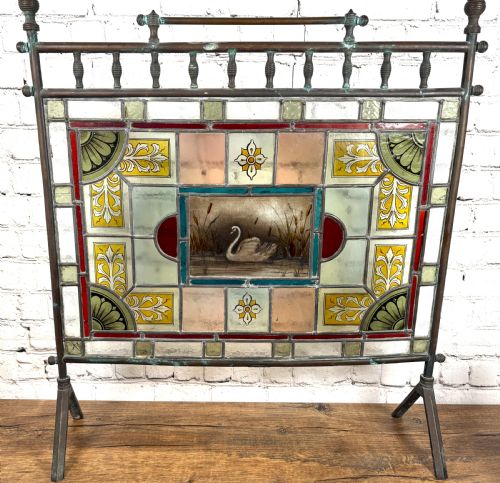
- A protective barrier placed in front of an open fireplace when not in use. They often feature decorative painted panels or stained glass.
- Lacquer
- A durable resin finish applied in multiple layers to wood surfaces. It creates a smooth, glossy background for Asian pictorial designs.
- Face screen
- A small handheld or mounted screen designed to protect a person's face from the heat of a fire. They are frequently made from papier-mâché or card.
- Fretwork
- Ornamental perforated or cutout woodwork. It appears on the frames or upper sections of decorative room dividers.
Hand Painted Screen: Frequently Asked Questions
How do I use a room divider at home?
A multi-fold divider partitions large living areas into intimate zones or conceals storage corners.
Position the panels at slight angles to ensure stability while displaying the painted artwork to full effect.
What is a fire screen used for?
These smaller screens sit in front of hearths during summer months to hide empty grates. They add colour and texture to a fireplace setting when the fire is unlit.
How are leather screens constructed?
Heavy leather hides are stretched over wooden frames, sometimes embossed with raised patterns, and then painted and gilded.
This technique creates a sturdy panel that withstands regular folding and handling.
How do I distinguish between European and Oriental styles?
European examples often draw on Neoclassical, French Chateau, or Baroque motifs with oil paint on canvas or leather. Oriental versions typically utilise lacquered wood panels featuring traditional Asian pictorial subjects.