


Hand Painted Porcelain Bottle
When you handle a hand painted porcelain bottle, you hold centuries of refined ceramic tradition and meticulous miniature artistry.
Hand Painted Porcelain Bottle
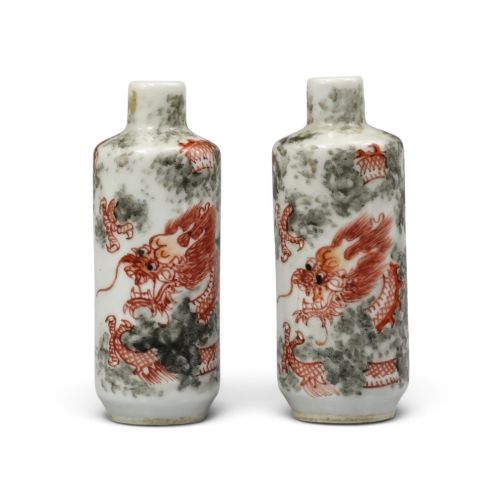
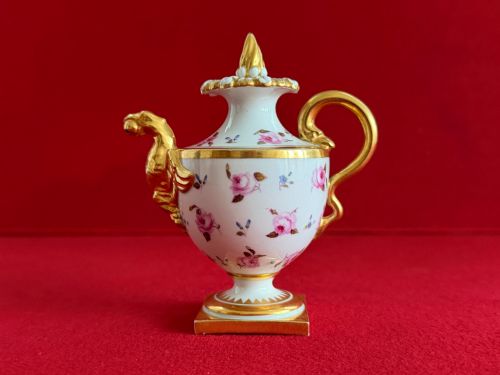
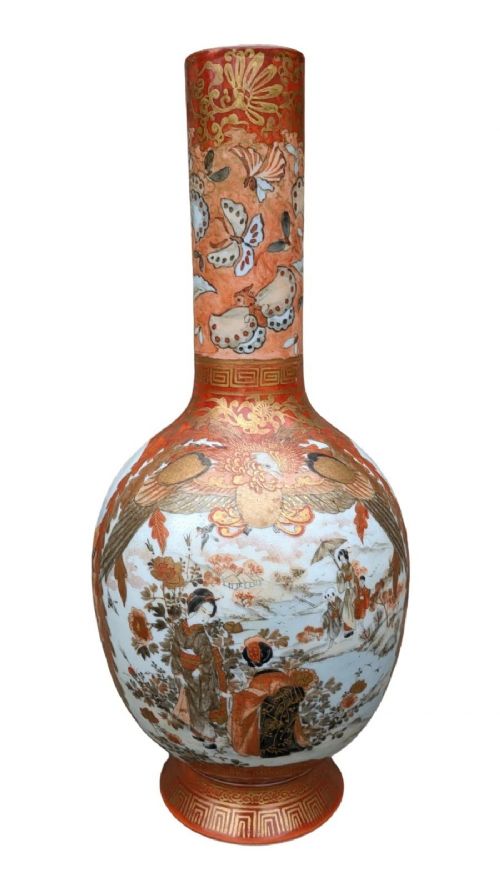
A hand painted porcelain bottle encompasses a diverse range of forms, from miniature snuff containers and scent flasks to large Japanese Kutani and Imari vessels and English rose water sprinklers. These objects span multiple periods, including the nineteenth century and earlier seventeenth-century Japanese flasks, reflecting global ceramic traditions.
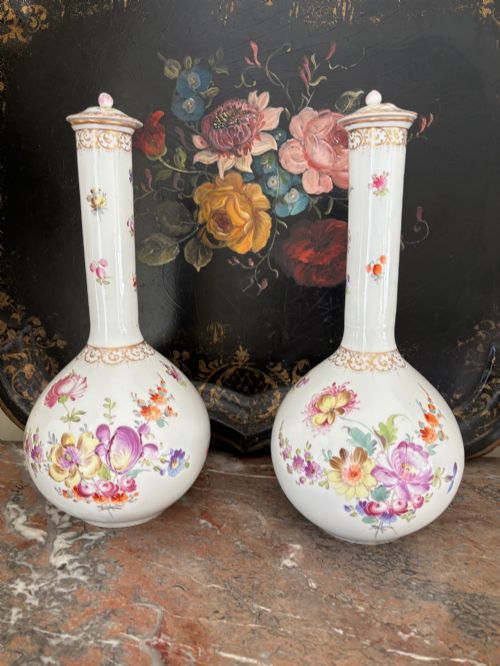
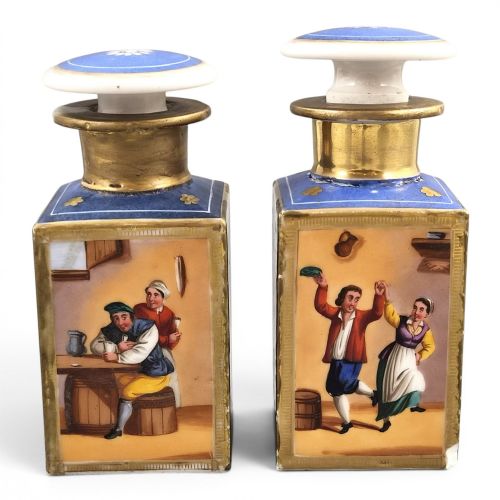
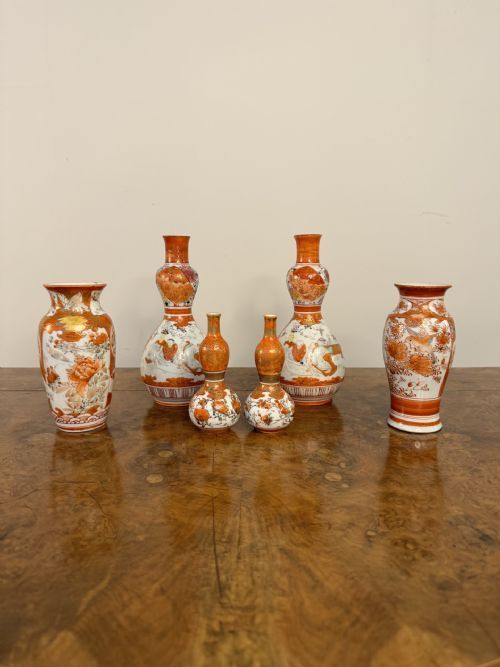
Buyers will most frequently encounter nineteenth-century Chinese porcelain snuff bottles decorated with figures or dragons, alongside Japanese Imari and Kutani vases from the late nineteenth and early twentieth centuries. European manufactories also contribute domestic scent bottles, perfume containers, and garniture sets featuring floral or pictorial enamel scenes.
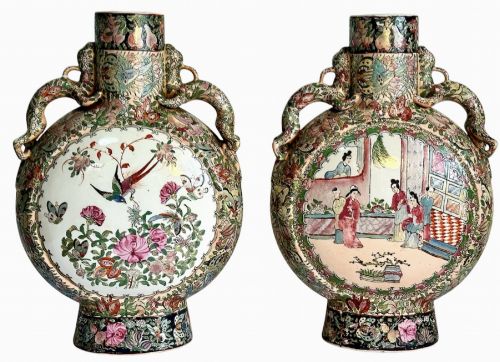
The functions of these vessels vary widely according to their origin, shifting from personal portable containers for snuff, perfume, or wine to ornamental display pieces like moon flasks and bottle vases. Each form showcases the adaptability of ceramic material to both utilitarian service and decorative display.
How They Were Made
The foundation of these objects lies in ceramic paste shaped into specific vessel forms, often finished with transparent glazes or specialised cobalt glazes before firing. Artisans applied detailed hand-painted designs utilising enamel colours, iron-red pigments, and gold leaf or gilding to accent the ceramic body.
Techniques varied between Asian and European kilns, with Chinese and Japanese makers employing intricate brushwork for figures, flora, and heraldic scripts, while English and continental European factories integrated moulded elements, flower encrustations, and meticulous pictorial scenes.
Listings feature porcelain pieces spanning from the seventeenth century through the twentieth century, encompassing both Asian export wares and European ceramics.
What Varies in Quality
The standard of a hand painted porcelain bottle depends heavily on the precision and fineness of the brushwork, where delicate facial expressions, precise lines, and well-composed scenes distinguish superior execution. The harmony between the ceramic body shape, glaze consistency, and the application of gold leaf or enamel accents dictates the overall visual success of the piece.
Provenance and maker attribution also influence the standing of an item, as documented works from established English manufactories or specific Asian dynastic periods carry distinct weight among collectors compared to unmarked or generic production pieces.
Flight Barr And Barr·Jacob Petit·Minton·Royal Worcester·Sitzendorf
The Hand Painted Porcelain Bottle Glossary
- Imari
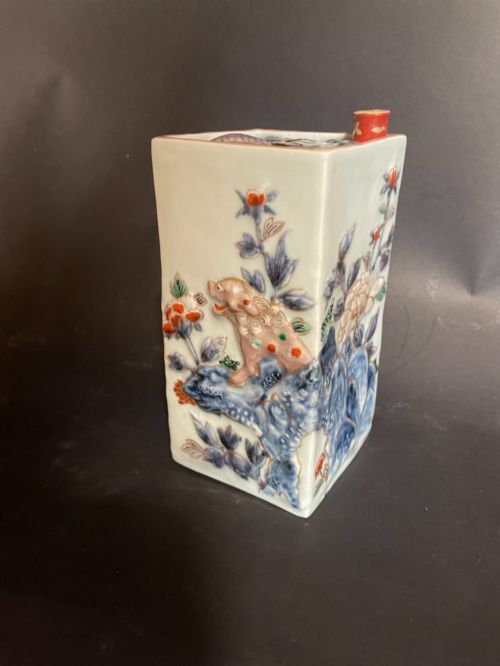
- A style of Japanese export porcelain characterised by a palette of underglaze blue, iron-red, and gilt highlights. This decorative approach became widely popular across European markets during the nineteenth century.
- Famille Rose
- A palette of Chinese porcelain enamels dominated by opaque pink or rose colours, introduced during the Qing dynasty. It allowed artists to render soft tonal gradations on figures and florals.
- Kutani
- Japanese ceramic ware known for bold pictorial designs, often incorporating rich red and gold pigments over a white or buff body. Many surviving pieces date from the Meiji period and later.
- Gilding
- The application of gold leaf or gold powder to the surface of porcelain to highlight rims, handles, and decorative motifs. It adds a reflective quality that enhances the vessel's visual depth.
- Garniture
- A set of matching vases or pots designed for symmetrical display on a mantelpiece or cabinet top. These coordinated groups often share identical painted motifs and bulbous or shaped forms.
Hand Painted Porcelain Bottle: Frequently Asked Questions
What is a hand painted porcelain bottle used for?
These vessels served various practical and decorative purposes depending on their cultural origin and scale, functioning as portable containers for snuff, perfume, or wine, as well as standalone ornamental vases.
Smaller examples were designed for personal use or travel, while larger bottle-shaped vases and garniture sets were intended to adorn domestic interiors and display wealth.
How do I care for antique porcelain?
Antique porcelain requires gentle handling, ideally keeping it away from direct sunlight and extreme temperature fluctuations to protect the painted enamels and delicate gilding.
Cleaning should be limited to dusting with a soft, dry cloth, avoiding harsh chemical cleaners or submersion that might compromise the historic glaze or surface decoration.
What does Famille Rose mean?
Famille Rose refers to a grouping of Chinese porcelain defined by the use of an opaque pink enamel derived from colloidal gold, which permitted subtle shading.
This palette allowed artists to create lifelike renderings of human figures, robes, and botanical specimens during the Qing dynasty.