


Hand Painted Highland Cattle
Hand painted highland cattle pieces bring the mist of the Scottish glens straight onto porcelain and enamel.
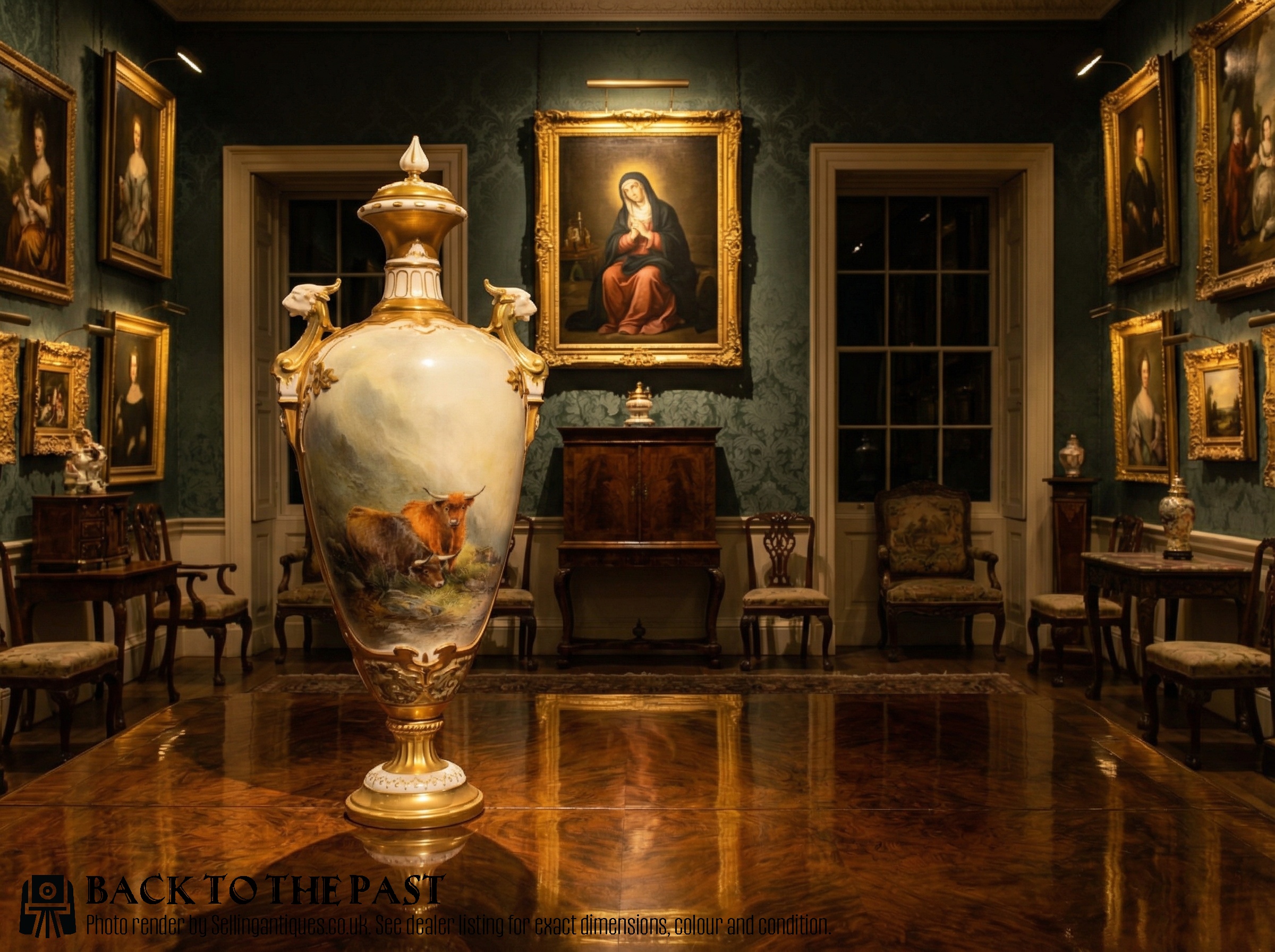
Hand Painted Highland Cattle
When someone searches for hand painted highland cattle, they are hunting for fine porcelain decorated with detailed rural scenes. The versions most commonly met on this page are Edwardian and Edwardian traditional items originating from the early decades of the twentieth century. These objects capture a specific romantic view of rural life through skilled brushwork.
The selection here encompasses various decorative forms including vases, cabinet plates, ewers, and wall art plaques. Each piece presents an individual study of cattle set against misty mountain backdrops and heather-clad hills. Buyers find single items as well as matched pairs designed for symmetrical display.
Production spans from 1900 through the 1930s, showing a steady output of this distinct pastoral subject matter. The objects serve primarily as cabinet pieces or decorative focal points within a room. Their enduring appeal lies in the miniature artistic portraits rendered upon porcelain and bone china surfaces.
How they were made
Makers utilised fine porcelain and bone china as the primary surfaces for these detailed pastoral illustrations. Artists applied enamel paints by hand to capture the texture of the cattle coats and the atmospheric tones of the landscape. Kiln firing fixed the colours permanently onto the ceramic body.
Many items incorporate gold leaf, gilt, gilding, or giltwood to frame the painted central subjects. This application of precious metal highlights the rims, handles, and borders of the vases and plates. Glass also appears occasionally in the construction of protective settings or associated display elements.
Hand Painted Highland Cattle Retail Price Guide 2026
Typical asking prices for hand painted highland cattle among the pieces listed under this phrase on Sellingantiques today, from the lower quarter to the upper quarter. They describe what is for sale here now, not the wider market.
Materials span porcelain, bone china, glass, enamel, and gilt highlights.
What varies in quality
The sophistication of the brushwork largely defines the distinction between standard items and exceptional examples. Finer pieces demonstrate meticulous detail in the rendering of the animal coats and the depth of the background landscape. The presence of a signature from a known hand adds significant artistic merit to the piece.
The quality of the ceramic form itself and the preservation of any gilding also influence the overall standard. Robust gilding without rubbing elevates the physical presence of vases and cabinet plates. Scale matters too, with larger plaques and covered vases demanding greater technical skill from the ceramic artist.
Royal Worcester·Harry Stinton·John Stinton
The Hand Painted Highland Cattle Glossary
- Spill vase
- A tall, slender vessel originally designed to hold wooden spills used for lighting fires or candles. These objects often double as purely decorative cabinet pieces.
- Cabinet plate
- A decorative ceramic plate intended for display on a wall or within a glass-fronted cabinet rather than for dining. They frequently feature detailed painted scenes.
- Ewer
- A large jug with a wide spout and a curved handle, traditionally used for pouring water. In decorative ceramic contexts, they serve as ornamental display pieces.
- Plaque
- A flat panel of porcelain or earthenware meant to be hung on a wall like a painting. These items showcase detailed miniature artwork without the constraints of a standard vessel shape.
- Gilding
- The application of gold leaf or gold powder to the surface of porcelain or wood. This technique provides metallic accents that frame the central painted artwork.
Hand Painted Highland Cattle: Frequently Asked Questions
Are these pieces meant for daily use?
These decorated items are created primarily for display rather than practical household service. Their delicate enamel painting and gold leaf accents require gentle care.
Owners typically place them inside glass cabinets or on mantelpieces where they remain safe from heavy handling. Cleaning requires only a soft, dry cloth to remove dust.
How can I identify the period of a piece?
Dating relies heavily on the factory marks stamped or painted on the underside of the porcelain. Stylistic cues such as the Edwardian aesthetic also provide a clear temporal framework.
Comparing the specific floral or landscape borders helps narrow down the decade of production. Documentation from the early twentieth century confirms these manufacturing patterns.
Why do some items feature artist signatures?
Master painters working within major ceramic factories sometimes signed their finished artwork directly onto the glaze. A signature indicates a higher level of individual artistry and specialised skill.
Collectors look for these inscribed names to identify particular painters associated with highland cattle scenes. Unsigned pieces remain common but lack the specific attribution.
How do pairs differ from single items?
Matched pairs consist of two complementary vases or plates created to sit symmetrically on either side of a fireplace or cabinet. These sets share identical artistic themes and dimensions.
Single items function as standalone decorative focal points on shelves or tables. Finding a surviving pair adds considerable cohesion to a room display.