





Hand Painted Botanical Urns
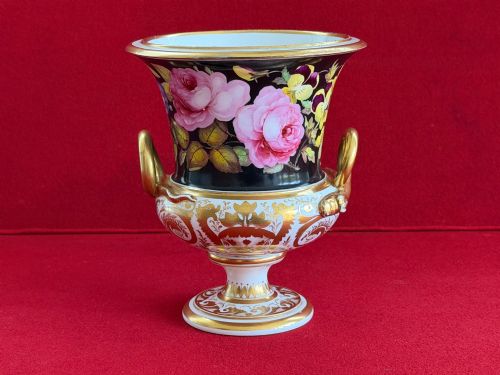
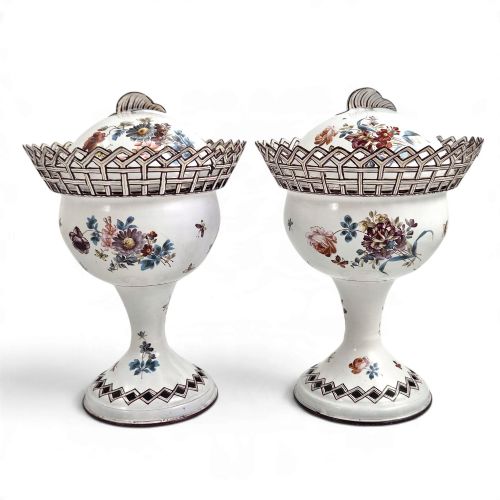
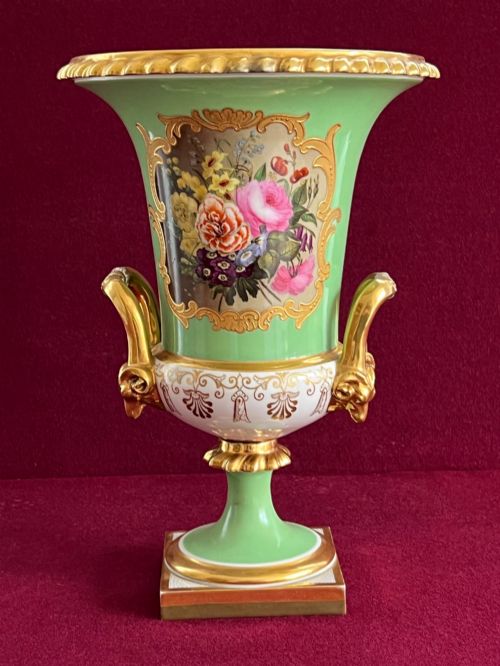
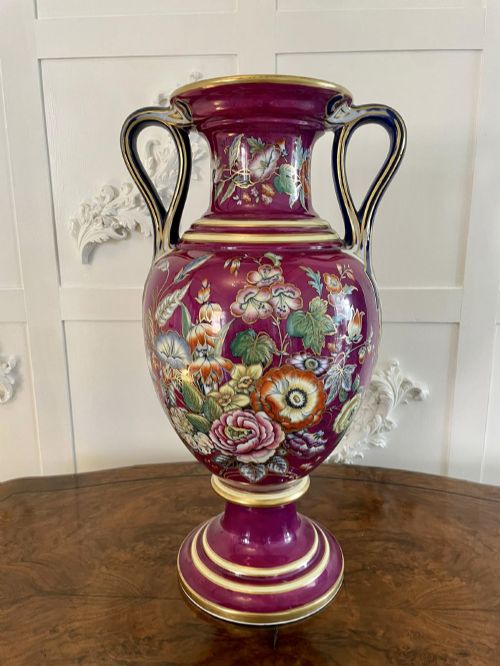
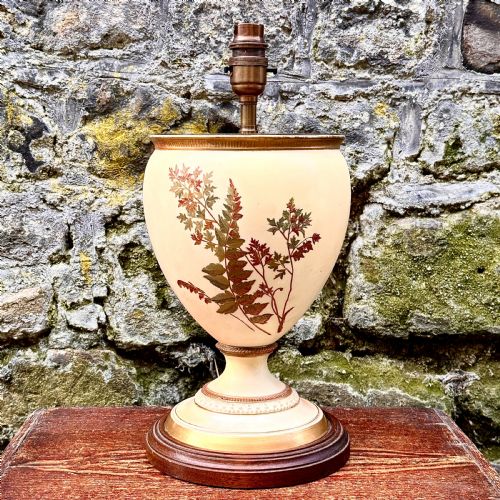
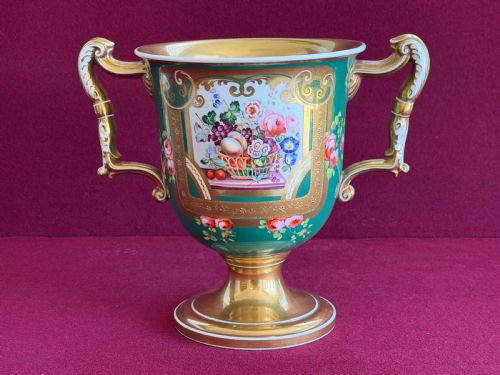
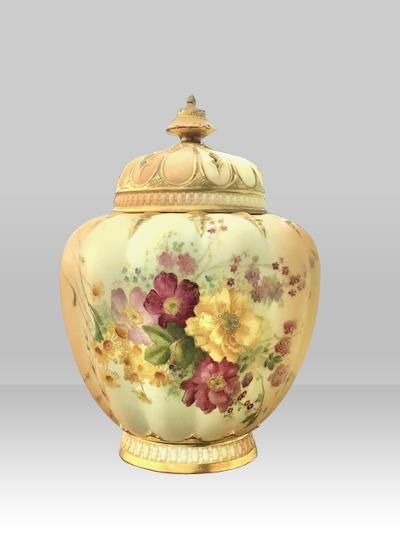
These hand painted botanical urns are decorative vessels adorned with floral motifs, offering instant classical elegance to a room.
Hand Painted Botanical Urns
When you search for hand painted botanical urns, you encounter a selection of decorative ceramics, porcelain vessels, and table lamps spanning the nineteenth and early twentieth centuries. These pieces incorporate forms such as twin-handled vases, pedestals, and lidded pails originating from diverse periods including the Regency, Victorian, and Edwardian eras.
The objects on this page showcase varied production origins, ranging from English factories like Royal Worcester and Spode to continental porcelain houses such as Meissen. Most examples combine classic vessel shapes with floral depictions rendered directly onto the ceramic ground.
Buyers frequently find pieces featuring specific regional styles, including Aesthetic Movement designs and Neoclassical Revival forms. Such items function primarily as decorative centrepieces or converted lighting.
How they were made
The manufacture of these pieces relies on porcelain, creamware, earthenware, and opaque glass bodies shaped into classical urn and vase forms. Artisans then applied polychrome pigments by hand to depict botanical subjects across the ceramic surfaces.
Many examples incorporate metallic detailing alongside painted flora, utilising gold leaf and gilding to highlight handles, rims, and pedestals. Some pieces integrate brass components or enamel finishes to complete the construction.
Hand Painted Botanical Urns Retail Price Guide 2026
Typical asking prices for hand painted botanical urns among the pieces listed under this phrase on Sellingantiques today, from the lower quarter to the upper quarter. They describe what is for sale here now, not the wider market.
Listings here feature porcelain, earthenware, and opaque glass bodies decorated with hand painted botanical motifs across Victorian and Edwardian periods.
What varies in quality
Quality in these vessels rests upon the precision of the hand painting and the crispness of the underlying ceramic form. Finer specimens display detailed botanical studies executed with steady brushwork, whereas standard examples feature simpler floral repetitions.
The application of gilding and gold leaf also differentiates the grade of a piece, with superior items showing careful burnishing and hand-tooled accents. Furthermore, the reputation of the pottery house influences the distinction between standard production wares and exceptional commissions.
Royal Worcester·H and R Daniel·Flight Barr and Barr·Meissen·Minton·Spode·Doulton Lambeth
The Hand Painted Botanical Urns Glossary
- Creamware
- A refined earthenware developed in England during the eighteenth century featuring a pale yellowish-buff glaze. It served as a popular canvas for painted decoration before porcelain became universal.
- Porcelain
- A hard, vitreous ceramic material fired at high temperatures to achieve a white, impermeable body. It forms the primary substrate for fine nineteenth-century decorative urns.
- Gilding
- The application of gold leaf or powdered gold paint to the surface of ceramics or metal mounts. This technique accentuates handles, rims, and architectural details on classical vessels.
- Earthenware
- A porous pottery body fired at lower temperatures than porcelain and typically covered with an opaque glaze. It provides a robust structure for nineteenth-century decorative wares.
- Enamel
- A glassy substance fused to the surface of ceramics or metals through firing to provide colour and protection. It creates vibrant, durable hues on painted floral designs.
Hand Painted Botanical Urns: Frequently Asked Questions
What periods do these urns come from?
The pieces span the nineteenth and early twentieth centuries, encompassing Regency, Victorian, and Edwardian eras. Many examples date from the middle to late 1800s.
Individual pieces reflect the aesthetic preferences of their specific decade of production, ranging from Neoclassical Revival forms to Aesthetic Movement designs.
How were these urns originally used?
These vessels served primarily as decorative interior ornaments displayed on mantelpieces, pedestals, and tables. Some specialised forms functioned as ice pails or pot pourri containers.
Over time, certain pieces were adapted into table lamps while retaining their original hand painted ceramic bodies.
How do I care for hand painted ceramics?
Maintain these vessels by dusting them gently with a dry, soft cloth to protect the painted botanical surfaces and delicate gilding. Avoid using moisture or chemical cleaners on the exterior.
Keep the items away from direct sunlight to prevent fading of the hand-applied pigments over the years.
How can I identify the maker?
Look for factory marks, pattern numbers, or printed ciphers on the underside of the ceramic base. These stamps often indicate the pottery house and approximate production period.
Stylistic cues such as the specific blush ivory ground or handle shape also help attribute pieces to makers like Royal Worcester or Flight Barr and Barr.