


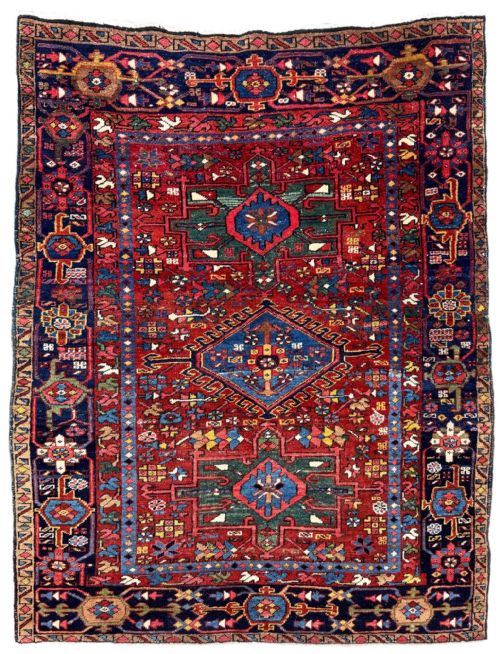


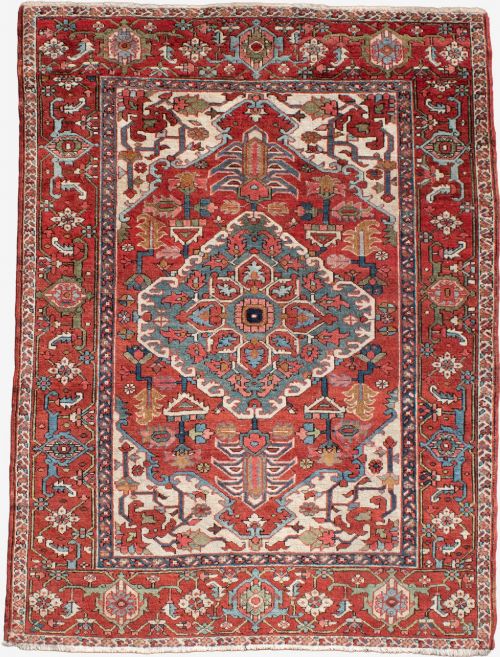


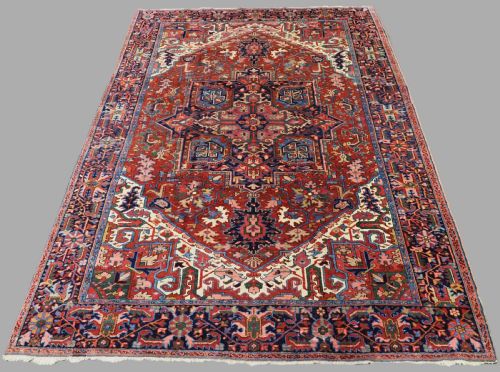


Hand Knotted Serapi Carpet
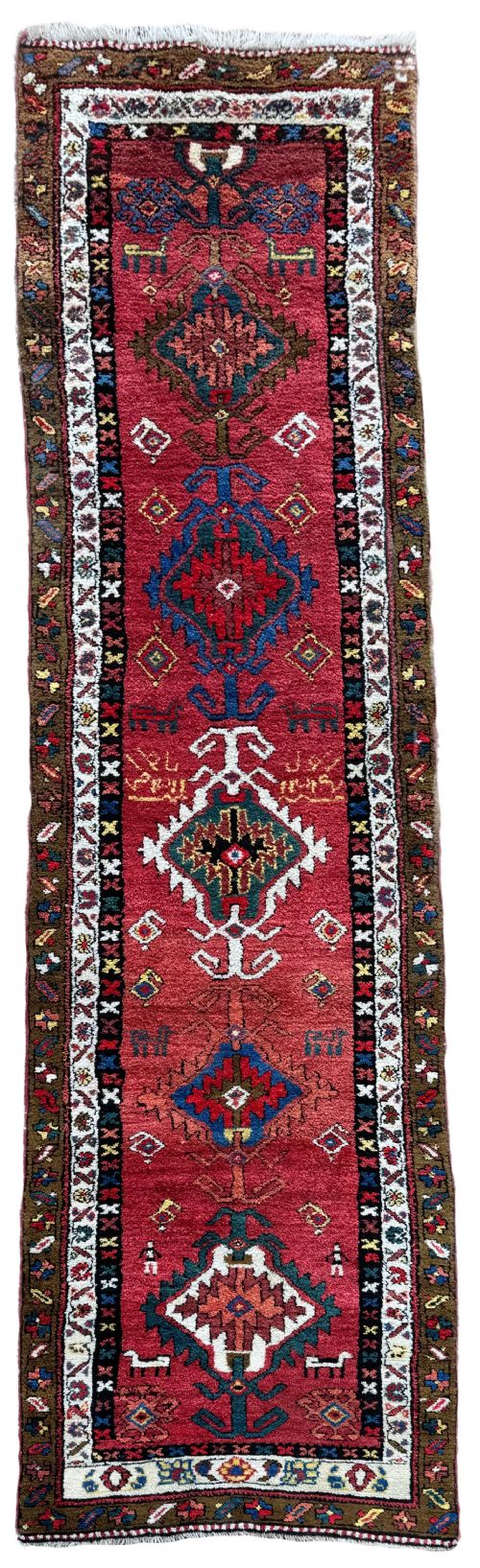
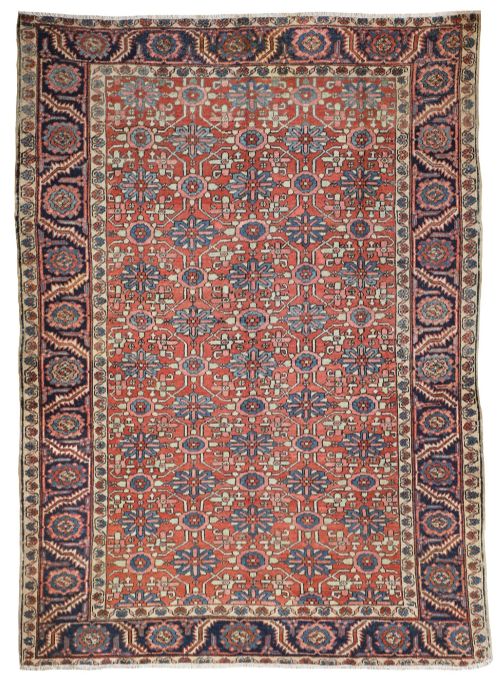
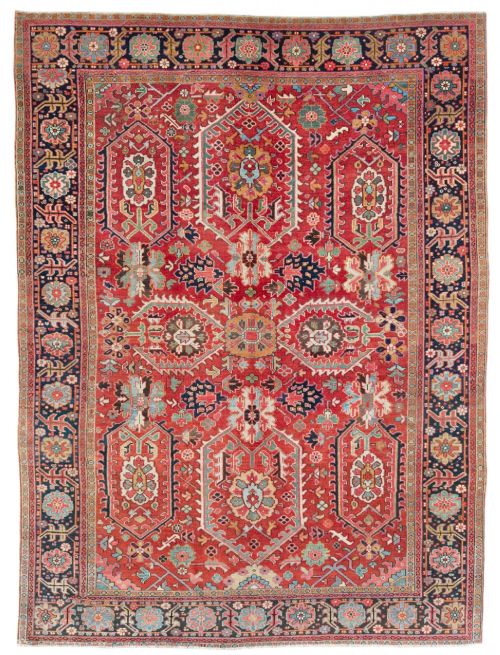
A hand knotted serapi carpet brings bold geometric medallions and rich terracotta tones from Northwest Persia into a room.

Hand Knotted Serapi Carpet
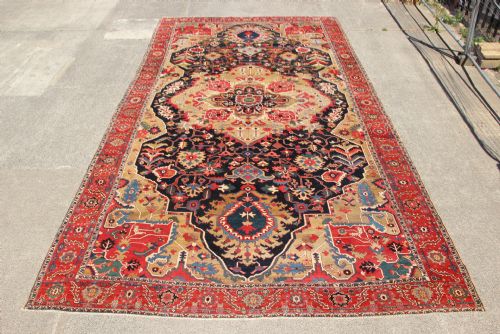
When searching for a hand knotted serapi carpet, buyers encounter woven floor coverings originating from Northwest Persia, specifically associated with the Heriz region and dating from the late nineteenth century into the early decades of the twentieth century. These pieces appear in various formats on this page, ranging from expansive gallery carpets measuring over six metres in length to smaller area rugs and long hallway runners.
The aesthetic centres on large geometric central medallions set against expansive fields, complemented by stylised floral motifs and heavy corner spandrels. Most examples seen here align with traditional Persian Heriz and Serapi styles, reflecting the distinct weaving traditions of the Northwest Persian district.
Materials and Construction
Every hand knotted serapi carpet is constructed using wool for the pile and cotton for the foundation warp and weft threads. The wool provides a resilient surface suitable for heavy domestic use, while the cotton foundation offers structural stability and allows the geometric patterns to hold their linear precision over decades.
The technique relies on dense hand knotting tied onto the vertical cotton warp threads. Weavers executed intricate geometric designs by hand, building up the robust textile structure that defines these antique Northwest Persian floor coverings.
Early weavers occasionally embedded small asymmetric tribal motifs into the corners, leaving a charming irregularity for keen-eyed observers to spot.
Assessing Quality and Execution
Quality in a hand knotted serapi carpet is determined by the crispness of the drawing and the clarity of the geometric motifs across the field. Superior examples display balanced proportions in the central medallion and sharp delineation in the corners, whereas lesser pieces show muddied transitions or compressed borders.
The depth and saturation of the natural dyes also dictate the visual standing of the textile. Tones that remain luminous and well-balanced across the wool pile separate the finest Northwest Persian carpets from standard commercial grades.
The Hand Knotted Serapi Carpet Glossary
- Serapi
- A sub-style of Northwest Persian Heriz carpet, known for bolder geometric designs and more open fields than standard Heriz weaves. These pieces date predominantly from the late nineteenth century.
- Heriz
- A town and carpet-weaving district in Northwest Persia that produces durable, large-scale geometric rugs and carpets. The region is renowned for its distinctive medallion layouts.
- Medallion
- The prominent central ornamental motif positioned in the middle of the carpet field. In these rugs, it typically takes a strong geometric or polygonal form.
- Spandrels
- The triangular decorative corners situated in the four angles of the main border. They frame the central field and balance the geometry of the medallion.
- Warp
- The stationary vertical foundation threads running the length of the carpet. Cotton serves as the standard material for this structural base.
- Weft
- The horizontal threads passed across the warp to secure the knots in place. Together with the warp, it forms the woven grid of the textile.
Hand Knotted Serapi Carpet: Frequently Asked Questions
Where were these carpets originally woven?
These textiles originate from Northwest Persia, specifically the town and surrounding villages of Heriz. The local weavers developed a distinct geometric vocabulary.
Serapi carpets represent a particular stylistic group within this wider Northwest Persian production. They date mainly from the late nineteenth and early twentieth centuries.
Are these carpets suitable for heavy traffic?
The dense wool pile and sturdy cotton foundations make these floor coverings exceptionally durable. They withstand regular walking in hallways and reception rooms.
Using a quality underlay prevents slipping and reduces friction against the floorboards. This support preserves the structural integrity of the antique weave.
How do I identify a Serapi from a Heriz?
Serapi carpets typically feature larger, more open geometric medallions with coarser knot counts than standard Heriz rugs. The colour palette tends to be more spacious and less congested with small details.
Both styles share the Northwest Persian origin and robust cotton-and-wool construction. The distinction lies primarily in the scale and openness of the drawn design.