




Hand Knotted Heriz
Hand knotted heriz carpets are robust floor coverings from North-West Persia that bring geometric structure and rich colour to high-traffic rooms.
Hand Knotted Heriz
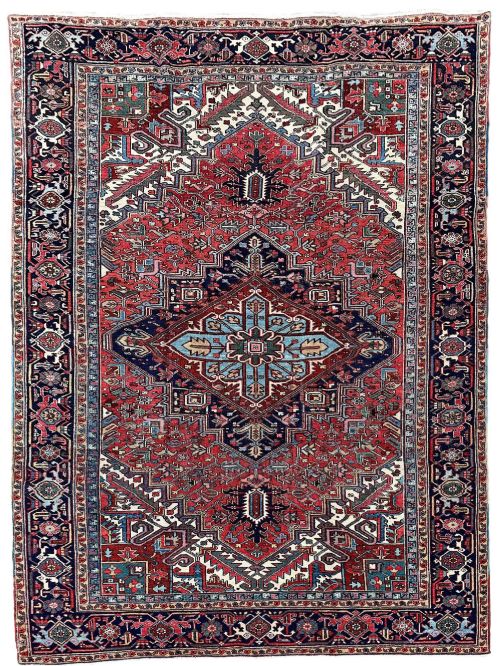
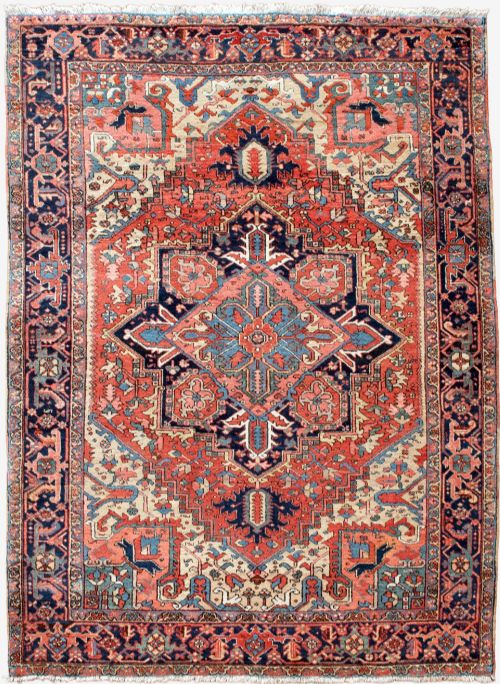
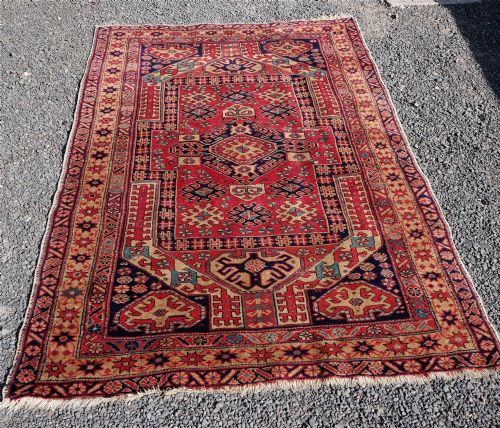
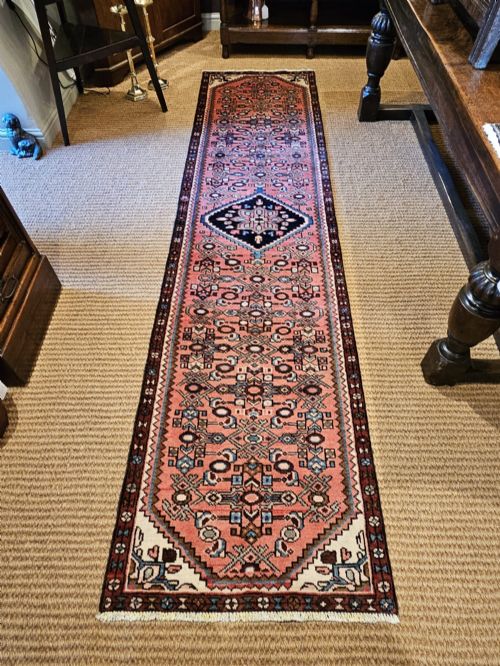
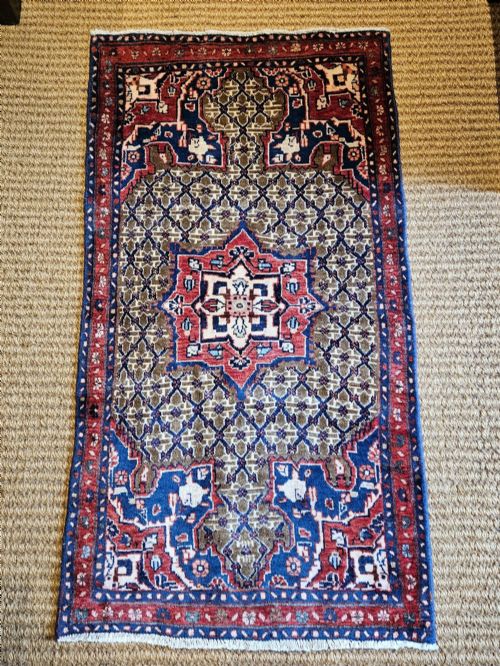
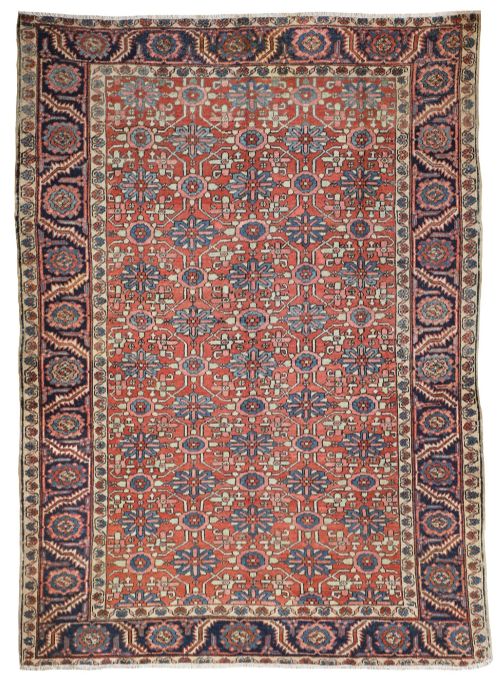
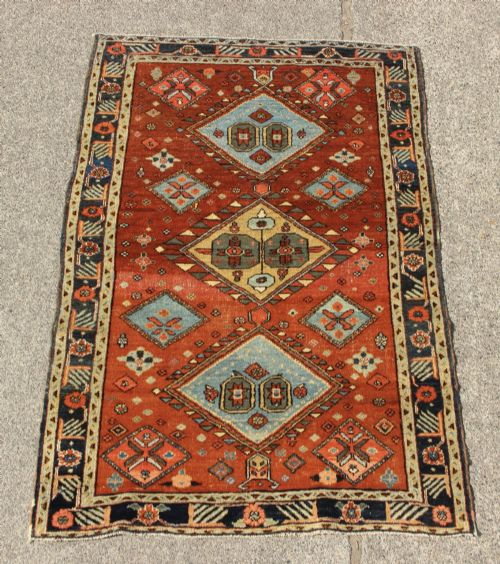
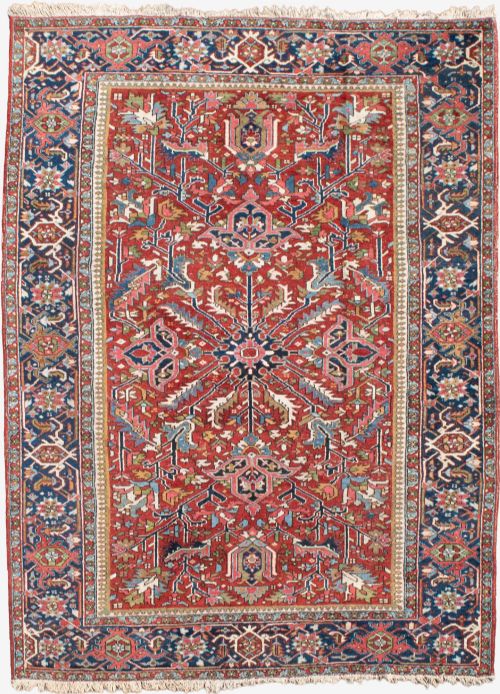
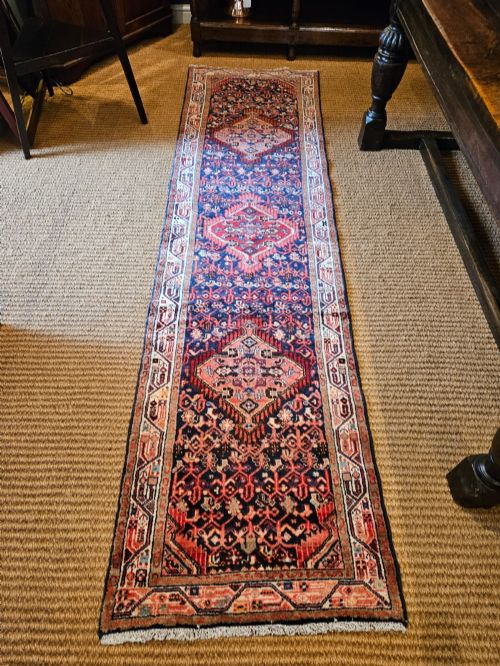
Hand knotted heriz pieces are room-sized carpets and smaller rugs originating from the villages and towns of North-West Persia. When you search for hand knotted heriz, you encounter large formats alongside narrower runner rugs and hearth-sized pieces designed for domestic utility.
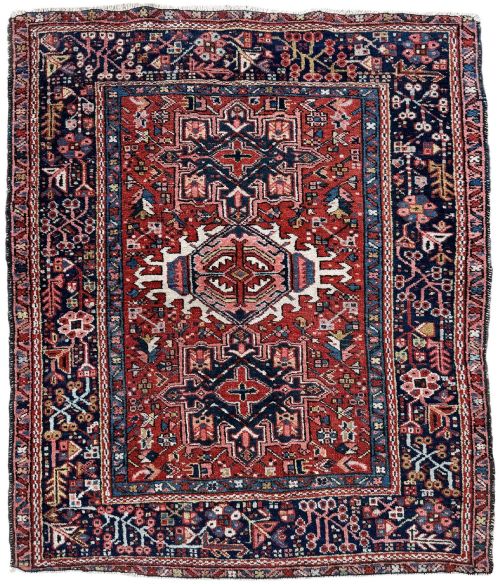
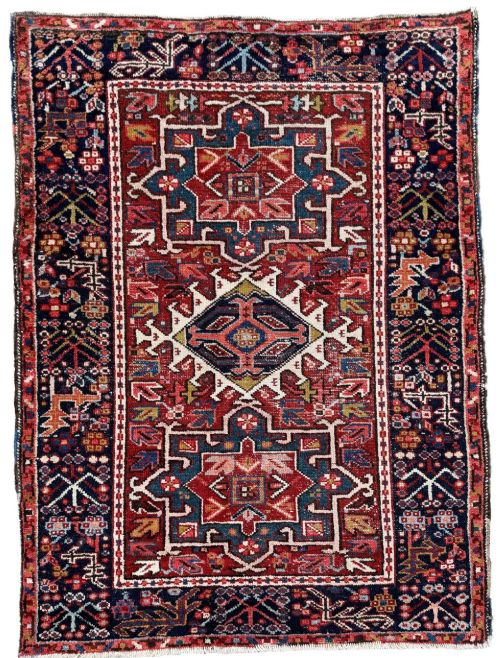
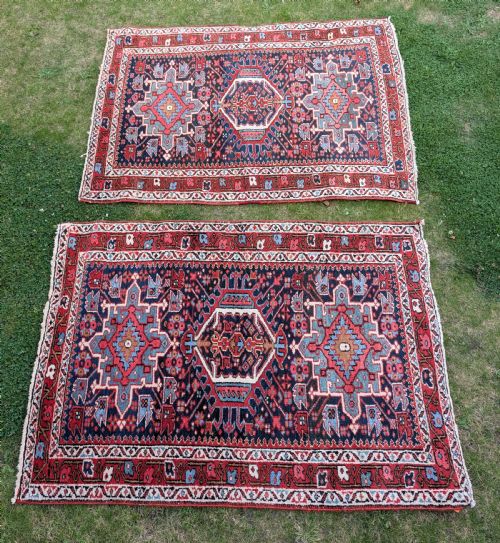
The selections span production dates from the mid-nineteenth century through the early twentieth century, encompassing styles associated with the wider Heriz region. Alongside pieces bearing the Heriz attribution, related village weaves such as Karaja, Bakshaish, and Ahar appear frequently within the listings.
How they were made
These floor coverings are constructed using wool piles hand knotted onto supportive cotton foundations. The natural resilience of wool provides the dense, durable surface necessary to withstand decades of heavy use.
Weavers employed sturdy geometric drafting techniques, often anchoring the composition with a central medallion framed by angular corners and botanical borders. Natural dye traditions supplied the characteristic sky blue, ivory, and colourful palettes seen across the region.
Hearth-sized rugs were specifically woven to sit safely in front of open fireplaces, catching stray sparks before they reached the main floorboards.
What varies in quality
The distinction between ordinary room-sized carpets and superior examples rests in the precision of the geometric drawing and the handling of the pile. Finer knotting permits sharper definition within the medallions and corner spandrels.
Proportion and scale dictate visual success, where exceptionally large formats maintain structural integrity and balance across wide fields. The harmony of the natural dye palette and the crispness of the wool define the upper tier of the tradition.
The Hand Knotted Heriz Glossary
- Heriz
- A region in North-West Persia known for producing durable carpets featuring bold geometric medallions and substantial wool piles. These rugs draw upon village traditions rather than court designs.
- Serapi
- A sub-category of carpets from the Heriz district distinguished by broader, more open designs and particularly fine knotting. They originate predominantly from nineteenth-century production.
- Karaja
- A village weave from the same geographical orbit as Heriz, typically found in smaller rug and runner formats. These pieces often showcase repeated geometric motifs and saturated colour.
- Medallion
- The central ornamental motif dominating the field of the carpet. In regional village weaves, this element is rendered in strong rectilinear geometry rather than curves.
Hand Knotted Heriz: Frequently Asked Questions
How do I clean a hand knotted heriz?
Routine maintenance requires gentle vacuuming without rotary brushes to protect the wool pile from unnecessary friction. Professional textile cleaners who understand vegetable-dyed Persian wool should handle deeper maintenance.
Water exposure must be strictly controlled during spot cleaning to prevent dye migration across the cotton foundation. Allowing the rug to dry flat ensures the structure remains undistorted.
Where should I place a runner?
Narrow runner formats suit hallways, staircases, and gallery spaces where durable floor coverings are required. Their heavy wool construction absorbs foot traffic effectively while introducing regional colour to transitional areas.
Using a quality underlay beneath the runner prevents slipping and cushions the wool against hard flooring. This simple addition extends the working life of the cotton foundation.
How do I identify a Serapi rug?
Serapi carpets are distinguished by an open, spacious field composition and a more restrained use of secondary ornament. They represent an earlier aesthetic within the regional production.
The drawing tends to be less dense than standard village carpets, often paired with a softer palette and fine knotting. These characteristics set them apart within nineteenth-century inventories.
Will these rugs suit modern interiors?
The geometric structure and earthy palette of these village weaves allow them to anchor contemporary minimalist or traditional rooms alike. Their bold scale provides a striking contrast against plain wooden or stone floors.
Placing a room-sized carpet beneath contemporary furniture grounds the seating area and introduces tactile warmth. The varied colourways complement both neutral and saturated interior schemes.