


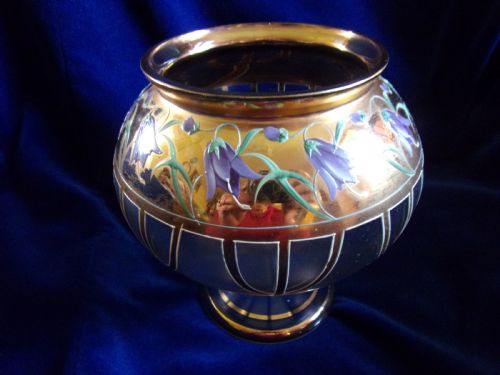

Hand Enamelled Glass
Hand enamelled glass encompasses decorated vessels and tablewares from the Victorian era onward, offering collectors vibrant colour and painted detail.
Hand Enamelled Glass
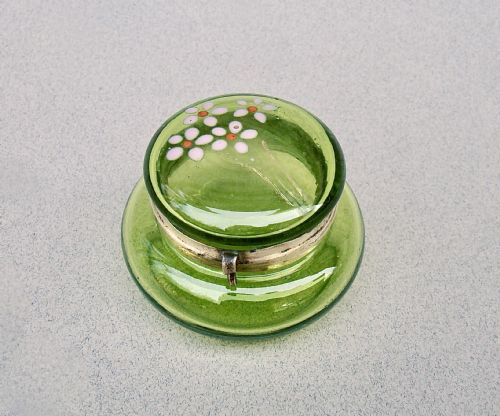
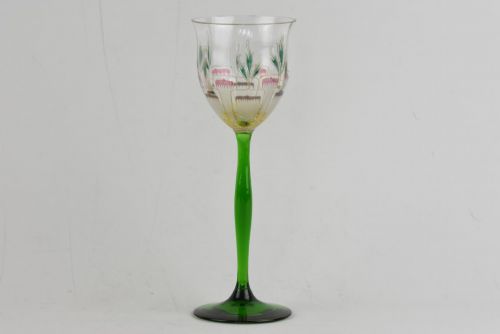
The most common forms on this page include Victorian green glass jugs, Bohemian vases, and matched sets of wine hock glasses from makers like Theresienthal. Pieces range from small dressing table jars to large decorative ewers and lamps integrating brass or wrought iron elements.
Materials and production techniques
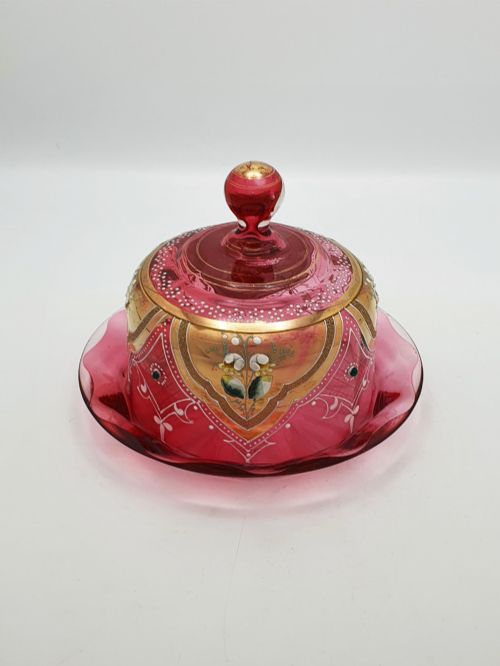
The foundation of these pieces relies on blown or crystal glass, often utilising coloured bases in shades of cranberry, ruby, green, Bristol blue, and white opaline. Craftsmen applied powdered glass enamels suspended in a medium, sometimes combining the work with gold leaf, gilt decoration, or silver mounts.
Once painted, the glassware underwent firing in a kiln to permanently fuse the enamel pigments to the glass surface. Additional details such as portraits, floral scenes, and heraldic motifs were frequently executed by hand before this final thermal fixation.
Listings span periods from the eighteenth century to the 1930s, featuring materials such as crystal, brass, gold leaf, and ruby glass.
What separates the finest pieces
Quality in hand enamelled glass rests upon the precision and complexity of the painted decoration rather than the mere presence of enamel. Pieces featuring detailed pictorial scenes, multi-coloured polychromatic palettes, or armorial motifs command greater attention than simple repetitive floral bands.
The clarity and weight of the underlying glass, whether standard blown crystal or overlaid coloured glass, also dictate the calibre of the object. Furthermore, works attributed to documented firms or signed by individual artisans display superior artistic execution in both the glassblowing and the enamelling stages.
Mary Gregory·Theresienthal·Fritz Heckert·Lobmeyer·Moser
The Hand Enamelled Glass Glossary
- Enamel
- A decorative vitreous composition fused to the surface of glass through high-temperature firing. It provides opaque or translucent colour to the designs.
- Cranberry glass
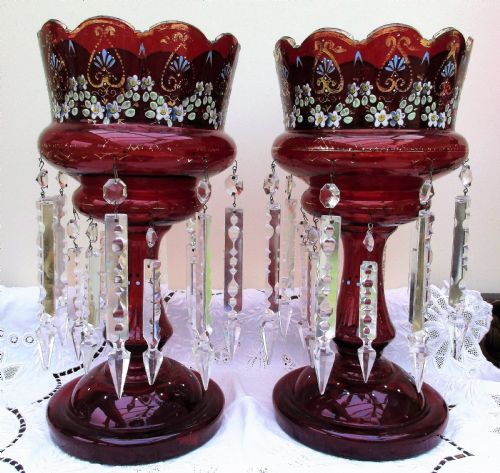
- A rich pink or red transparent glass created by adding gold chloride to the molten batch. It is frequently seen in Victorian vases and jugs.
- Lustre
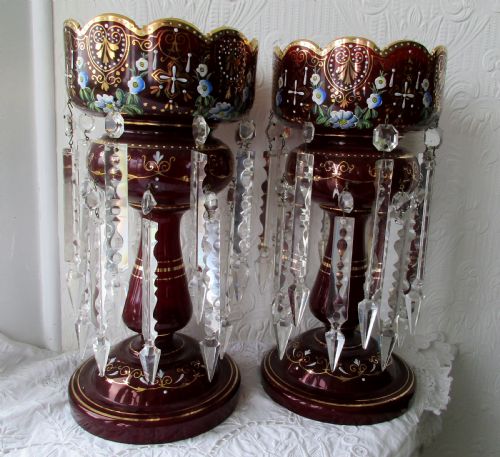
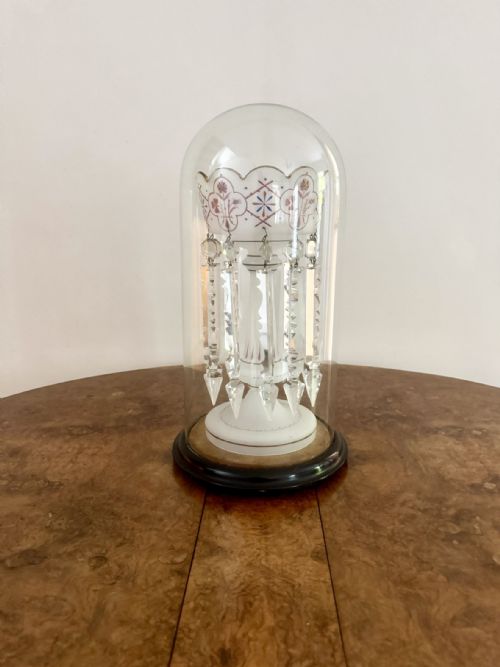
- A decorative glass vase or candlestick hung with cut crystal prisms designed to catch and reflect light. Victorian examples often feature painted enamel highlights.
- Opaque glass
- A non-translucent glass variety, including milk glass and white opaline, used as a solid background for painted floral motifs.
- Roemer
- A traditional Germanic large-bowled wine goblet with a thick patterned stem. These often display elaborate heraldic or floral enamel work.
Hand Enamelled Glass: Frequently Asked Questions
What is Mary Gregory glass?
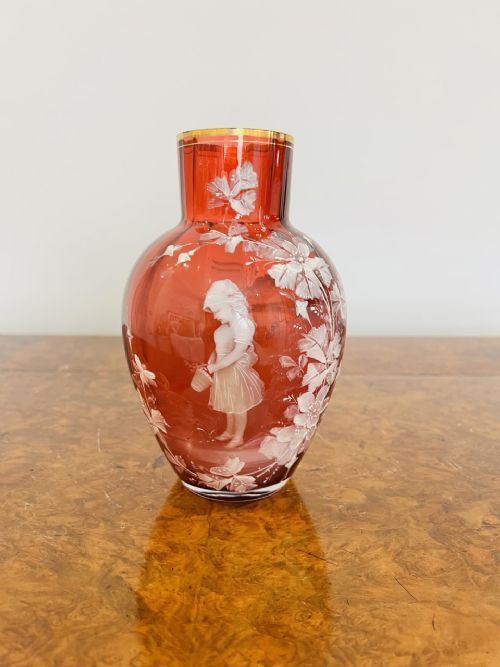
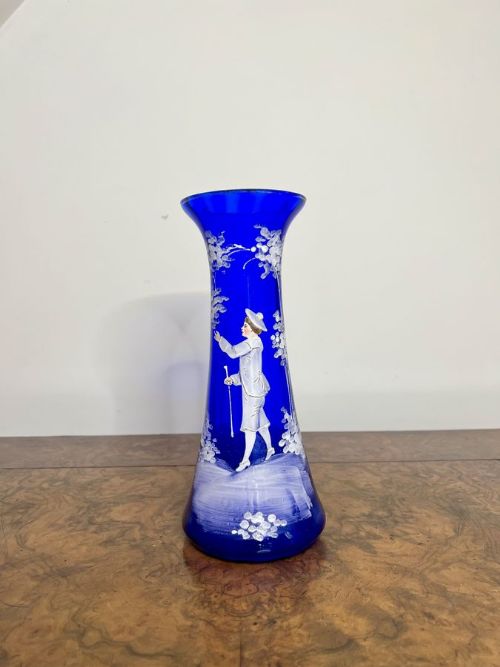
Mary Gregory glass refers to Victorian glassware decorated with white or tinted enamel silhouettes of children playing amidst foliage. The attribution persists despite many pieces originating from Bohemian and English factories rather than the American artist herself.
These items commonly appear on cranberry or blue glass grounds, forming vases, jugs, and trinket boxes.
How can I date these glass pieces?
Dating relies on stylistic indicators, colour palettes, and manufacturing techniques recorded across Victorian, Art Nouveau, and Art Deco periods. Shape and form, such as the heavy proportions of nineteenth-century lustres versus the geometric lines of later items, offer further chronological clues.
Signatures, registry marks, or specific maker attributions provide the most precise dating evidence when present.
Where were these glass items made?
Production centres spanned Great Britain, Bohemia, Germany, and France, with distinct regional preferences in colour and motif. English makers favoured opaline and ruby glass for dressing table accessories, while continental workshops produced elaborate armorial goblets and crystal hock glasses.
Bohemian output frequently encompassed green and ruby glass decorated with hunting scenes or overlaid portraits.