
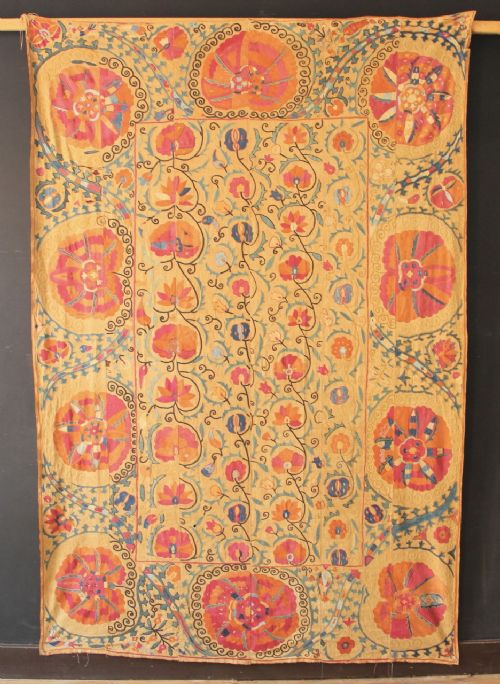


Hand Embroidered Uzbek Textile
When you search for a hand embroidered uzbek textile, you are looking at vibrant historical needlework from Central Asia, prized for bold patterns and rich silk threads.
Hand Embroidered Uzbek Textile
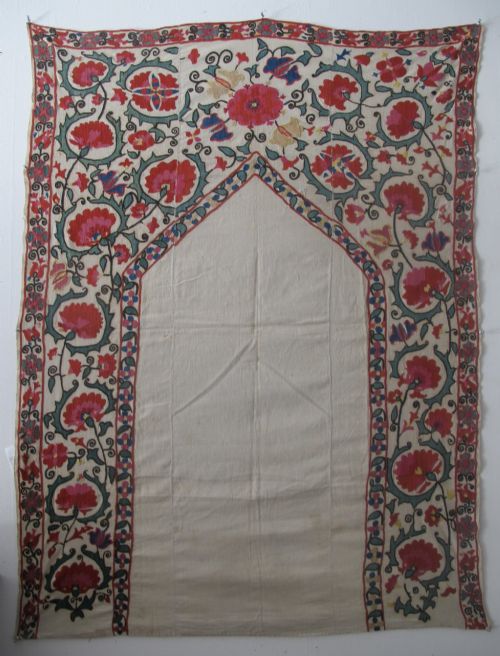
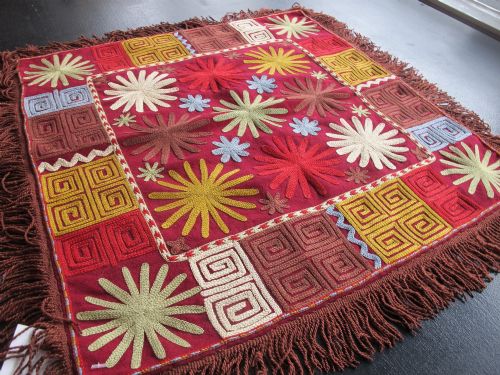
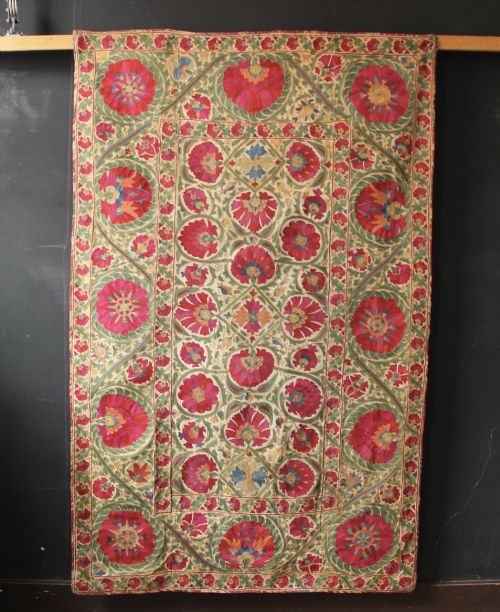
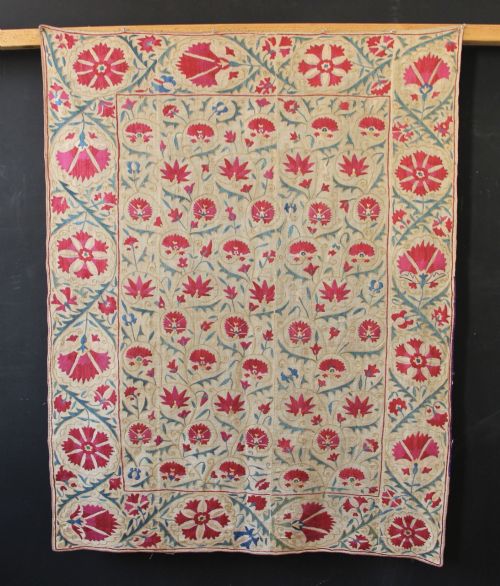
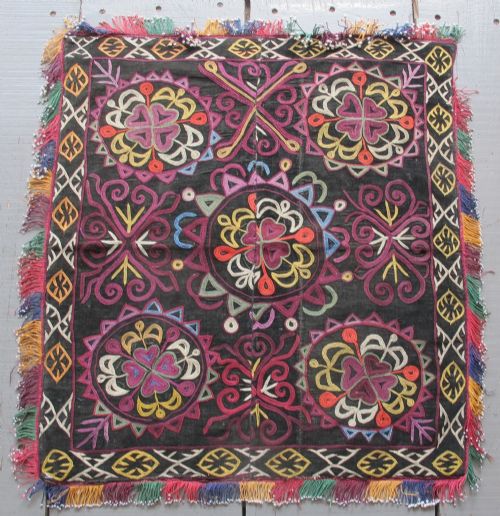
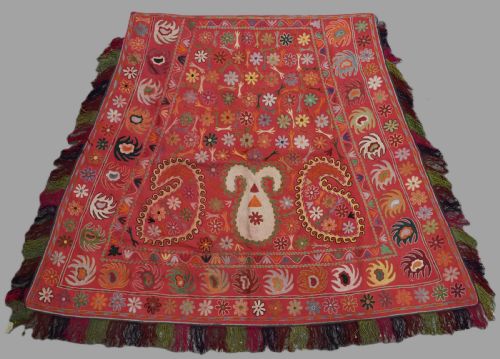
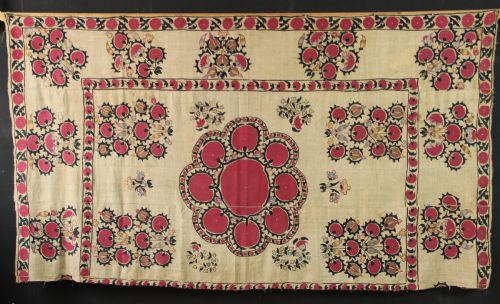
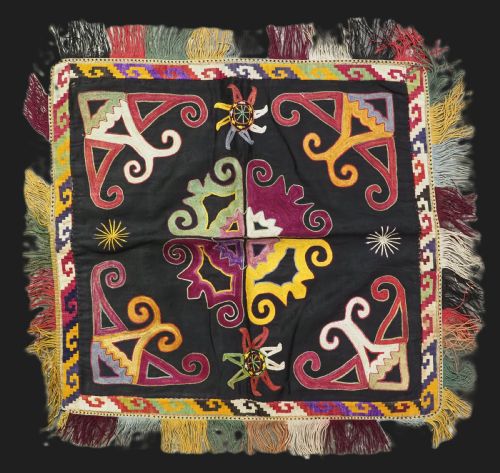
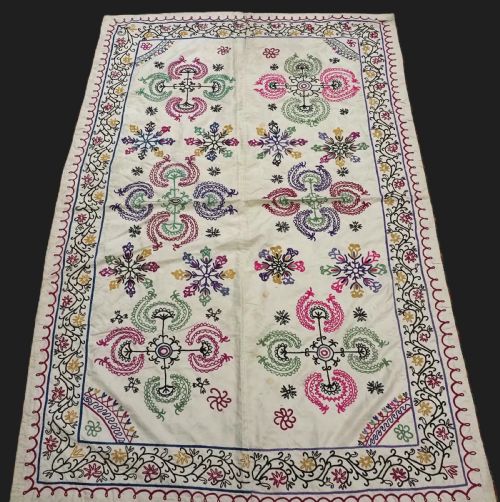
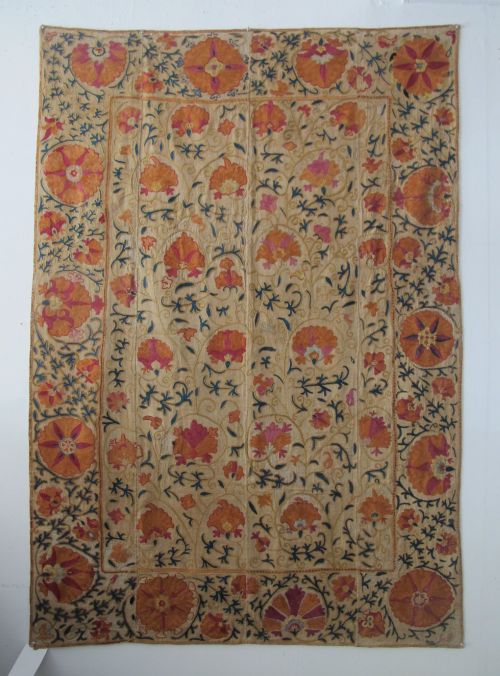
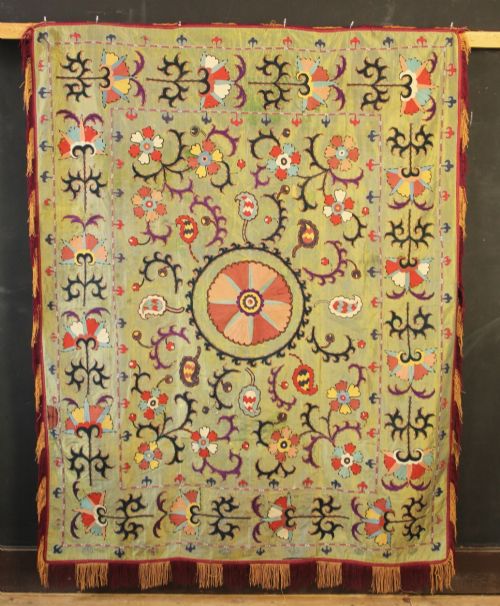
A hand embroidered uzbek textile encompasses diverse traditional forms created across Central Asia, including large wall hangings, smaller nim suzanis, and ceremonial horse covers. These pieces originate from distinct regional centres such as Bukhara, Tashkent, Samarkand, and Shakrisabz.
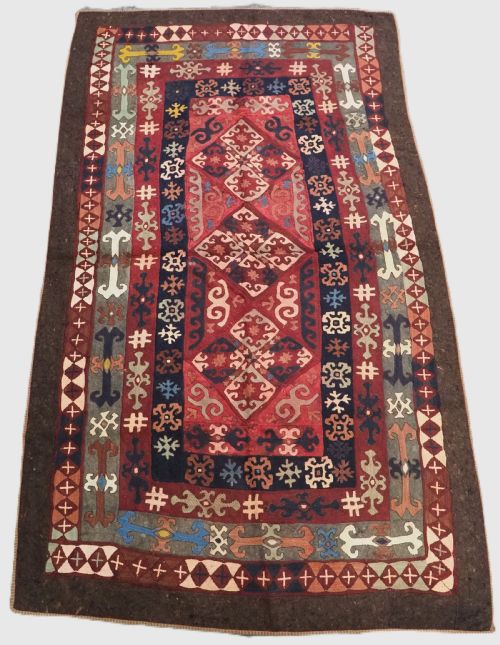
Most examples date from the nineteenth and early twentieth centuries, reflecting traditional domestic and ceremonial use. Collectors encounter varied formats, from elongated wall panels to square mirror covers and felt rugs.
How they were made
Artisans worked silk thread onto foundation grounds made from cotton, linen, wool, adras silk-cotton mix, or felt. Many items incorporate dense surface stitching that completely covers the underlying fabric.
Specialised regional techniques included tambour hook embroidery and needlework using diverse stitch structures. Makers decorated certain utilitarian items, such as saddle rugs and wall hangings, with added glass beads.
Several ceremonial horse covers and saddle rugs preserve the nomadic equestrian heritage of the Lakai tribe.
What varies in quality
Quality depends on the density of the needlework and the complexity of the botanical or geometric composition. Full-work suzanis display greater technical ambition than sparse or partial layouts.
The vibrancy and preservation of the dyed silk threads determine the visual impact of a panel. Balanced proportions, intricate regional motifs, and harmonious colour grounds distinguish superior examples.
The Hand Embroidered Uzbek Textile Glossary
- Suzani
- A large, embroidered Central Asian wall hanging or domestic textile, traditionally worked in silk on a cotton or linen ground. These pieces often feature large floral and medallion motifs.
- Nim Suzani
- A smaller or half-sized version of the traditional suzani hanging. These compact textiles offer versatile display options for domestic interiors.
- Palak
- A fully embroidered Tashkent suzani style dominated by large central star motifs and dense surface work. The ground is often entirely covered in stitching.
- Lakai
- Associated with the Lakai tribe, these embroideries feature distinct tribal designs, dynamic asymmetry, and compact formats like saddle covers and small rugs.
- Adras
- A traditional Central Asian textile woven from a mixture of silk and cotton yarns. It frequently serves as the foundation ground for embroidered panels.
Hand Embroidered Uzbek Textile: Frequently Asked Questions
What is a suzani used for?
Historically, suzanis served as wall hangings, bed covers, and dowry items in Central Asian homes. Today, collectors typically mount them on walls as decorative textile art.
Smaller formats like mirror covers and saddle rugs function well as accent pieces on smaller wall spaces or tables.
How do I care for a textile?
Protect antique embroideries from direct sunlight to prevent the natural silk dyes from fading over time. Keep them away from high moisture and excessive heat.
Professional textile conservation is recommended for cleaning or mounting older pieces safely.
How do I tell regional styles apart?
Regional types often display distinct structural layouts and colour palettes. Tashkent pieces frequently feature full embroidery with star motifs, while Shakrisabz and Bukhara works emphasise floral designs.
Tribal Lakai pieces tend to show smaller, dynamic geometric forms often worked on coloured woolen or cotton grounds.
What does nim mean in a title?
The term nim designates a half or smaller scale version of a standard textile format. These pieces provide the intricate embroidery of full-scale suzanis in a more compact dimension.
They frequently appear as smaller wall hangings or decorative covers.