
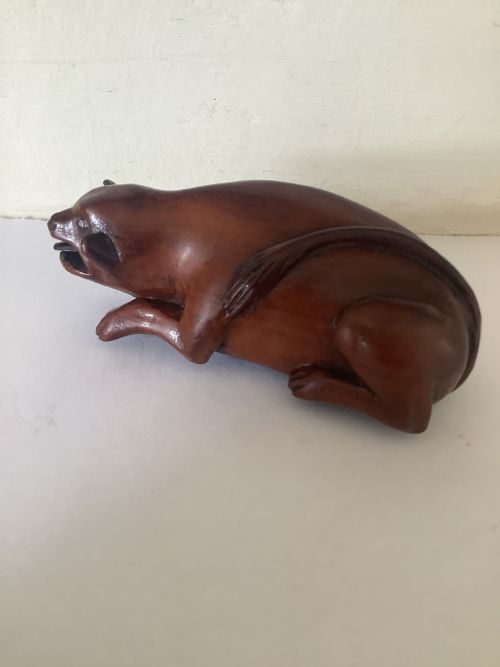
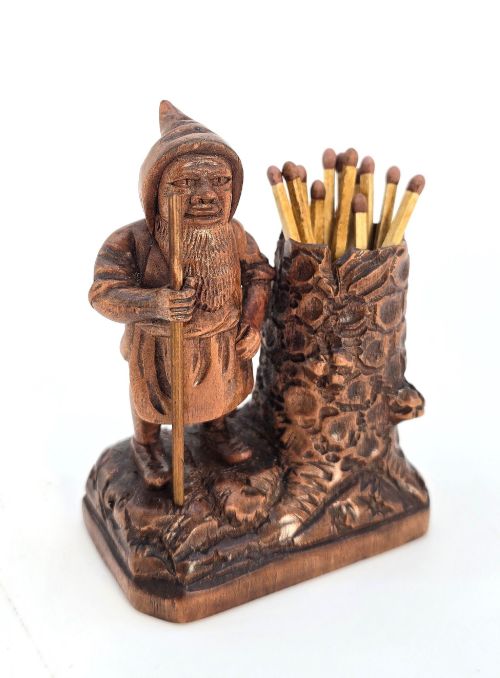
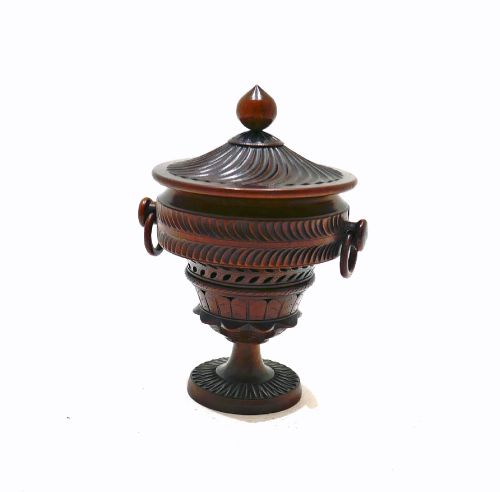
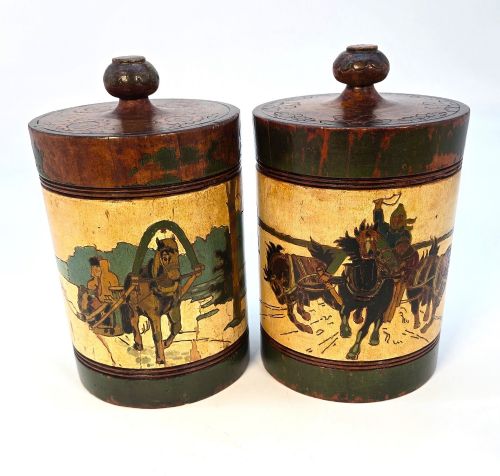


Hand Carved Wooden Container
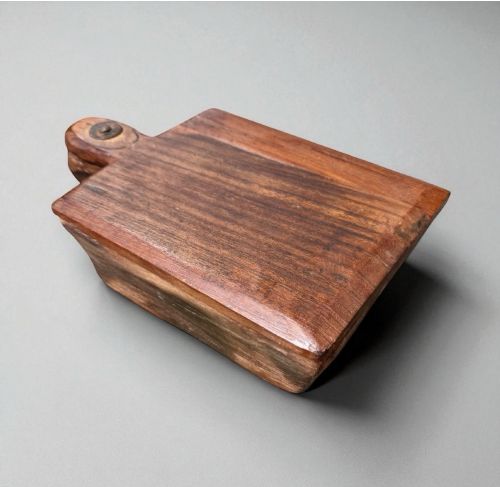
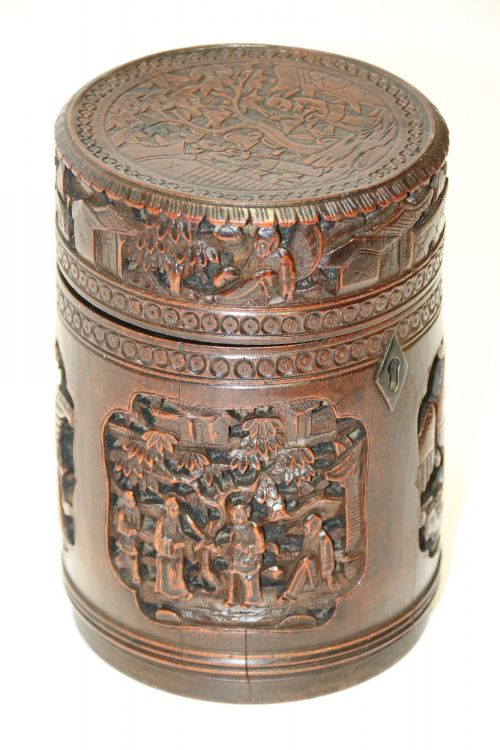
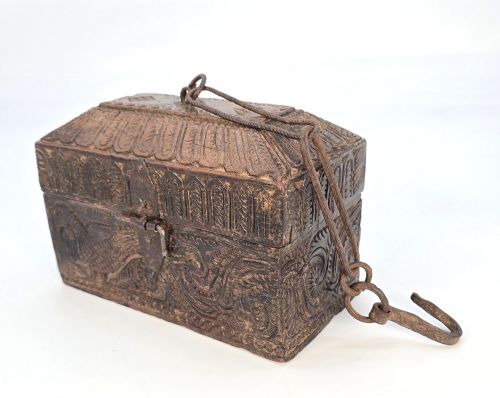
These hand carved wooden container examples range from vernacular folk art pieces to intricate boxes shaped by distinct regional hands.
Hand Carved Wooden Container
When you search for a hand carved wooden container, you meet small domestic objects designed to hold everything from tobacco and snuff to spices and keepsakes. The selection spans the Georgian period through the Edwardian era, taking in European folk traditions, Indian vernacular pieces, and Chinese works.
You find snuff boxes carved into specific forms such as hands or shoes alongside practical lidded vessels, tea caddies, and match holders. Many of these survive from the nineteenth century, shaped from dense hardwoods, fruitwoods, and limewood with varying degrees of decorative finish.
Materials and construction
The makers of a hand carved wooden container relied on regional timbers including oak, teak, limewood, fruitwood, bamboo, and elm. These woods were shaped using hand chisels and gouges, sometimes complemented by brass pique work or painted decoration.
Surface treatments range from simple wax finishes to deep patinas developed through handling over generations. Joinery techniques are straightforward, often featuring solid lidded constructions or vessels carved directly from a single block of wood.
The listings feature works in oak, teak, limewood, and fruitwood spanning the eighteenth, nineteenth, and early twentieth centuries.
What separates the fine examples
The quality of a hand carved wooden container rests upon the ambition of the carving and the dexterity of the maker. Crisp details on figurative pieces or sophisticated geometric motifs distinguish superior workshops from simpler vernacular items.
Condition and surface character also define the better pieces. A rich, deep patina and intact original lids or hinges elevate an object, whereas heavy wear or structural loss alters the balance of the piece.
The Hand Carved Wooden Container Glossary
- Treen
- Small handmade wooden household objects created for utilitarian or decorative purposes. This broad category includes items like the lidded cups and small boxes found in earlier periods.
- Snuff box
- A small lidded container made to hold powdered tobacco for inhalation. These often display inventive carving, sometimes taking figurative forms such as shoes or hands.
- Tea caddy
- A box or container built to store tea leaves safely away from light and air. Examples include carved bamboo and hardwood versions from the nineteenth century.
- Patina
- The surface sheen and colour developed on wood through age, handling, and regular polishing. A deep patina indicates long use and proper maintenance over decades.
- Pique work
- A decorative technique involving tiny inlaid points of metal, such as brass, arranged in foliage or floral patterns. This method appears on select nineteenth-century pieces.
Hand Carved Wooden Container: Frequently Asked Questions
How do I date an old wooden container?
Dating relies upon the timber species, the style of the carving, and construction methods such as hinge types and joint assembly. Comparative study of known period pieces helps narrow down the decade.
Changes in tool marks and regional design traits further assist in placing an object within eras like the Georgian period or Edwardian times.
What were these small boxes used for?
These vessels served practical daily functions in homes, storing dry goods, spices, matches, tobacco, or personal valuables. Specific forms correspond to specific substances, such as tea caddies for leaf tea and snuff boxes for tobacco.
Many objects also doubled as decorative ornaments or personal tokens exchanged among family members.
How should I care for antique wood?
Keep wooden containers away from direct sunlight and sudden changes in central heating to prevent the timber from splitting. Dust them gently with a dry, soft cloth.
Avoid using modern liquid polishes or silicone-based sprays, which can build up on the surface and dull the original patina.
Are all carved boxes folk art?
Not all pieces fall under folk art; the category includes both untutored vernacular items and formally styled objects from specific regional traditions. Some pieces originate from distinct artistic movements or named institutions.
Stylistic markers reveal whether an object was carved by a local villager or produced within a formalized workshop environment.