

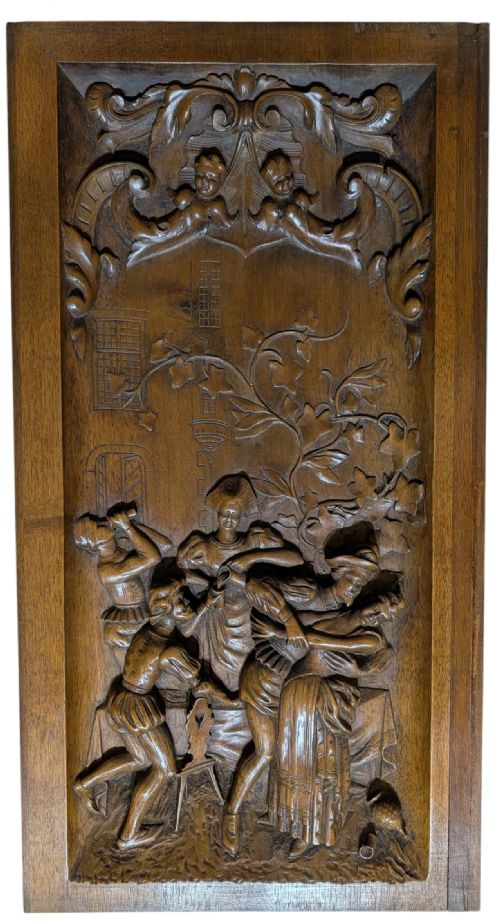


Hand Carved Timber Plaques
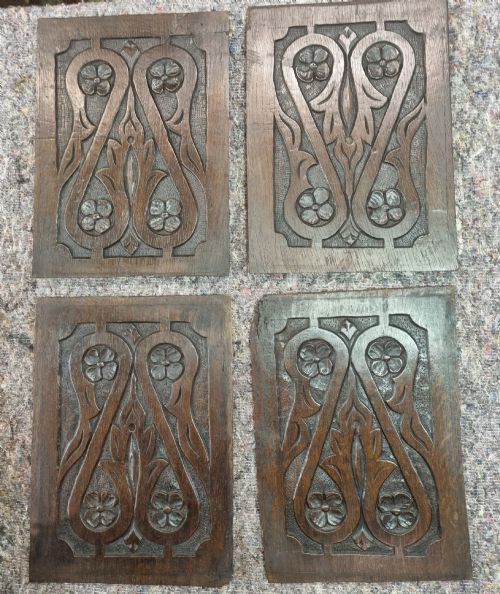
Hand carved timber plaques are sculptural wooden wall panels and reliefs that bring deep texture and historic narrative directly into a room.
Hand Carved Timber Plaques
Hand carved timber plaques encompass wall panels, architectural salvage, and sculptural carvings spanning from the seventeenth century through to the early twentieth century. You will frequently encounter nineteenth-century oak panels and Black Forest animal carvings on this page, alongside regional works from Italy, China, India, and Kashmir.
How they were made
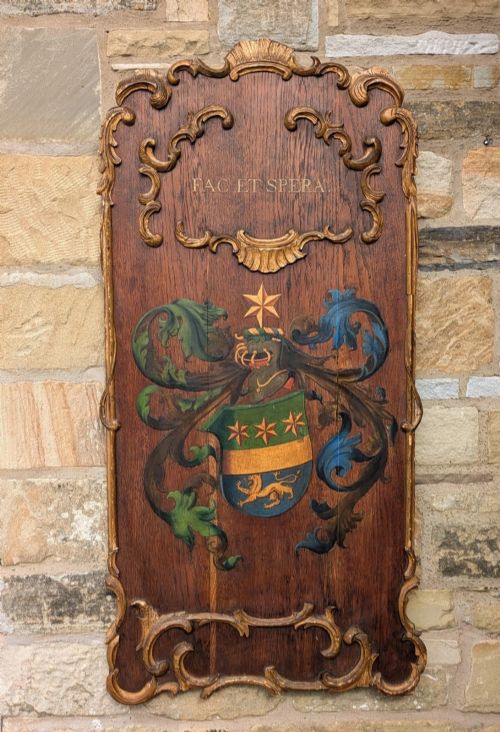
Craftsmen shaped these pieces predominantly from hardwoods such as oak, walnut, chestnut, and regional timber, employing chisel and gouge to achieve deep relief. Surface treatments vary from natural waxed finishes to polychrome paint, lacquer, and accents of gold leaf.
Many items originate as structural elements, cart fragments, or door panels that were later repurposed as wall displays. Iron hardware and fixings occasionally accompany the timber elements, reflecting their utilitarian beginnings before entering the decorative sphere.
Keep an eye out for depictions of chicken thieves and falcons carved into sturdy oak.
What varies in quality
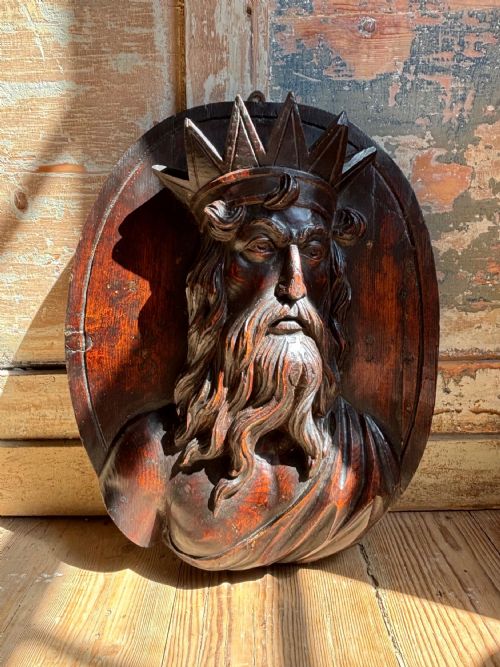
The distinction between standard execution and superior quality lies in the depth and vitality of the carving. Master carvers achieved anatomical precision and fluid movement, whereas lesser works appear stiff and shallow.
Condition and originality dictate the standing of a piece, particularly the integrity of the timber and the preservation of the original surface. Patina accumulated through age enhances the visual weight of the carving.
The Hand Carved Timber Plaques Glossary
- Relief
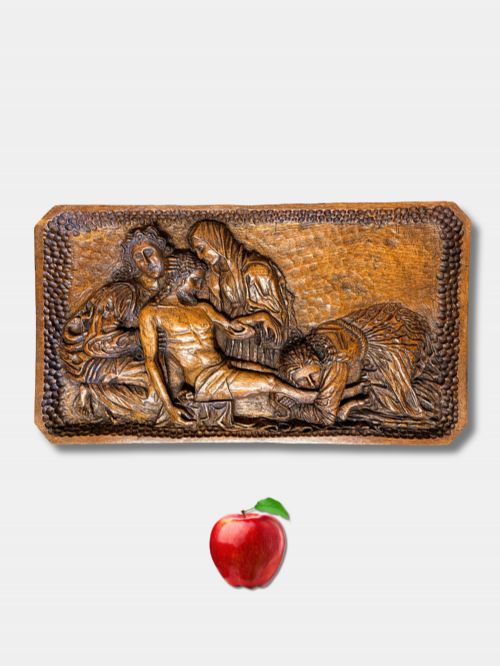
- A sculptural technique where figures project from a background plane. High relief creates strong shadows and distinct spatial depth.
- Black Forest
- A regional style of wood carving originating from Switzerland and Germany, renowned for naturalistic animal and foliage motifs. These pieces often depict birds of prey and hunting dogs.
- Architectural salvage
- Building elements rescued from demolition or alteration, subsequently repurposed for interior decoration. This includes cart fragments and door panels.
- Polychrome
- The practice of decorating architectural elements and wooden carvings in multiple colours. Traces of original paint often survive on older panels.
Hand Carved Timber Plaques: Frequently Asked Questions
How do I hang a heavy wooden plaque?
Heavy panels require secure fixings into structural wall studs or solid masonry using appropriate brackets.
Ensure the weight is evenly distributed across the hanging hardware to protect the antique timber.
How do I clean an antique carved panel?
Dust the carvings gently with a soft, dry brush to remove particles from the deep recesses.
Avoid liquid cleaners and harsh polishes, which can damage aged wax or exposed wood.
Are these plaques suitable for humid rooms?
Solid wood expands and contracts with changes in moisture and temperature.
Keep carved timber away from direct heat sources and damp environments to prevent splitting.
How can I tell centuries apart in carvings?
Earlier seventeenth-century pieces display heavier tool marks and denser timbers like chestnut.
Later nineteenth-century examples often exhibit machine assistance alongside hand work and distinct revivalist styles.