



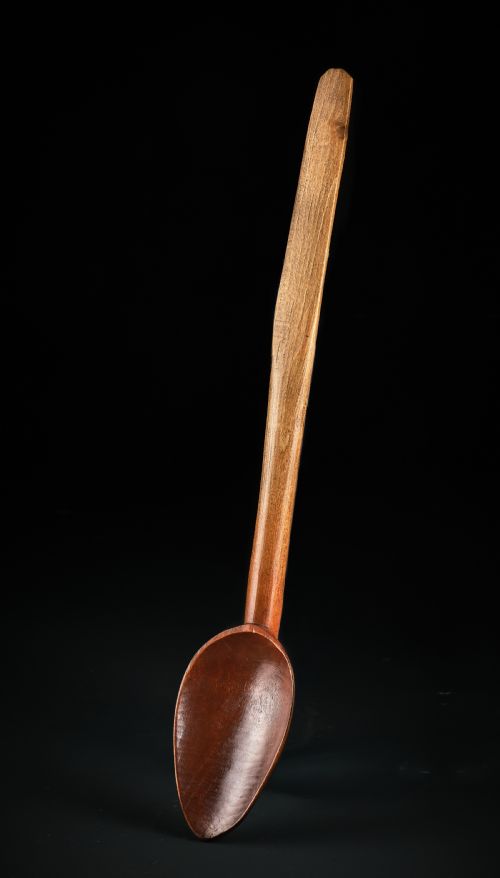
Hand Carved Spoon
A hand carved spoon is a domestic or ceremonial implement shaped from timber, bone, or horn, offering tangible connection to historic folk traditions.
Hand Carved Spoon
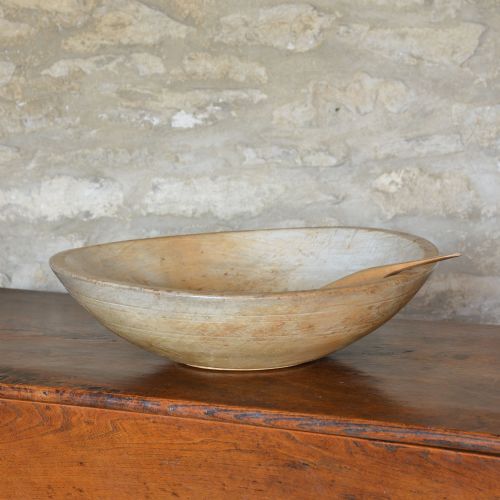
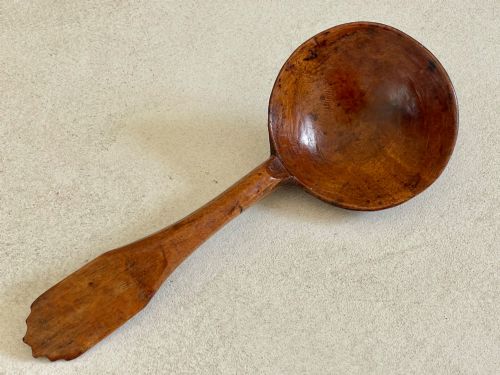
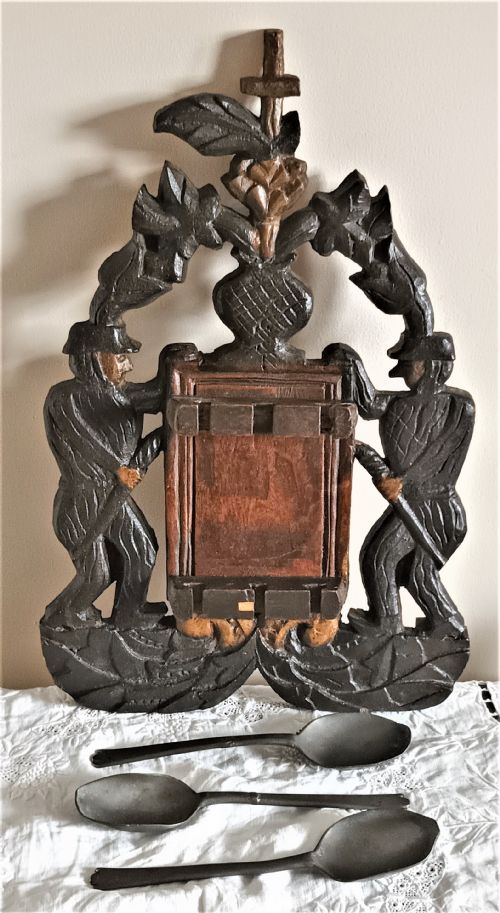
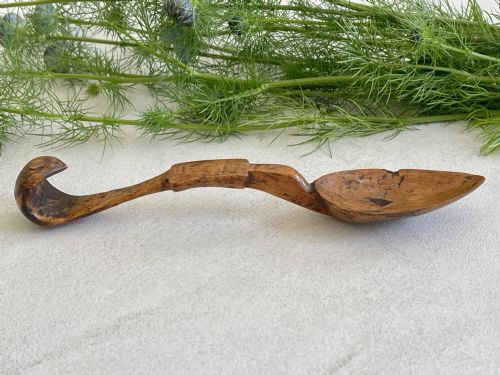
When you search for a hand carved spoon, you encounter items rooted in treen, kitchenalia, and folk art traditions spanning the eighteenth and nineteenth centuries. These pieces encompass utilitarian kitchen implements alongside decorative love spoons and ceremonial objects.
The selections on this page most frequently showcase regional vernacular pieces, notably Welsh lovespoons and Scandinavian or central European examples. Materials range from native fruitwood and sycamore to oak, beechwood, and occasionally stag horn or bone.
Forms vary significantly according to function, moving from simple basting spoons and scoops to intricate layered love tokens bearing dates and initials. Each object reflects the specific domestic or cultural requirements of its original maker.
Evaluating quality and merit
Quality rests in the crispness of the tool work and the proportional harmony of the bowl to the stem. Superior examples display confident, unhesitating cuts that define the decorative motifs without unnecessary fuzziness.
Patina and surface preservation heavily influence desirability, as handling over generations develops a deep, warm lustre on the timber. Pieces that retain clear regional characteristics or specific structural complexity stand apart from plainer utilitarian items.
Hand Carved Spoon Retail Price Guide 2026
Typical asking prices for hand carved spoon among the pieces listed under this phrase on Sellingantiques today, from the lower quarter to the upper quarter. They describe what is for sale here now, not the wider market.
Listings feature regional European folk art alongside domestic kitchenalia, utilising timbers like sycamore, fruitwood, and oak across the eighteenth and nineteenth centuries.
The Hand Carved Spoon Glossary
- Treen
- Small handmade wooden objects of domestic use. This broad category includes spoons, bowls, and kitchenalia.
- Lovespoon
- A traditionally carved wooden spoon given as a token of affection. These often feature intricate symbols, chains, and initials.
- Trefid spoon
- An early form of spoon featuring a split, three-lobed terminal at the end of the handle. They appear frequently in eighteenth-century sets.
- Kitchenalia
- Utensils and equipment formerly used in domestic food preparation. These items bridge the gap between functional utility and folk art.
- Folk art
- Art produced from an indigenous culture or peasant society. This includes utilitarian pieces decorated with traditional regional motifs.
Hand Carved Spoon: Frequently Asked Questions
What is a lovespoon?
A lovespoon is a decorative wooden spoon traditionally carved by hand as a token of romance or betrothal. Makers often incorporated symbolic motifs like hearts, chains, and twists into the handle.
These objects originated as practical displays of woodworking skill and affection within rural communities. They were typically kept on walls rather than used for dining.
How old are these spoons?
The pieces seen here generally date from the eighteenth and nineteenth centuries, spanning Georgian to Edwardian periods. Some bear specific carved dates or initials that anchor them to a particular year.
Stylistic markers and timber types help distinguish earlier Georgian utilitarian implements from later Victorian folk art creations. Hand-tool marks provide further clues to their approximate age.
Were these spoons used for eating?
Many examples served practical daily roles in the kitchen or at the table, functioning as ladles, basting spoons, or condiment scoops. Hardwoods like sycamore and fruitwood resisted splitting during regular food preparation.
Other variants, such as ceremonial or intricate lovespoons, were strictly decorative objects. Their delicate carved links meant they were unsuitable for practical culinary tasks.
How should I display a wooden spoon?
Displaying these items often involves mounting them on specialised racks or placing them securely on flat surfaces away from direct heat sources. Stable indoor humidity prevents the historic timber from drying out or cracking.
Allowing natural light to touch the surface helps highlight the deep patina built up over centuries of handling. Careful placement ensures the carved details remain visible from multiple angles.