

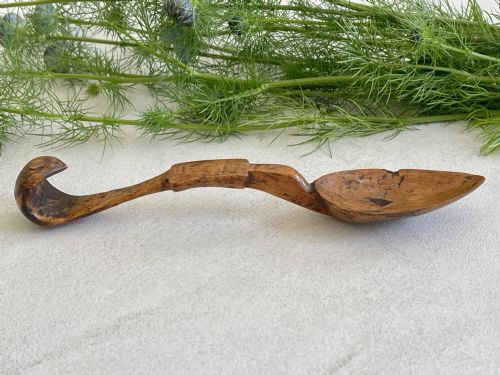


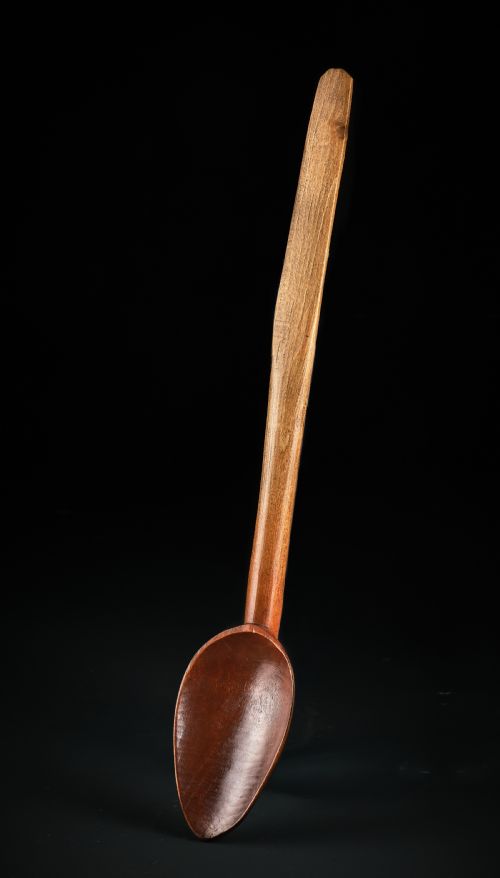


Brown Wooden Spoon
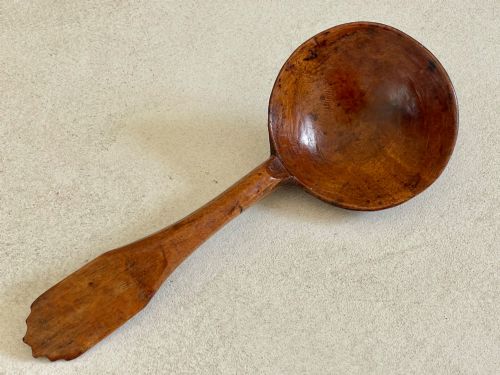
These brown wooden spoon examples bridge domestic kitchenalia and folk art, offering tactile warmth and centuries of hand-carved character.
Brown Wooden Spoon
A brown wooden spoon search brings up a rich selection of treen, kitchenalia, and folk art spanning the eighteenth, nineteenth, and early twentieth centuries. Buyers encounter domestic utensils alongside decorative lovespoons and ladles originating from Welsh, Scandinavian, and English country traditions.
The objects vary from utilitarian basting spoons and scoops in beechwood and sycamore to intricately carved lovespoons in fruitwood and cherrywood. Pieces range from simple nineteenth-century kitchen implements to dated tokens bearing specific domestic histories.
Most items on this page fall into the treen and kitchenalia categories, reflecting everyday rural life and regional folk art carving traditions. Collectors find smaller condiment spoons alongside larger ladles and wall-hung display items.
Materials and construction methods
These pieces rely on native hardwoods such as fruitwood, oak, beechwood, sycamore, and cherrywood, chosen for their grain and durability during heavy kitchen use. Craftsmen shaped each utensil by hand using traditional carving tools, leaving tool marks and surface patination that record the making process.
Specialised items incorporate specialised woods and elements, including coquilla nut and leather accents where decorative or functional needs required them. Makers utilised simple hand-held gouges and knives to achieve the engraved patterns seen on Scandinavian and Welsh folk art examples.
Brown Wooden Spoon Retail Price Guide 2026
Typical asking prices for brown wooden spoon among the pieces listed under this phrase on Sellingantiques today, from the lower quarter to the upper quarter. They describe what is for sale here now, not the wider market.
Sugar tongs meet love spoons in nineteenth-century folk art tokens.
Quality factors in traditional treen
Quality rests in the crispness of the carving, the integrity of the timber, and the depth of the surface patination built up through handling and age. Superior examples display balanced proportions and deliberate, clean lines in any engraved or pierced decoration.
Condition matters greatly, with preference given to items retaining their original surface finish rather than those heavily sanded or restored in later periods. The skill of the vernacular carver dictates whether a simple utility spoon transcends its functional origins to become genuine folk art.
The Brown Wooden Spoon Glossary
- Treen
- Small handmade wooden domestic objects such as spoons, bowls, and ladles. The term derives from old English words for tree and woodland materials.
- Lovespoon
- An ornate wooden spoon traditionally carved as a token of affection or betrothal. Makers often embellished these with symbols like chains, hearts, and twists.
- Kitchenalia
- Utensils and functional equipment used historically in domestic food preparation. These items combine practical design with regional manufacturing traits.
- Patination
- The surface sheen and colour change developed by wood and other materials through handling, age, and exposure to light over many decades.
- Sycamore
- A light-coloured hardwood frequently utilised by rural turners and carvers for kitchen implements. It resists splitting and provides a smooth surface for food use.
Brown Wooden Spoon: Frequently Asked Questions
How were these wooden spoons used?
Many examples served practical roles in domestic kitchens for stirring, basting, and serving food from large pots. Others functioned as decorative lovespoons given during courtships or commemorative tokens marking significant dates.
Smaller condiment or christening spoons saw specialist use at the dining table. Larger ladles handled liquids in communal settings before metal utensils became dominant.
How do I care for antique treen?
Keep wooden items away from direct heat sources and rapid humidity changes to prevent the timber from splitting or warping. Cleaning should involve only a dry or very slightly damp cloth without harsh detergents.
Applying a light coat of neutral mineral oil or beeswax periodically helps maintain the surface patination. Avoid soaking any piece in water.
What distinguishes Welsh folk art spoons?
Welsh lovespoons typically feature distinctive motifs carved from a single piece of fruitwood, sycamore, or cherrywood. Carvers incorporated symbolic elements such as interlocking links, geometric patterns, and initials.
These pieces often display a strong regional aesthetic distinct from Scandinavian or English domestic treen. Dated examples provide clear anchors for stylistic comparisons.
How can I tell the age of a wooden spoon?
Age assessment relies on examining tool marks left by hand-carving implements rather than modern machinery. The presence of natural wear patterns and dry, stable patination points to extended historical use.
Comparing the timber species and decorative style against dated historical examples helps narrow down the period of manufacture.