
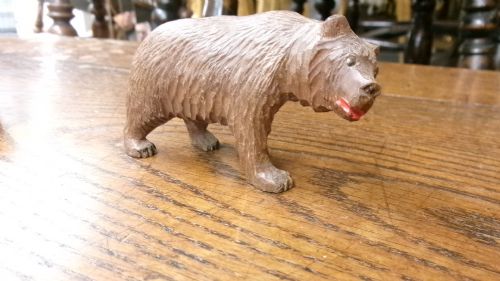
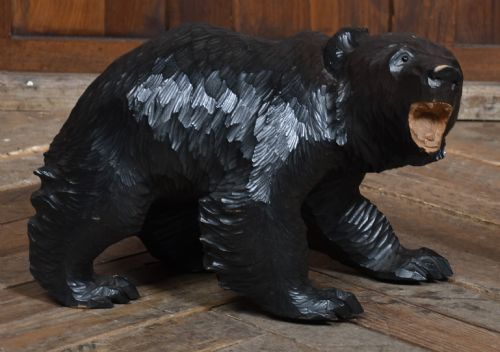


Hand Carved Bear
These hand carved bear sculptures bring character to a room through expressive carving and tactile timber.
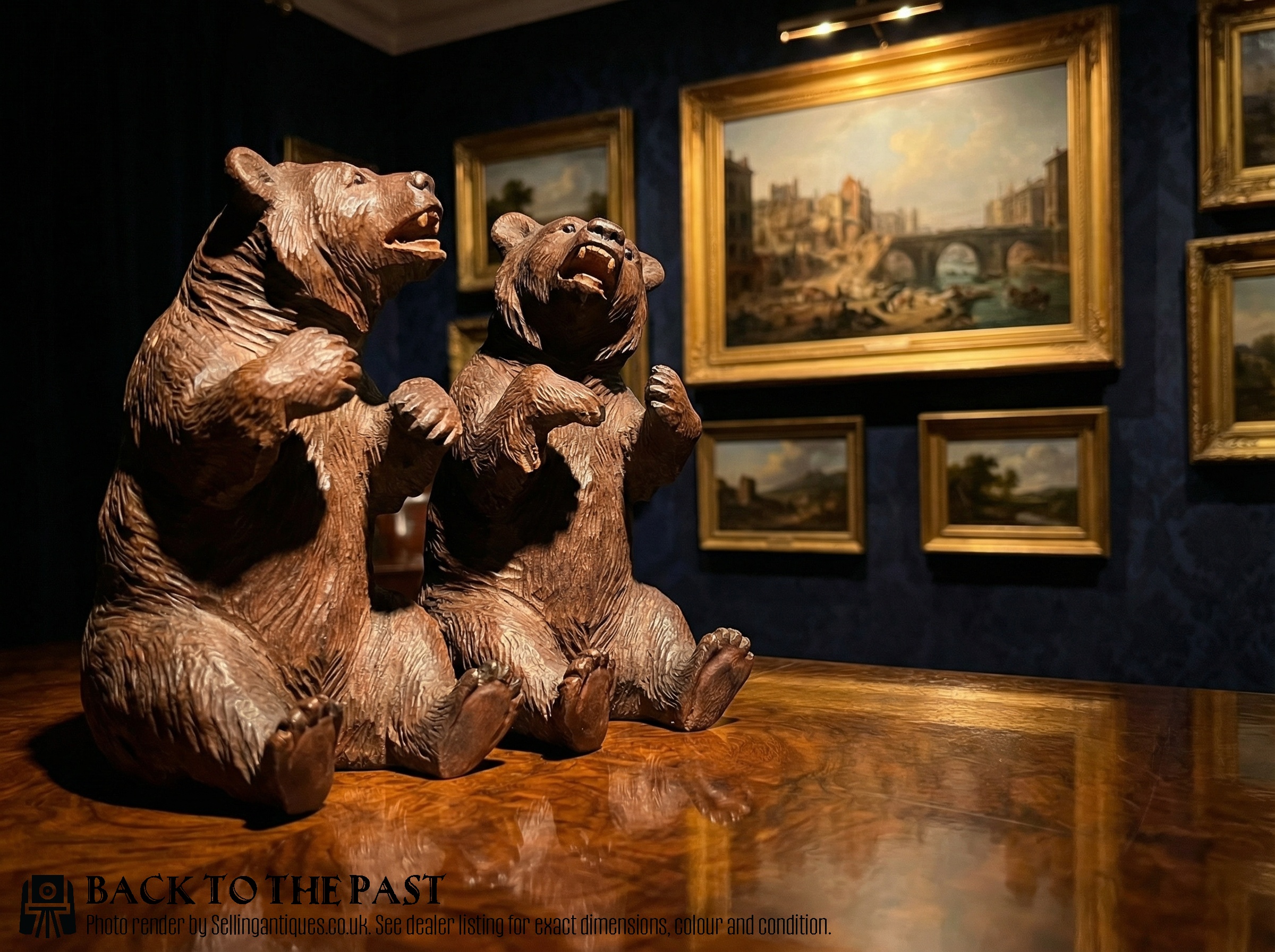
Hand Carved Bear
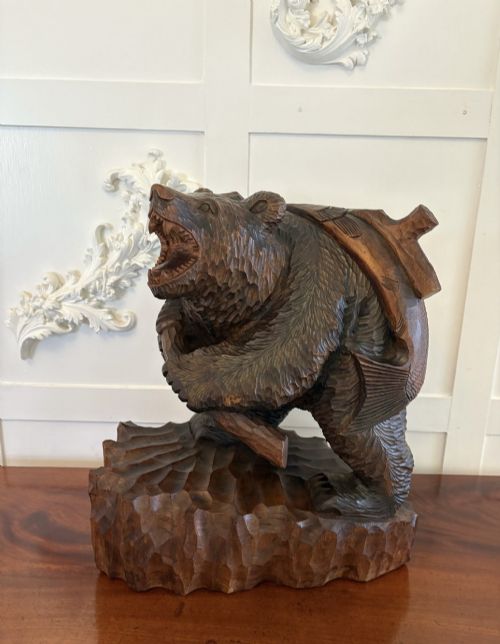
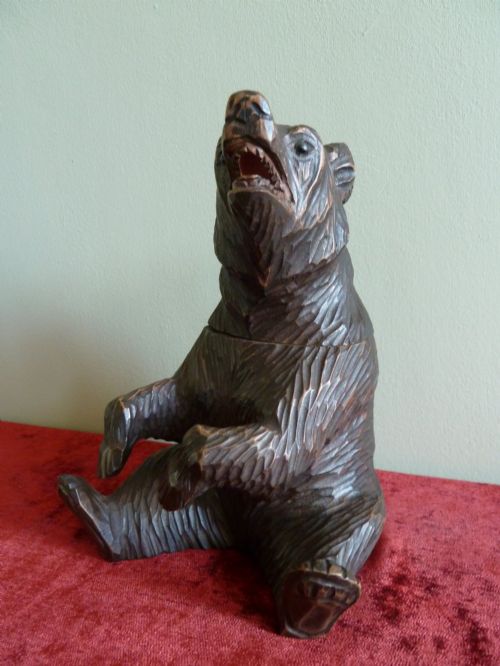
A hand carved bear brings together nineteenth century folk art traditions from European and Japanese workshops. Buyers search for these figures to acquire decorative sculptures, table lamps, bookends, and inkstands that display expressive animal forms.
The pieces appearing on this page span the Victorian and Edwardian eras up to the nineteen twenties. You will find large sculptures alongside miniature figures, functional items like tobacco jars, and seating furniture incorporating carved animal motifs.
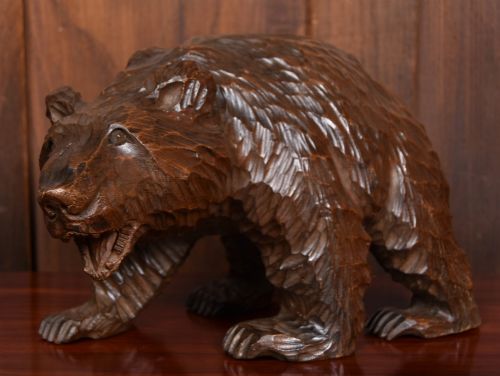
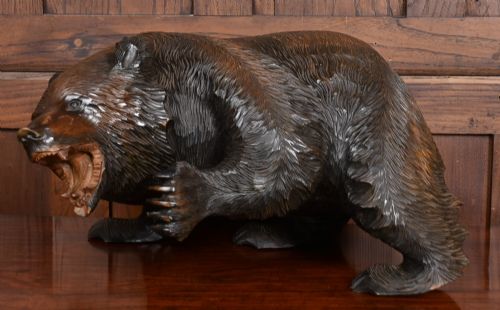
European examples typically originate from Black Forest or Swiss folk art traditions, while Japanese pieces represent the Kibori Kuma style. Both regional traditions utilise native timbers to capture realistic or stylised postures.
How they were made
Carvers shaped these figures primarily from linden wood and other hardwoods using hand chisels and gouges. Linden wood offered a fine grain that allowed artisans to carve deep fur, facial expressions, and anatomical details without splitting.
Many European and Japanese works retain a dark stain or polish to highlight the carved texture of the fur. Additional elements such as inset glass or metal stud eyes bring realism to the wooden faces.
Listings feature linden wood and hardwood across nineteenth century European and Japanese folk art traditions.
What varies in quality
Quality rests upon the depth of the carving and the anatomical accuracy of the bear. Master carvers defined individual strands of fur and realistic muscular tension rather than relying on surface smoothing.
The integration of the bear into functional objects, such as lamps, inkstands, and furniture handles, separates standard production from ambitious studio work. Proportions remain balanced and expressive even in miniature sets.
The Hand Carved Bear Glossary
- Black Forest
- A style of wood carving originating from the mountainous regions of central Europe during the nineteenth century. These works frequently depict wildlife, particularly bears, in sculptural and functional forms.
- Kibori Kuma
- Japanese wood-carved bears originating from Hokkaido. These pieces display distinct folk art characteristics developed by local carvers in the nineteenth century.
- Linden Wood
- A pale timber favoured by carvers for its uniform grain and softness. It allows intricate detailing without splintering along the grain.
- Inkstand
- A desk accessory holding inkwells and pens. Bear carvings often form the base or lid mounts of these nineteenth century items.
Hand Carved Bear: Frequently Asked Questions
How do I identify a Black Forest bear?
Black Forest pieces originate from European workshops and typically feature rich dark stains, naturalistic fur carving, and glass eyes.
Subjects often incorporate functional elements like trays, bookends, or umbrella stands.
What is a Kibori Kuma bear?
Kibori Kuma refers to Japanese wood carved bears produced mainly in Hokkaido.
These sculptures emphasise the natural grain of the wood and distinct regional carving techniques.
Where should I display a carved bear?
These sculptures suit desks, bookshelves, and side tables where their detailed carving remains visible.
Functional items like lamps and bookends integrate easily into everyday use.
How do I date an antique bear carving?
Dating relies on stylistic markers, timber type, and construction methods associated with the Victorian and Edwardian periods.
Archival examples from the nineteenth century show specific regional tool marks and finishing treatments.