


Hand Blown Decanter
These hand blown decanter pieces combine centuries of glassmaking skill with practical utility, offering collectors rich colours and tactile forms.
Hand Blown Decanter
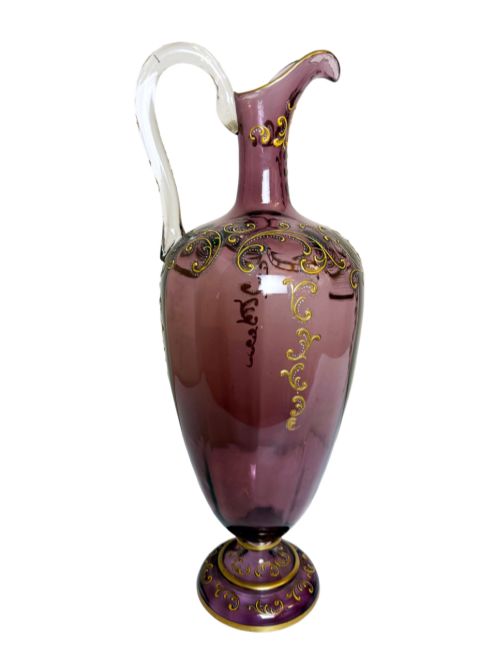
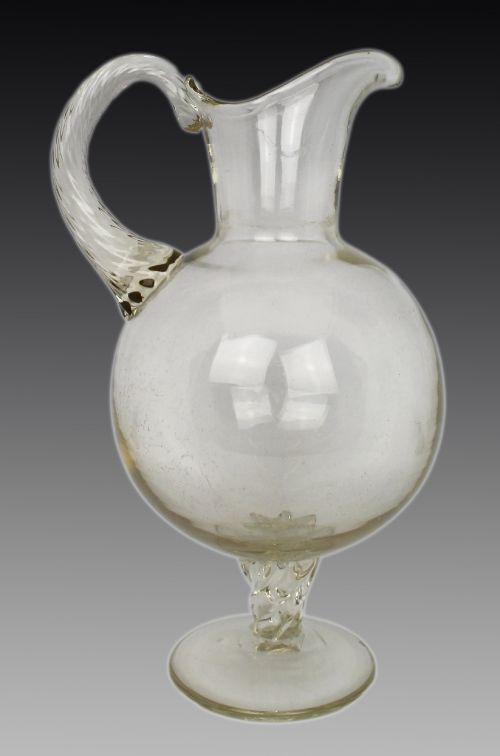
When you search for a hand blown decanter, you encounter vessels shaped by free-blowing or mould-blowing techniques across the eighteenth, nineteenth, and early twentieth centuries. The selection spans utilitarian serving bottles and cider jugs to ornate Victorian ewers, cranberry glass decanters, and arts and crafts creations.
You are most likely to meet Victorian and Edwardian examples on this page, often rendered in clear glass, cranberry glass, or vibrant shades of green and blue. Forms range from shaft and globe decanters and mell decanters to figural pieces shaped like dogs.
Origins stretch across English, Scottish, French, Italian, Bohemian, and Scandinavian workshops, reflecting diverse regional techniques and decorative traditions. These pieces served functional roles at the dining table or sideboard before finding favour as display objects.
What varies in quality
The distinction between standard and superior pieces rests on the weight of the metal, the balance of the proportions, and the clarity or depth of the glass colour. Heavier, more substantial vessels with crisp optical ribbing or well-executed wheel engraving sit higher in the range.
Decorative execution also dictates standing, particularly where hand-painted enamels, gilt appliques, or metalwork mounts by known designers are involved. Precision in the free-blown form and the finish of the rim and base distinguish accomplished workshops from simpler output.
Some nineteenth-century makers dispensed with traditional shapes entirely, offering thirsty hosts a decanter formed precisely in the likeness of a loyal hound.
James Powell·Archibald Knox for Liberty
The Hand Blown Decanter Glossary
- Pontil mark
- The rough scar left on the base of a vessel where the pontil rod was attached during manufacture. Its presence is a key indicator of hand-blown production.
- Cranberry glass
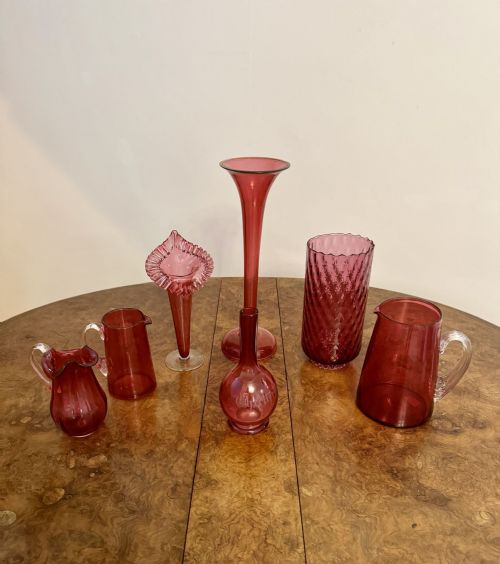
- A rich red-pink transparent glass created by adding gold chloride to the molten batch. It became extremely popular during the Victorian era for tableware and decanters.
- Mell decanter
- A distinctively shaped serving bottle, often associated with Scottish tradition, featuring a rounded body and a tapering neck. These vessels held spirits or wine for the table.
- Shaft and globe decanter
- An early form characterised by a globular body and a long, slender neck designed to hold a tight stopper. Eighteenth-century examples often display deep kick-ups in the base.
- Mary Gregory glass
- Glassware decorated with white enamel silhouettes of children, birds, or foliage, usually set against a coloured ground like green or blue. The style gained widespread favour in the late nineteenth century.
Hand Blown Decanter: Frequently Asked Questions
Can I use these for serving wine?
Many of these vessels functioned historically as wine or cider decanters and remain suitable for serving beverages today. Inspect the interior for staining or residue before deciding to use them for consumption.
Ensure that stoppers are handled carefully, as hand-ground glass stoppers are specific to their individual necks and difficult to replace if broken.
How do I date a piece?
Examine the base for a pontil mark, the thickness of the glass, and the overall form to ascertain the likely period of manufacture. Georgian pieces often feature deep kick-ups and pontil scars, while Victorian examples embrace varied colours and applied enamel.
Compare stylistic markers such as arts and crafts motifs or cranberry glass hues with documented examples from the same era to narrow down the decade.
Are stoppers always original?
Stoppers were easily misplaced or broken over centuries of use, meaning many surviving vessels feature matched or replacement stoppers. Look for consistent wear and matching glass colour between the neck and the stopper.
A slightly loose or tight fit often indicates a replacement, though slight variations are normal in hand-blown glassware where every piece was individually fitted.